.svg)
How scope creep costs agencies thousands in hidden losses

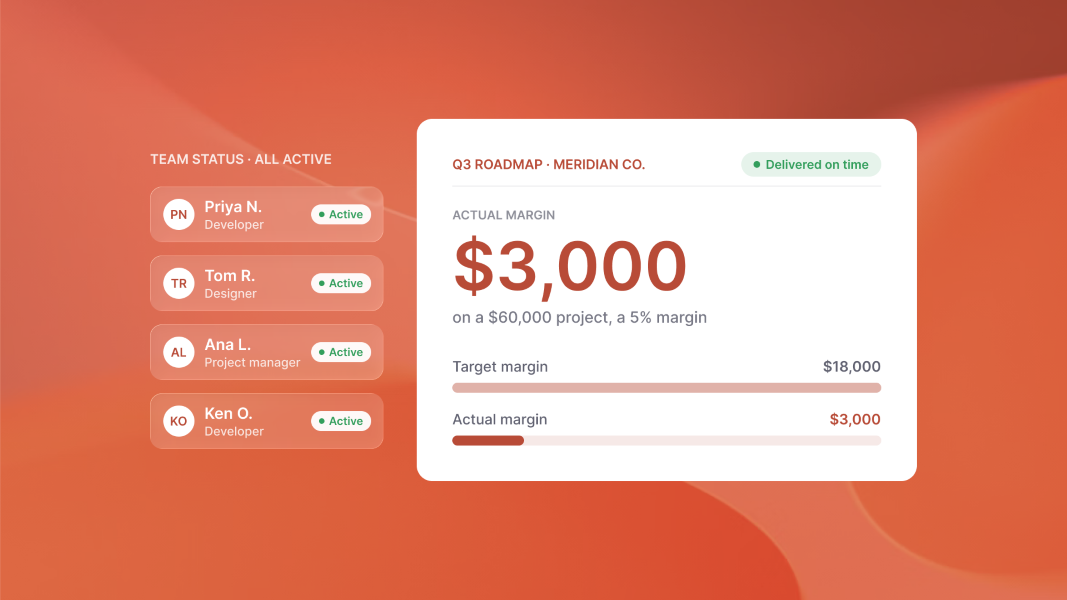
Your agency closed a profitable quarter. Your team hit utilization targets. But your actual margins dropped 15% and you can't explain why.
The culprit isn't inefficiency. It's the invisible accumulation of unbilled scope creep that doesn't show up in standard time reports.
The math behind the bleeding
Scope creep costs agencies $1,000 to $5,000 monthly in unbilled work, according to the Ignition 2025 Agency Pricing & Cash Flow Report. That's 57% of agencies. Another 30% lose over $5,000 monthly. Yet only 1% successfully bill for all out-of-scope work.
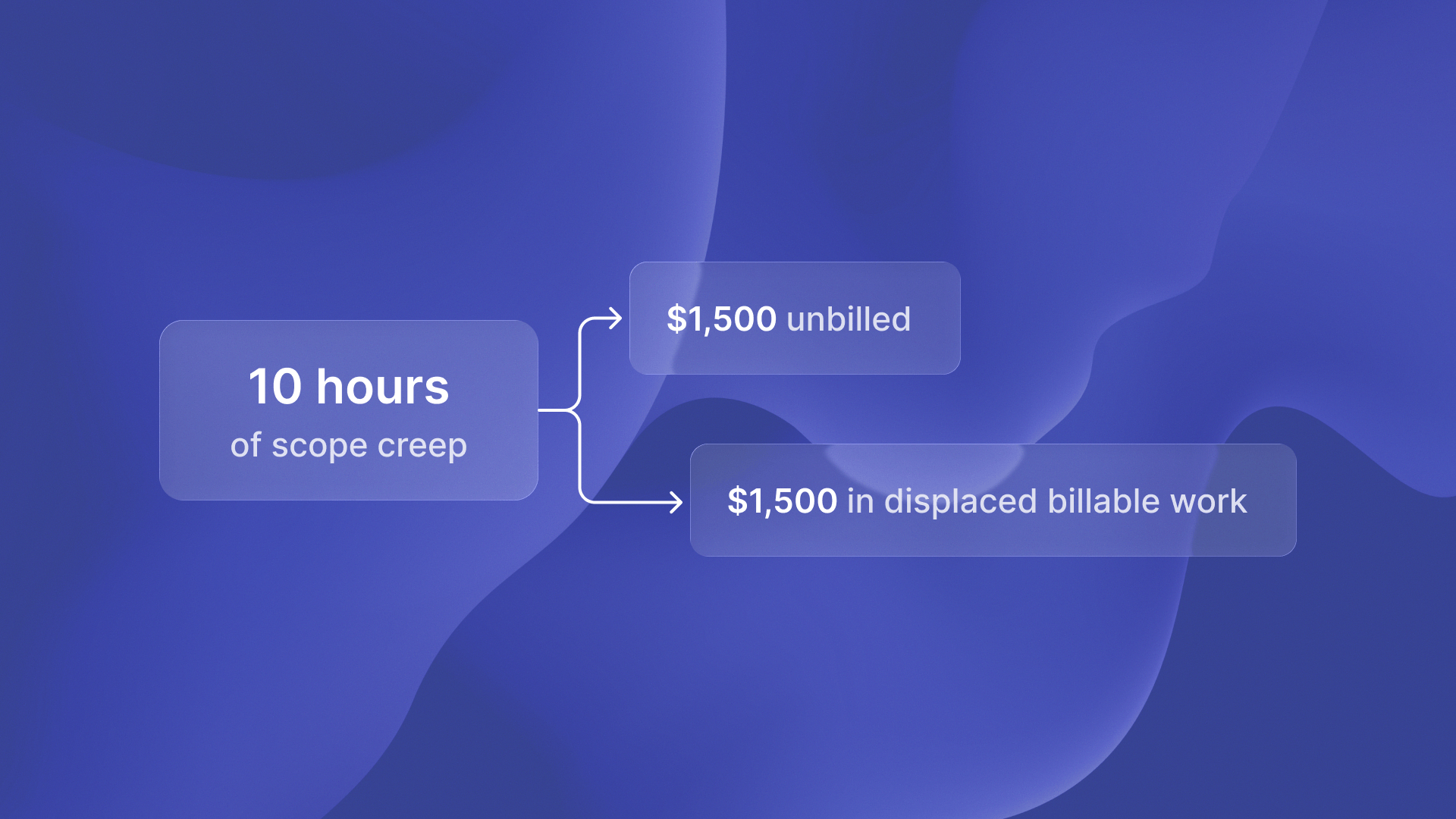
Here's what that looks like in real numbers. A $50,000 project budgeted for 400 hours starts accumulating small requests: quick design tweaks, unplanned client calls, extra revision rounds. Your team logs the hours faithfully. The hours just never get categorized as billable or non-billable in real-time. By project close, you've delivered 480 hours but can only bill for 400. That's 80 unbilled hours at $125/hour, or $10,000 in lost revenue you didn't see coming.
Multiply that across 5-10 active projects and you're looking at $50,000+ in annual margin erosion from work that simply disappeared into your time tracking system.
Why agencies can't bill for scope creep
The problem isn't recognizing scope creep. Every agency knows it happens. The problem is quantifying it during project execution, not after. When Islands analyzed their client projects using Timecapsule, they found the same pattern: teams were logging hours accurately, but those hours weren't flagged as billable vs. non-billable until post-mortems revealed the damage.
Most time tracking systems answer "How many hours did we work?" not "How many of those hours were in-scope and billable?" That gap compounds daily. A 15-minute favor becomes 2 hours of revisions becomes 10 hours of unplanned work, all logged but never questioned until the project closes underwater.
Left unchecked, scope creep consumes up to 20% of annual revenue, according to PMI's Pulse of the Profession 2024 research. That's not a client management problem. That's a tracking problem.
The real-time profitability gap
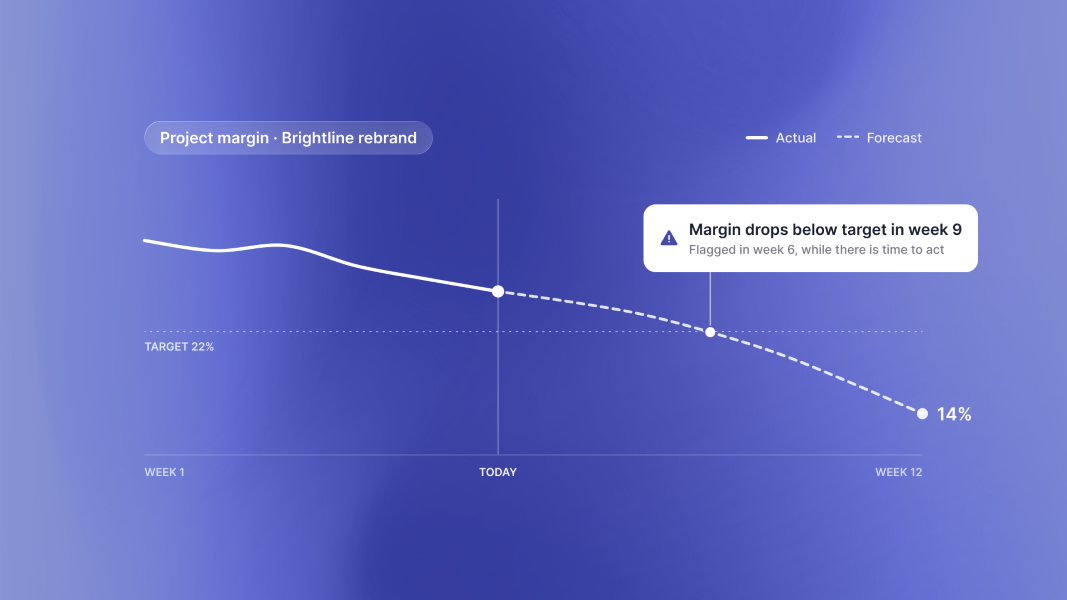
Agencies that track hours aren't the same as agencies that track profitability. The former document their losses. The latter catch margin erosion while there's still time to course-correct: renegotiate scope, set boundaries on the next request, or absorb the cost knowingly rather than discovering it in a post-mortem.
Real-time profitability tracking means knowing which logged hours are making you money and which are silently eroding margins. It means catching the third revision round before it becomes the tenth. It means having data to support scope conversations with clients instead of vague feelings that "this project feels off."
From logging hours to protecting margins
The agencies winning aren't the ones preventing all scope creep. They're the ones who see it happening in real-time and make informed decisions about what to absorb, what to bill, and what to push back on. They use tools like Timecapsule to monitor billable vs. non-billable hours as projects progress, not after they close.
This isn't about logging more hours. It's about knowing which hours make you money while there's still time to fix the ones that don't.