.svg)
Why your billable utilization rate dropped to 68.9% in 2025

%20(4).png)
Your team logged 1,847 hours last quarter. Your billable utilization rate was 68.9%. You're losing money and don't know where it's going.
This isn't a time tracking problem.
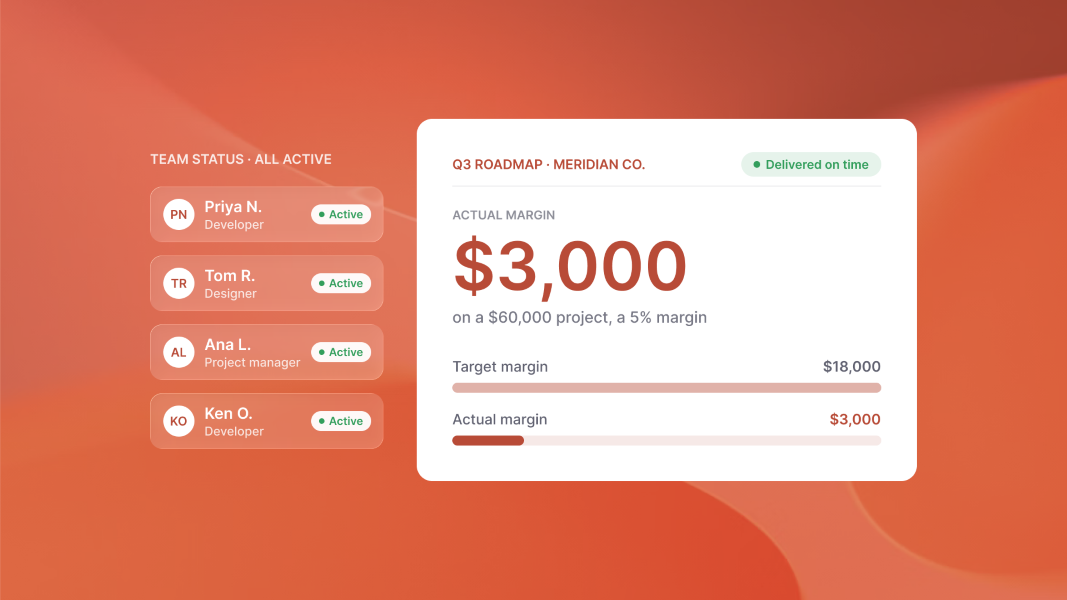
It's a profitability intelligence problem. Most agencies discover their utilization collapsed only when monthly reports arrive and the financial damage is already done. By then, the unbilled hours are gone, the projects are closed, and the revenue that should have been captured has evaporated.
The 68.9% problem: why utilization collapsed
Billable utilization fell from 73.2% in 2021 to 68.9% in 2024. This is based on the SPI 2025 Professional Services Maturity Benchmark. That's not a minor dip. It's a steady drop below the key 75% profit threshold. This threshold separates agencies that earn money from those that work hard and break even.
Billable utilization measures the ratio of billable hours to total hours worked. Every percentage point below 75% represents revenue that was worked but never captured. Here's what that looks like in real numbers: A 10-person agency, with each person working 2,000 hours a year, generates 20,000 total hours. At 68.9% utilization, that's 13,780 billable hours. At 75% utilization, it's 15,000 billable hours. The difference is 1,220 hours of work that happened but didn't get billed. At $150/hour, that's $183,000 in lost annual revenue.
Where the billable hours disappear
WorldBusinessOutlook reports that 40-47% of agencies fail to capture every billable hour. This isn't theoretical. It happens in clear, specific ways. Admin work gets mislabeled as billable. Scope creep gets absorbed without re-billing. Context switching overhead does not get tracked. Internal meetings for client work get marked as non-billable.
This isn't about working more hours. It's about correctly identifying and billing what's already being worked. Traditional time tracking creates false confidence because hours are logged but classification is wrong. The invoice goes out undercharging for work that actually happened. By the time you realize the project lost money, the client has paid and moved on.
The 75-80% sweet spot (and why most agencies miss it)
TMetric 2025 Marketing Agency Benchmarks identifies 65-80% as the profitability zone, with 70-75% as optimal. That's the range where agencies make peak profit without burning people out. Pushing for 100% utilization is a burnout disaster because there's no time for professional development, sales, or strategic work.
The agencies hitting 75-80% utilization do something fundamentally different: they track billable versus non-billable allocation in real-time, not retrospectively. They don't wait for month-end reports to discover problems. They monitor project profitability while projects are in progress, which allows mid-stream corrections. When they see a team member over-allocated to non-billable work in week two, they rebalance. When they identify scope creep in week two of a six-week project, they renegotiate terms before delivery.
%2520(4).png)
Why time tracking alone won't fix this
Hours tracked doesn't equal money earned. The classification, allocation, and billing of those hours determines profit. Most agencies discover they worked 200 hours at a loss only after the invoice goes out and the client pays. Traditional time trackers show hours logged but don't reveal profitability.
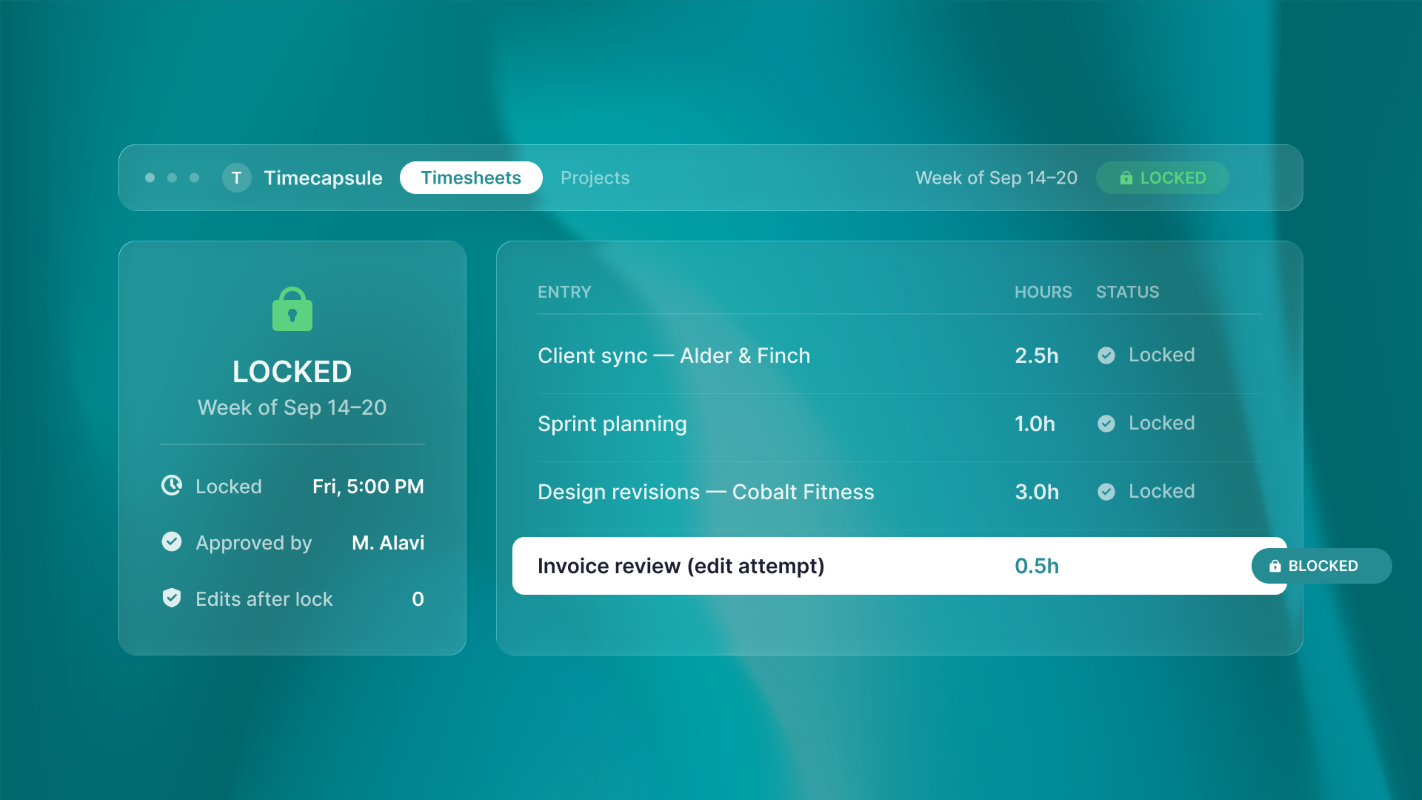
Real-time profit tracking answers what time trackers can't: "Are we making money on this project now?"
Timecapsule provides that insight. It tracks time and shows if that time earns profit. It also helps you act while there is still time to intervene.
How to climb back to 75%
Start with an audit of current utilization by project and team member to identify where non-billable time concentrates. Then implement real-time profitability tracking so margin erosion becomes visible during projects, not after. Reclassify ambiguous time by asking hard questions: is that client meeting billable or admin? Set utilization targets per team member and monitor weekly, not monthly. Finally, use profitability data to inform project pricing, team allocation, and scope negotiation going forward.
Tracking hours is an operational task. Tracking profitability is a strategic advantage. Agencies stuck at 68.9% know how much time was worked. Agencies at 75-80% know whether that time made money while there's still time to fix it.