.svg)
How to calculate the true cost of scope creep before it destroys your margins


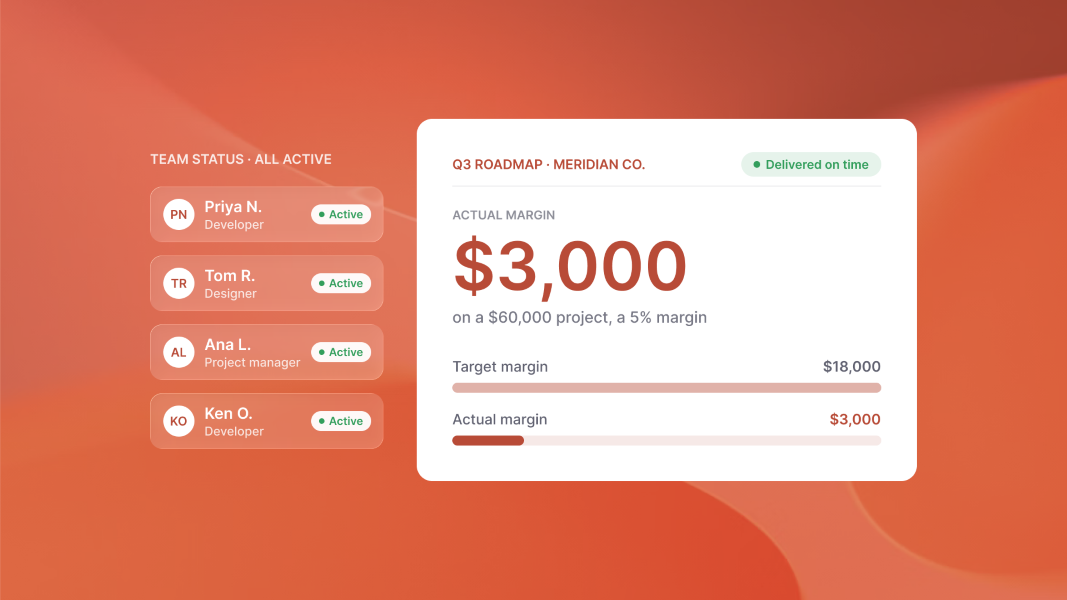
Your most profitable project last quarter might have actually lost money. You won't know until the invoice goes out.
Agencies track hours religiously with time tracking tools, see team utilization at 85%, and assume profitability is healthy. Then month-end reports reveal that three projects ran over budget due to scope creep, erasing the gains from two profitable ones. Hours tracked does not equal profit made. The gap between billable hours logged and actual revenue captured is where margins disappear silently.
That's not a discipline problem. That's a visibility problem. Your team works hard, but they're flying blind on which work is profitable versus which is burning budget. Traditional time tracking measures activity, not profit.
This means scope creep can quietly reduce profits. You may not notice it until it is too late.
The hidden math of unbilled work
57% of agencies lose $1,000 to $5,000 in monthly revenue from unbilled, out-of-scope work. This comes from the Ignition 2025 Agency Pricing & Cash Flow Report. These losses add up quietly because traditional time tracking shows hours worked, not profit or loss.
Your project manager sees 120 billable hours logged on a project. But they don't see that 18 hours were added due to scope expansion. The client never approved or paid for those hours.
Here's what that looks like in real dollars. A developer spends 10 hours fixing an out-of-scope feature request at a $150/hour rate. That's not just $1,500 in lost revenue from unbilled work. It's $1,500 in billable work they could not finish for other clients. It also includes margin loss from the original project budget, which is now overrun. The true scope creep cost compounds because you're losing twice: once on the unbilled hours, and again on the profitable work that didn't happen.
.png)
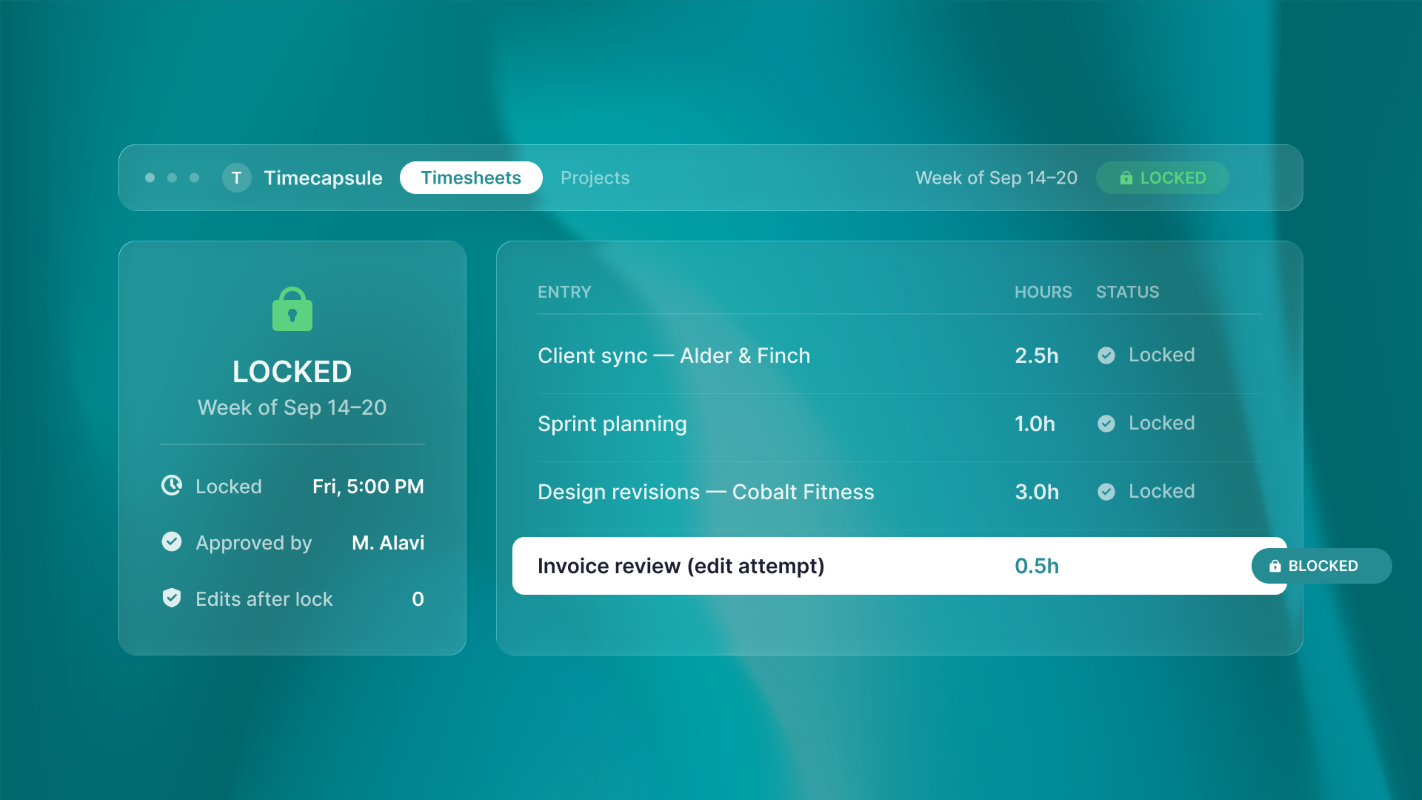
When agencies using Timecapsule tracked project profitability in real time, they found overruns in days. They no longer found them weeks later. The difference wasn't working harder or negotiating better contracts. It was seeing the money leak while there was still time to plug it.
Why half your projects are bleeding margin
52% of projects suffer from scope creep, which can disrupt budgets and timelines, according to PMI's 2023 research. The financial impact compounds because agencies often absorb these costs rather than renegotiate scope mid-project.
The math on a $50,000 project looks like this. You budget 320 billable hours at $156/hour. Scope creep adds 50 unbilled hours. That's $7,800 in costs you absorb, dropping your margin from 30% to 14%. The project looked profitable on paper. It is now barely breaking even.
You may not see this until invoicing shows the damage. Monthly financial reports surface these problems weeks after the work was completed and scope decisions were made. Real-time profit monitoring with tools like Timecapsule helps project managers spot budget overruns within days. They can then renegotiate scope or shift resources fast, before margins fully collapse.
The difference is catching profit leaks mid-project, while changes are still possible, not finding them at month-end.
The strategic distinction that changes everything
Time tracking tells you what your team did. Profitability tracking tells you whether it was worth doing. Agencies that track their numbers in real time make different choices than agencies that find profit problems at month-end. The difference isn't working harder or managing scope better through contracts alone.
It's seeing the money while there's still time to protect it. You can't manage what you can't measure, and you can't measure profitability with a time tracker alone.