.svg)
The $32,500 question: Is your agency treating billable work as relationship building?


Your project manager spent 90 minutes this week on a client call discussing timeline adjustments and requirement clarifications. She logged it as non-billable. That's $187.50 you'll never invoice.
This isn't a one-time occurrence. It happens every week across multiple projects. The pattern compounds into serious revenue drain because agencies treat certain client interactions as relationship investments without calculating whether those relationships are actually profitable. Scope creep isn't just about saying yes to extra features. It's about misclassifying billable project work as non-billable goodwill, and most agencies don't realize how much revenue disappears until months after delivery when it's too late to recover.
The hidden math: what scope creep actually costs
Misclassifying just 5 hours per week at $125/hour means $625 in lost weekly revenue. That's $2,500 monthly or $32,500 annually per project, according to Karya Keeper's analysis of billable vs non-billable hours. Pure revenue loss that never appears on any report.
But the real cost is double that number. Those 5 misclassified hours could have been spent on properly-billed work or new business development. You're not just losing the $32,500 you didn't invoice. You're losing the opportunity to generate $32,500 in additional revenue elsewhere. That's a $65,000 annual impact per project from what looks like a minor weekly classification error.
When Islands analyzed their Q3 profitability across 12 simultaneous client projects, they discovered that 5 of those clients were consuming 55% of their team's time while generating only 35% of revenue. The culprit wasn't dramatic scope creep. It was systematic misclassification of project management work as relationship building, costing them $78,000 in unbilled hours that quarter alone.
The misclassification trap: when relationship building becomes revenue loss
Here's the distinction most agencies miss: Relationship-building is non-billable goodwill like coffee chats with prospects, introduction calls with potential partners, or exploratory conversations about future work. Project management is billable work like status updates, requirement clarifications, timeline discussions, and scope negotiations during active projects.
One agency left thousands of dollars on the table each month by treating client check-in calls as non-billable relationship-building instead of project management, according to Karya Keeper's research. These weren't casual conversations. They were structured project communication covering deliverable status, blocker resolution, and timeline coordination. That's billable project delivery work disguised as partnership maintenance.
Most "relationship building" activities with existing clients during active projects are actually project delivery work that should be invoiced. New business development is non-billable. Keeping current projects on track and responding to client requests is billable, even when it feels like customer service.
How to identify your unprofitable client relationships
Track your billable ratio at the project level: total billable hours divided by total hours worked on that client. A healthy ratio for project work is 75-85%. Below 60% indicates serious misclassification or actual scope creep that's destroying your margins.
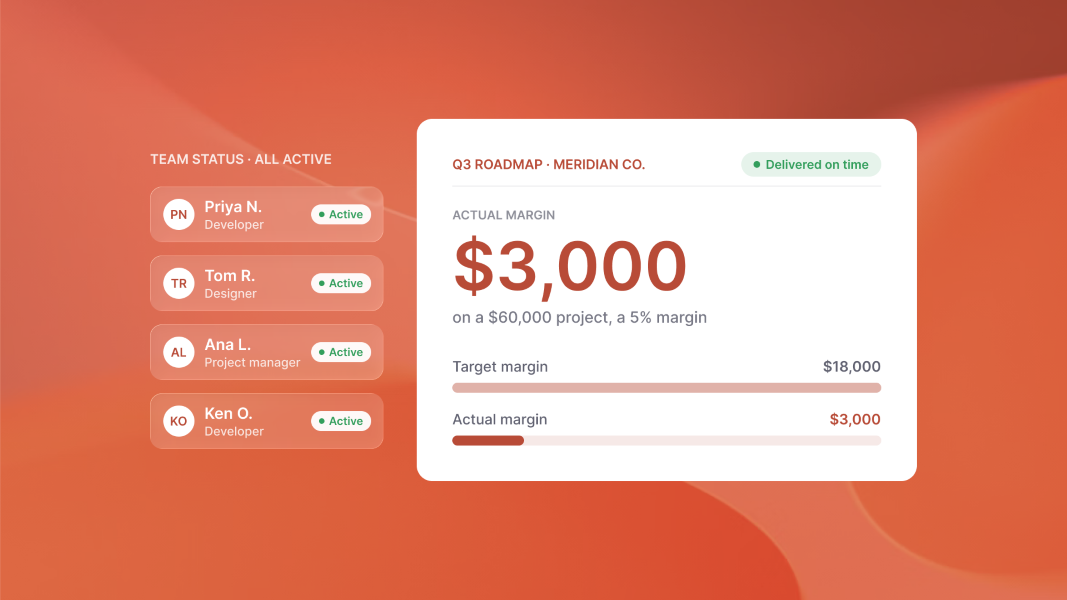
When Ingage implemented project-level billable ratio tracking for their distributed development team, they discovered one client engagement that looked profitable on paper had a 48% billable ratio. What seemed like a $22K profitable project was actually generating only $11K in billable revenue while consuming $23K in fully-loaded labor costs. The "partnership" was costing them $12K.
Here's the framework: Track billable vs. non-billable at the project level for 4 weeks. Calculate the percentage. Compare against contract value and profit margin targets. Then distinguish between causes. Is it legitimate relationship building with a $200K annual retainer client where extra time makes strategic sense? Or is it scope creep disguised as partnership with a $15K fixed-price project where margins are now negative?
A weekly 30-minute status call might be non-billable relationship maintenance for that $200K annual client. The exact same call should absolutely be billable project management for the $15K project. Context determines classification, not blanket policies.
The real-time intervention advantage
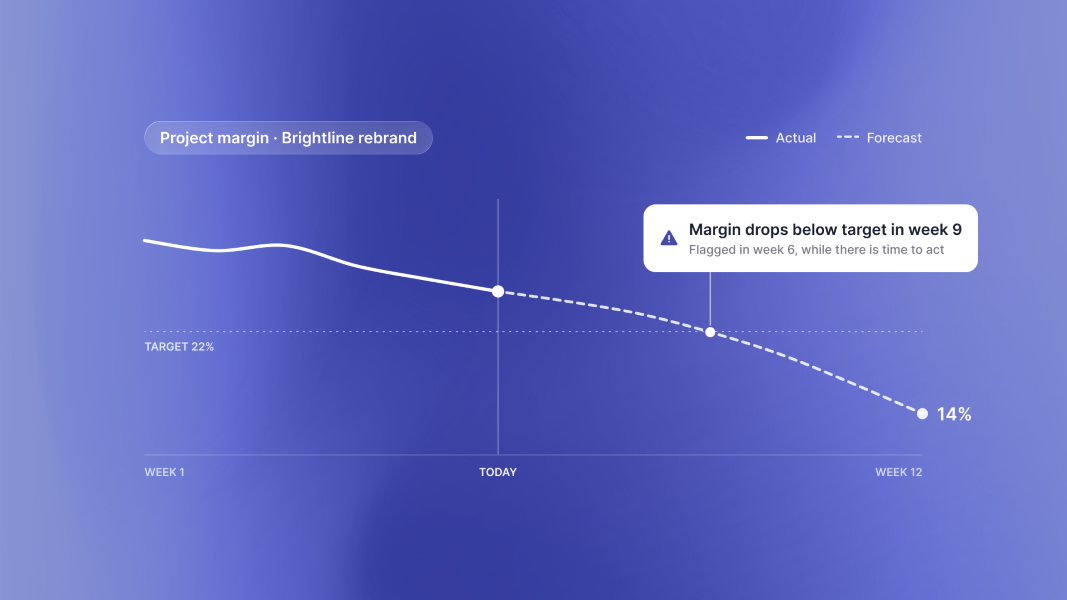
Traditional time tracking shows what happened after the fact. You discover a project lost $15K three months after delivery, which means absorbing the loss with no recourse. Real-time project intelligence shows billable ratios dropping from 80% to 55% in week 3, when you can still intervene.
That intervention window changes everything. You can renegotiate scope, convert non-billable work to billable, have a direct conversation with the client about additional requests, or consciously accept the cost as client investment with clear ROI understanding. All of those options require catching the problem during the project, not discovering it in post-mortem analysis.
What actually matters
Time tracked doesn't equal revenue earned. Only billable time properly classified and invoiced equals revenue earned. Most agencies are leaving tens of thousands on the table annually by treating project work as relationship building without calculating whether those relationships generate positive returns.
The solution isn't saying no to clients. It's properly classifying which work is billable, tracking billable ratios in real-time at the project level, and identifying unprofitable relationships during projects when you can still course-correct. Scope creep isn't a vague concept. It's quantifiable revenue loss that compounds weekly until you measure it.