.svg)
Why post-project financial reports mean you've already lost money

.png)
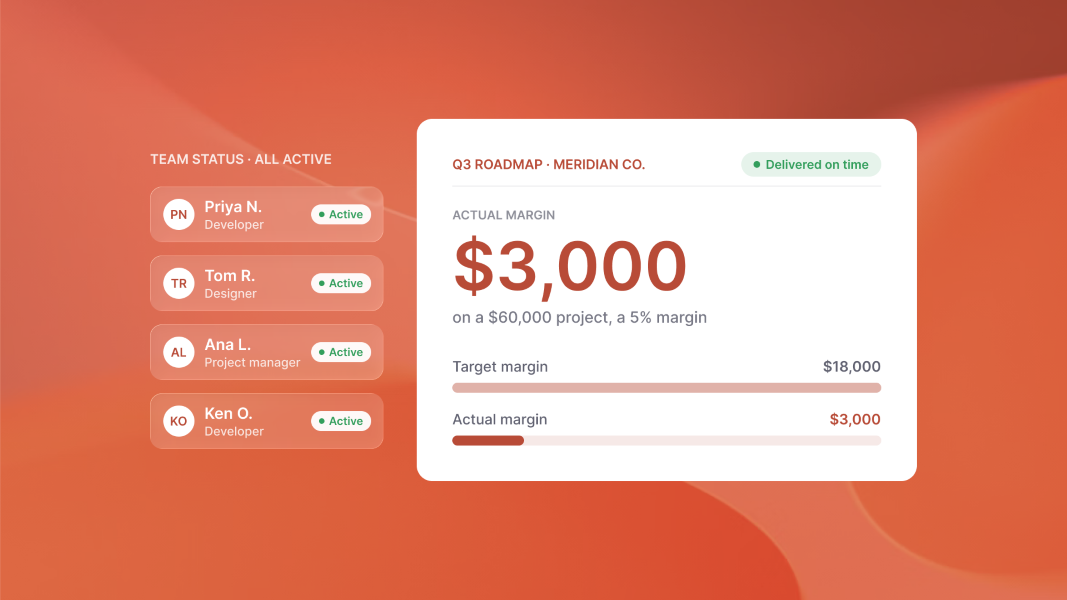
Your project manager just told you the $50,000 website build is complete. Three weeks later, your accountant tells you it lost $8,000.
Those three weeks? That's the profitability gap killing your agency.
Every agency owner knows this experience. Projects feel successful during execution: the team is busy, the client is happy, work is getting done. Then the monthly financial report arrives and reveals the truth. That profitable-looking project actually bled money. By the time you discover the loss, those billable hours are spent and the margin is gone forever.
This isn't an accounting problem. It's a visibility problem. Traditional time tracking counts hours worked but doesn't translate those hours into profit or loss during project execution. You're managing your business by looking in the rearview mirror, discovering problems weeks after they've already cost you money. The question isn't whether you'll lose margin on some projects. The question is whether you'll catch the leak before it compounds.
Half your peers are hemorrhaging 20% of their profits without realizing it
According to the Planable Agency Profit Margins Report 2026, 50% of agencies are missing out on at least 20% of their profits. That's not a rounding error or a temporary setback. That's a structural profitability crisis hidden inside what looks like operational success. These agencies have full calendars, satisfied clients, and busy teams. What they don't have is real-time visibility into which projects are actually making money.
The math is brutal but simple. A project budgeted at 40% margin can easily slip to 10% or turn negative if scope expands by 30%. But you won't know that happened until your monthly financial review reveals the damage. By then, the team has logged another 120 hours on similar projects, compounding the loss across your entire portfolio.
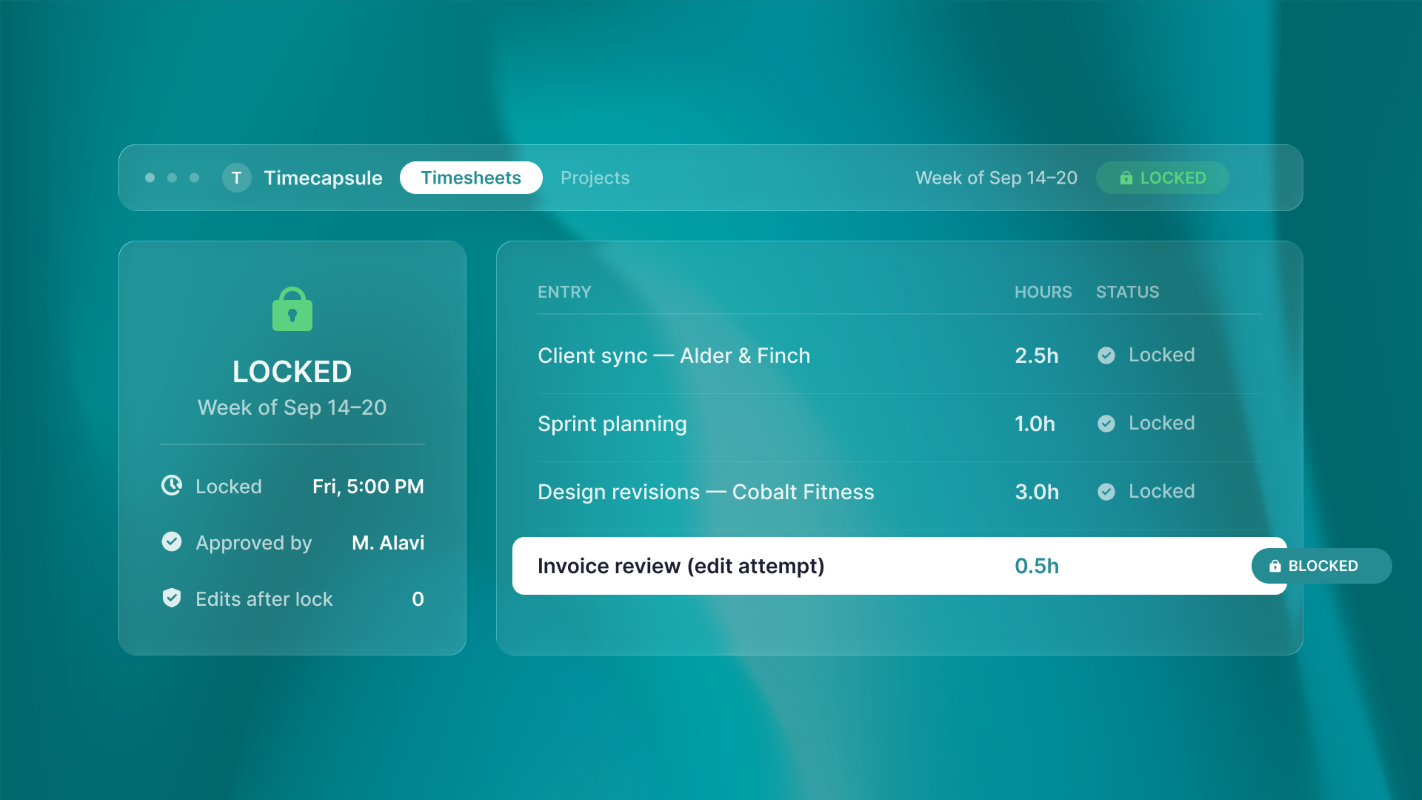
Platforms like Timecapsule solve this by monitoring agency profitability in real-time, catching margin erosion during execution rather than discovering it in post-mortems. The difference between these approaches isn't just timing. It's the difference between preventing losses and documenting them.
Scope creep kills margins silently during execution
According to the 4As Agency Operations Survey 2025, 22% of agencies say that overservicing and scope creep are the biggest threats to their profits. Here's why that matters: scope creep doesn't announce itself. There's no meeting where the team decides to work an extra 80 hours for free. It accumulates gradually through small decisions that feel reasonable in the moment.
The client asks for "one quick revision." The designer spends six hours perfecting a detail that wasn't in scope. The developer adds a feature "while we're in there anyway." Each decision is defensible individually, but collectively they transform a 35% margin project into a loss. Traditional time tracking only counts hours. It does not show how profits are affected. Because of this, people do not see what is happening until the project ends.
79% of agencies reported over-servicing clients without additional compensation, according to the FunctionFox 2025 Creative Industry Report. That's not occasional generosity. That's a systematic problem of working without visibility into the financial consequences of daily decisions. When you can't see profit eroding in real-time, you can't course-correct before the damage compounds.
Real-time visibility transforms guesswork into data-driven decisions
Here's what changes when you can see profitability during project execution rather than after completion. A project hits 75% of budgeted hours at 60% completion. Traditional time tracking tells you hours are being logged. Real-time profitability monitoring shows when a project is losing money. You have three options:
- Renegotiate the project scope with the client.
- Move resources to more efficient team members.
- Accept the loss and learn from it for future projects.
That's the difference between reactive and proactive financial management. Post-project reports tell you what happened. Real-time monitoring tells you what's happening and gives you time to intervene. When Islands manages development hours for different clients, they use Timecapsule to see which projects are profitable and catch overservicing before it becomes a habit.
The agencies winning on profitability aren't smarter about project estimates. They're faster at detecting when reality diverges from the plan and making adjustments while billable hours are still unspent. They've replaced monthly financial surprises with daily operational intelligence.
Financial reports are rearview mirrors, real-time tracking is your windshield
Post-project financial reports tell you where you've been. Real-time profitability monitoring shows you where you're going and whether you need to change course. Agencies that use retrospective reporting often react to problems that have already occurred. They find margin leaks after the money is lost.
In agency work, discovering you lost money after a project ends means you've already lost. The only question is whether you'll catch the next one in time.