.svg)
Why post-project profitability analysis is just an autopsy

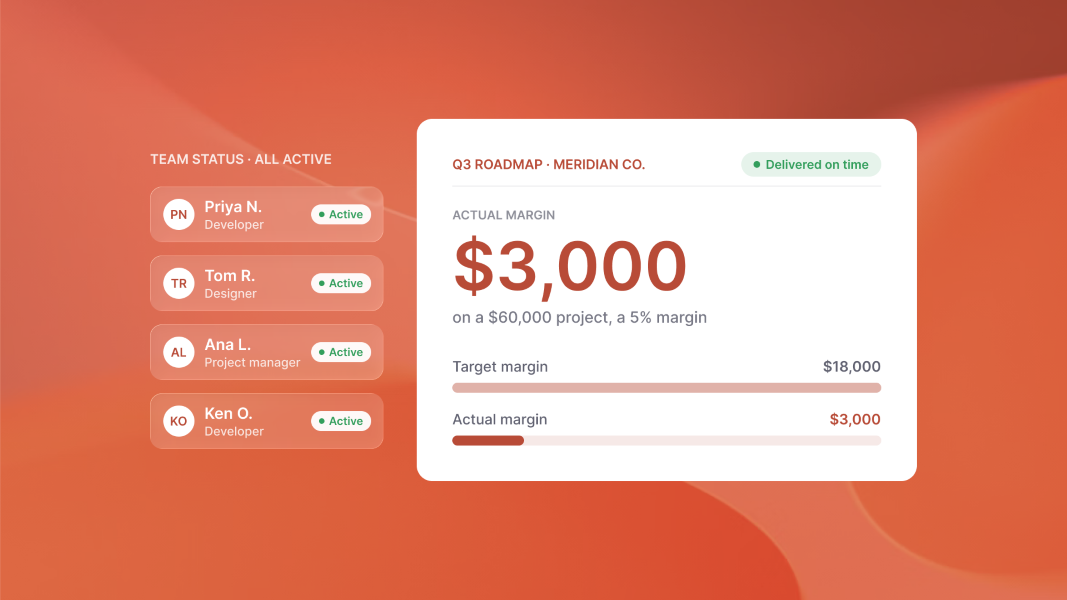
You delivered the project on time. The client was happy. Then you ran the numbers and realized you lost money.
This isn't a finance problem.
It's an operational failure that costs agencies 15-30% of possible revenue every year. You're discovering profitability problems only after projects end, when there's zero opportunity to fix them. The project wrapped, invoices went out, and then financial analysis revealed you were underwater the entire time. By then, you've already absorbed the loss with no mechanism to adjust scope, pricing, or resource allocation.
The industry-wide profitability crisis
Only 35% of agencies hit key profitability benchmarks, according to the TMetric Marketing Agency Benchmarks 2025. The rest are leaking 15-30% of possible revenue through poor time tracking and delayed visibility. Even more striking: 50% of agencies leave at least 20% of their profits untapped simply because they discover losses too late to act, per the Planable Agency Profit Margins Report 2025.
The pattern is consistent across the industry. Agencies run post-project financial reviews, identify where projects went over budget, and promise to "do better next time." But there is no next time for that specific project's margin erosion. You've already paid the developers, absorbed the scope creep, and sent the invoice based on estimates that turned out to be wrong.
How margin erosion happens invisibly
Profitability doesn't collapse in one catastrophic moment. It erodes gradually during projects through invisible non-billable time and scope creep. A developer spends three hours debugging an edge case that wasn't in the original scope. A project manager joins five client calls that weren't billable. A designer creates two additional revision rounds beyond what was quoted.
Without real-time categorization of billable versus non-billable hours, you can't identify which specific activities are draining agency profitability until the final invoice reconciliation reveals the damage. Tools like Timecapsule enable agencies to monitor project profitability in real-time, catching margin erosion while there's still time to adjust course.
The 20-30x profitability difference
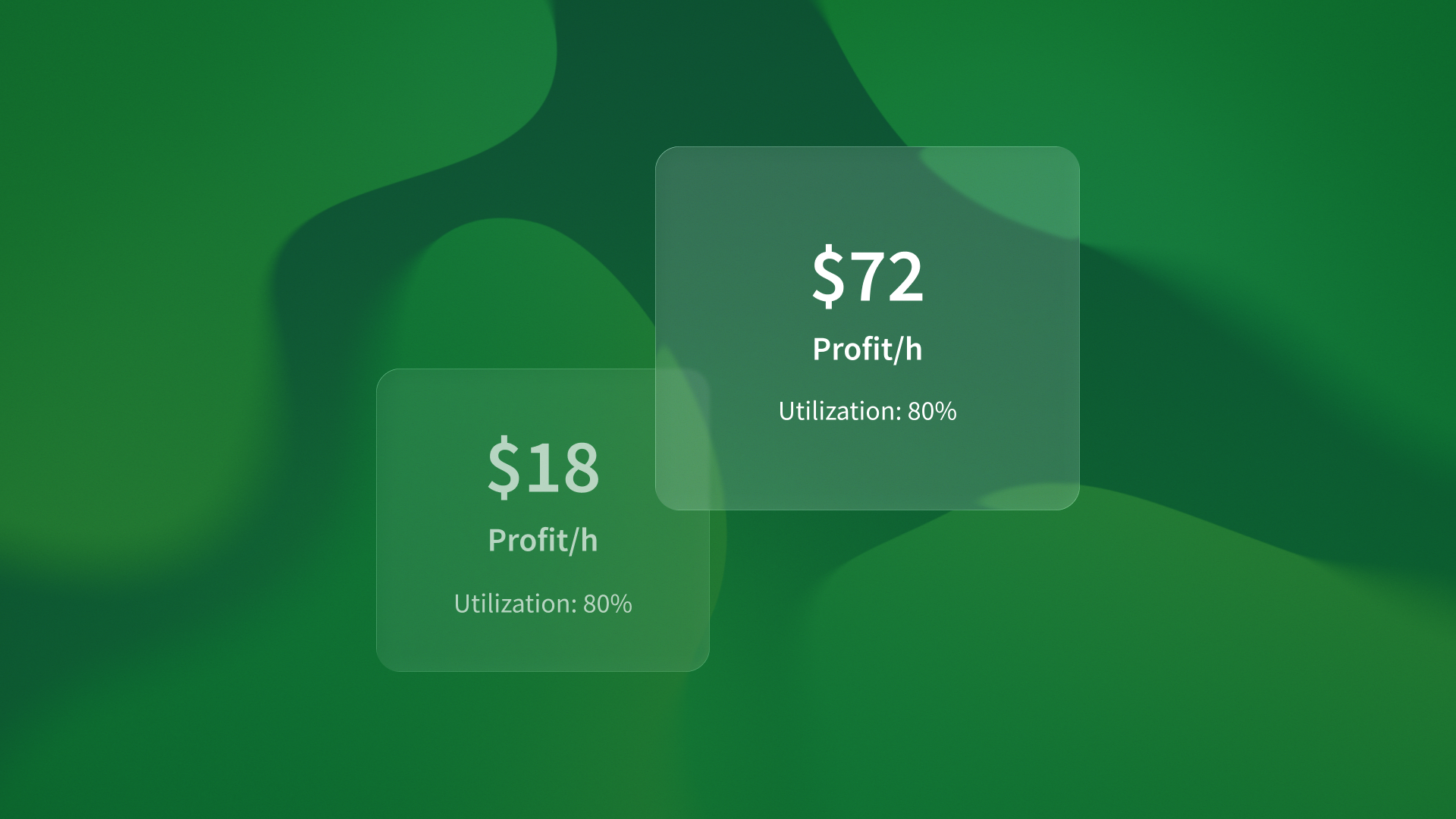
Agencies with utilization tracking declare profitability 20-30 times higher compared to working without visibility, according to TMetric's research. That's not a marginal improvement from better spreadsheets. That's the difference between running a profitable business and subsidizing client work without knowing it.
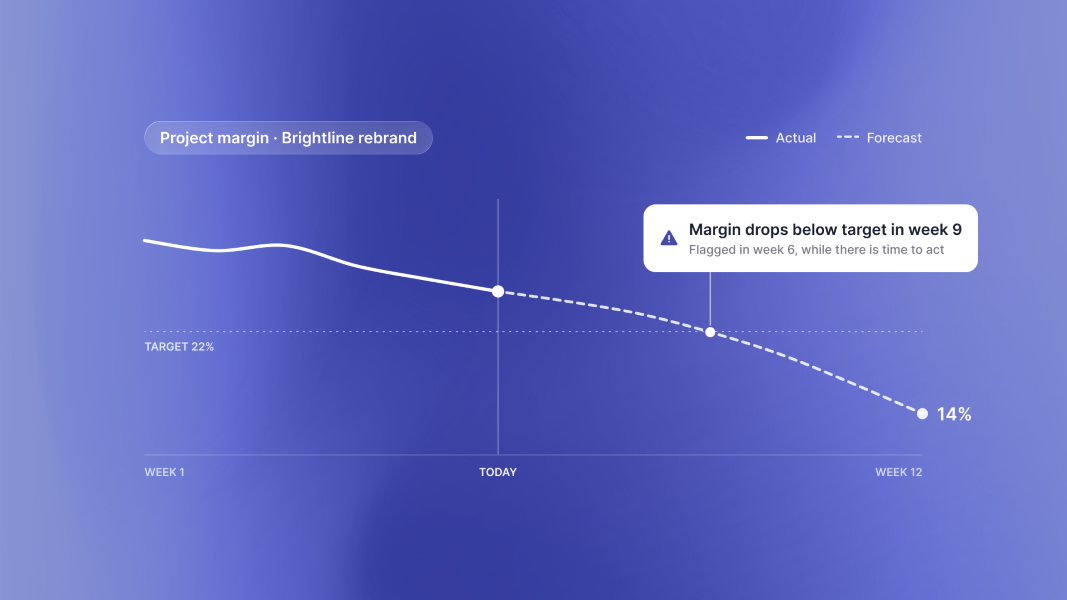
Real-time project monitoring creates this magnitude of improvement because it enables course correction while projects are still running. When you see billable hours tracking below target in week two of a six-week project, you can adjust scope, have pricing conversations, or reallocate resources. When you discover the same problem in post-project analysis, you can only document what went wrong.
Post-project analysis is an autopsy
Here's the definitional reframing: Post-project profitability analysis isn't financial management. It's an autopsy. You're examining what killed the margin after the patient is already dead. The only agencies hitting profitability benchmarks are the ones who caught problems while projects were still alive and could be saved.
This isn't about better reporting. It's about whether you're running a profitable business or subsidizing client work without knowing it.