.svg)
Why tracking billable hours doesn't track profit


Your agency tracked 240 billable hours on a project. The client paid every invoice on time. You still lost money.
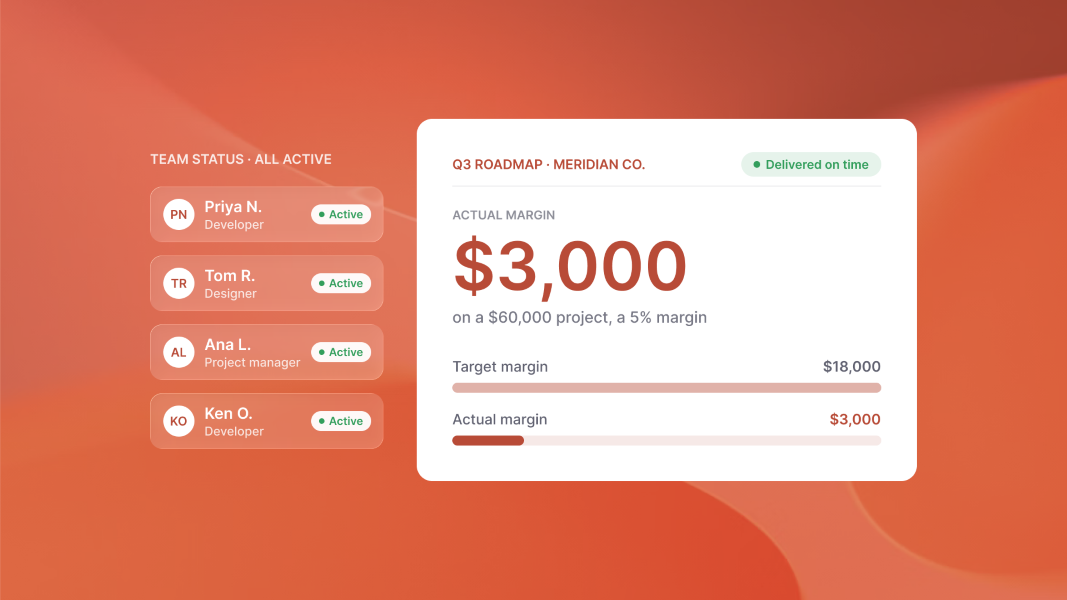
A $50,000 project with clear hourly rates. Diligent time tracking. Full payment. Every hour logged, every timesheet approved, the invoice went out and the client paid. Then you ran the actual numbers: total team costs, non-billable hours, scope additions. The project delivered a 3% margin instead of the planned 20%. This happens because tracking billable hours doesn't track profitability. It ignores the erosion happening between logged hours and actual costs.
This isn't an edge case. 50% of agencies are leaving at least 20% of their profits untapped (Planable 2025). The problem isn't that hours aren't being tracked. It's that agency profitability tracking isn't visible until the final invoice reveals the damage. When your baseline margin is 15-20%, a 10% tracking error doesn't reduce profit, it eliminates it entirely.
The gap between hours logged and money made
Most agencies measure billable utilization religiously. They know exactly how many hours each team member logged this week. They track billable versus non-billable time. They monitor project budgets against hours consumed. All of this creates a dangerous illusion: if we're tracking hours, we're tracking profitability.
But billable hours only tell you what you can invoice. They don't tell you what the project actually cost. Here's what hour tracking misses: scope creep that adds unbillable work, internal meetings about the project, rework from unclear requirements, underestimated tasks that eat margin while billable counts look fine. These are the invisible profit killers that erode margins while your time tracking dashboard shows green.
Only 35% of agencies hit every key benchmark, while the rest leak 15-30% of possible revenue through sloppy time tracking and runaway scope (TMetric 2025). This means tracking hours alone doesn't prevent profit erosion. You can count every hour and still lose money because you're measuring activity, not profitability.
When you discover the loss
The problem with traditional time tracking is timing. You see the full cost picture after project completion, when you can't adjust scope, pricing, or resource allocation. The project closes, the invoice goes out, and then you calculate actual profitability. By then, there's zero opportunity for course correction.
This is the fundamental flaw in reactive tracking systems. They tell you what happened, not what's happening. Average profit margins for marketing agencies hover around 15-20% (Ravetree 2025), leaving little room for error. When margins are this thin, discovering unprofitability after invoicing means the damage is permanent.
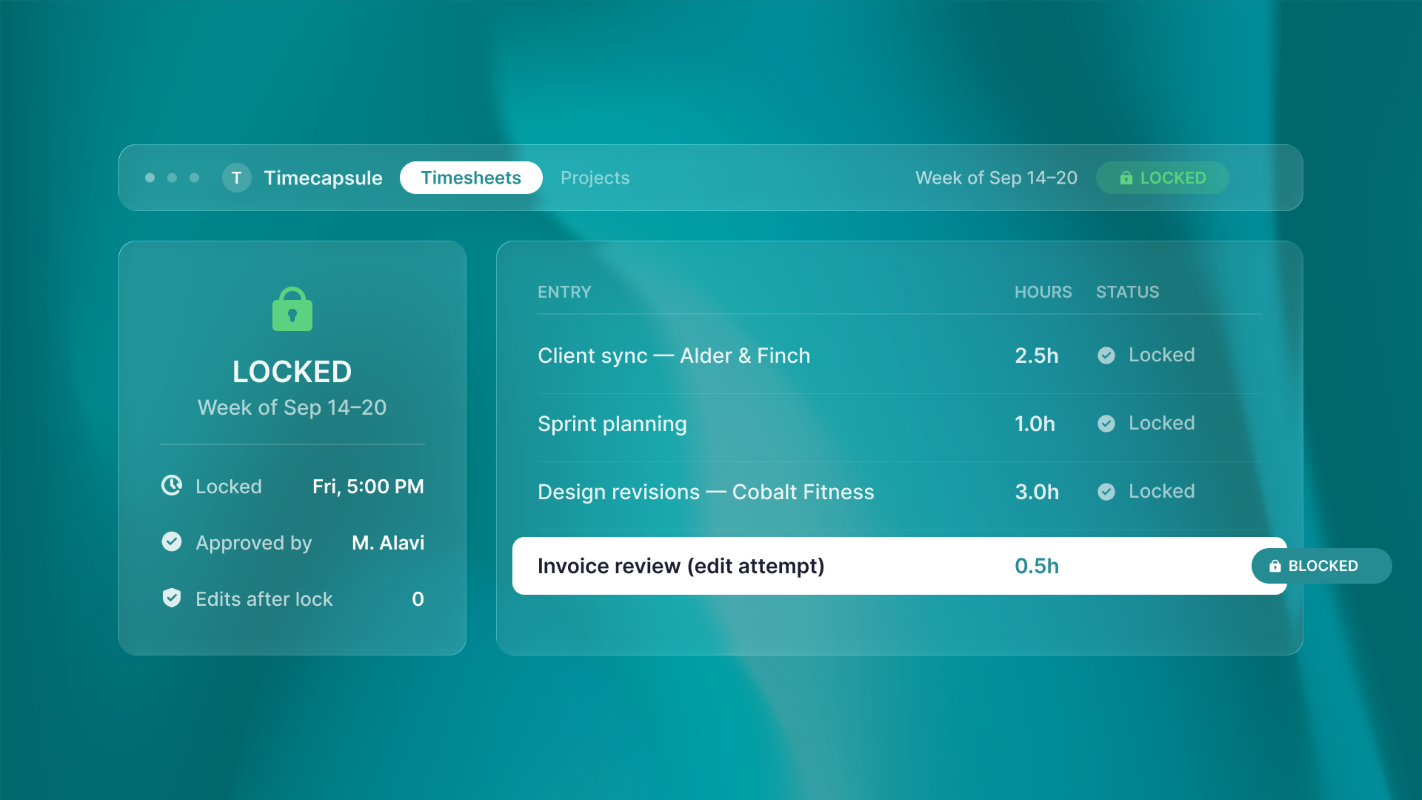
Platforms like Timecapsule shift this equation by tracking project profitability in real time, not after the fact. When Islands manages multiple client engagements simultaneously, real-time visibility means they can spot margin erosion while there's still time to adjust scope or resource allocation, not after the project closes.
The strategic shift
Time tracking is a feature. It tells you what happened. Project profitability tracking is a competitive advantage. It tells you what's happening in time to act. This distinction matters because agencies can't manage what they can't see. By the time traditional tracking shows the problem, the project is closed and the margin is gone.
The difference between discovering losses and preventing them comes down to visibility timing. Reactive systems show you profitability after invoicing. Proactive systems show you margin erosion while you can still do something about it. When half of all agencies are leaving 20% of profits on the table, the competitive edge belongs to those who see the problem before it becomes permanent.