.svg)
How scope creep silently erodes agency margins by 20-27%


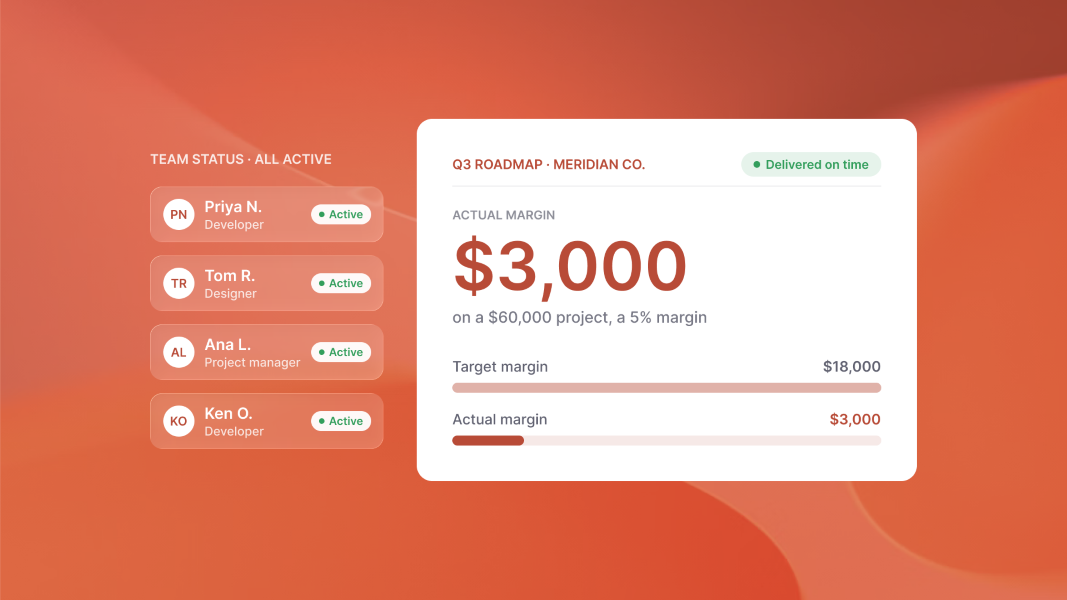
Your agency delivered a $50,000 project on time. The client was thrilled. Then you calculated actual profitability and discovered you made $4,000 instead of the expected $15,000.
Here's what happened. The project started clean with defined deliverables and clear scope. But small additions accumulated throughout execution. An extra round of revisions here. An unplanned feature there. A few internal strategy meetings about handling the expanding requirements. Each addition seemed minor in isolation. Together they consumed 85 additional billable hours at your blended rate. The math is brutal: 85 hours × $150/hour = $12,750 in uncompensated work. Your 30% margin project just became an 8% margin project. This is the hidden cost of scope creep and profit loss. It happens quietly while everyone thinks the project is going well.
This isn't an isolated incident. Construction industry studies show 85% of projects experiencing scope creep exceed their initial budgets by an average of 27%. The Project Management Institute reports that almost 50% of projects overspend. This is mainly due to scope creep, poor forecasting, and changing conditions. PMI's research reveals unchecked scope creep can cost businesses up to 20% of annual revenue. For a $500K agency, that is $100K in lost profit each year. That is enough to fund two senior hires. It could also support large profit distributions.
The visibility gap that kills profitability
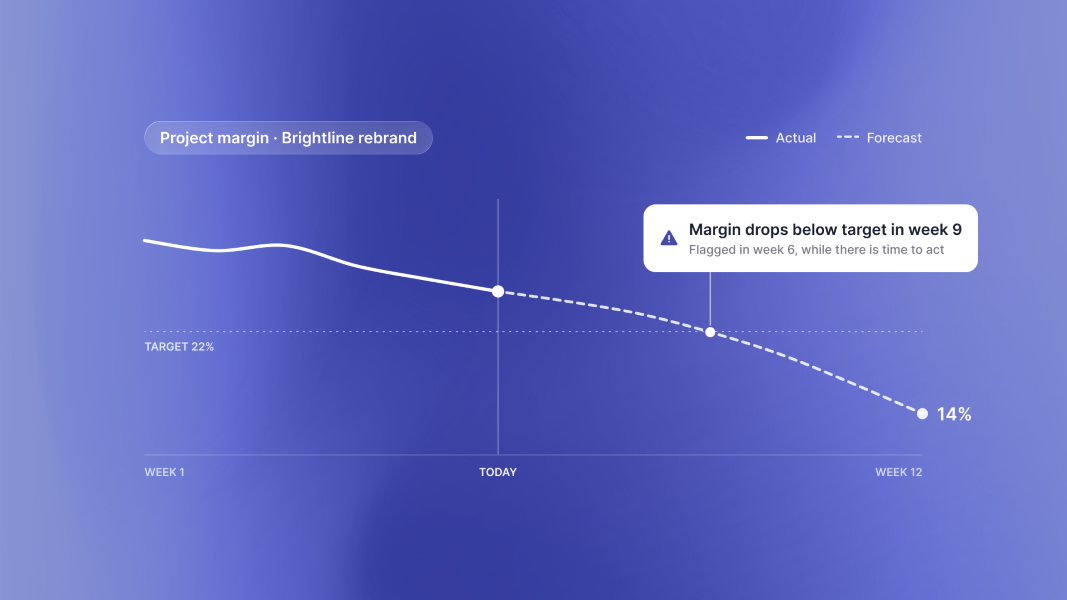
The fundamental problem isn't scope changes themselves. The problem is timing. Traditional project management discovers scope creep losses after invoicing, when no corrective action is possible. You track billable hours diligently. The project shows 120 hours logged and looks healthy in your time tracking system. Only when you check the original scope do you see that 40 hours were unplanned additions. Those hours were not priced into the contract.
Most agencies operate with this visibility gap. They know how many hours the team worked. They know what the original estimate was. But they don't connect those data points to real-time profitability calculations during project execution. The result is consistent: you discover margin erosion when you can only document it, not fix it. The invoice goes out. The client pays the agreed price. You absorb the loss.
Tools like Timecapsule solve this problem. They track project profit in real time. They link billable hours to budget forecasts as work happens. When Islands manages multiple client engagements simultaneously, real-time profitability tracking reveals which projects are trending toward losses before final invoicing crystallizes the damage.
What real-time profitability tracking enables
When you can see profitability eroding during project execution, you can take corrective action. Three specific interventions become possible: scope renegotiation with clients, resource reallocation to more profitable work, or pricing adjustments for future similar projects. The key is catching the problem when intervention is still possible, not when you're retrospectively documenting what went wrong.
Consider the $50,000 project scenario again, but with real-time visibility. At hour 80, your system flags that you've consumed 67% of budgeted hours but completed only 52% of deliverables. That's your signal. You can renegotiate the remaining scope with the client, explaining that additional features require a change order. Or you can reallocate senior resources to more profitable projects and assign junior resources to finish this one. Or you can document the actual effort required and adjust pricing for the next similar project. All three responses preserve profitability. None are possible if you discover the problem after invoicing.
.png)
From project management to business intelligence
Most content about scope creep focuses on prevention through better requirements gathering, change request processes, and stakeholder communication. These tactics are valuable but insufficient. Scope creep often happens even with best practices because client needs change, requirements become clearer, and conditions shift. The competitive advantage goes to agencies that can see profitability impact in real-time and make mid-project adjustments.
This shifts the problem from project management to business intelligence. You're not trying to prevent all scope changes - you're trying to catch profit erosion early enough to respond. That requires different capabilities than traditional project management tools provide. Hour tracking shows productivity. Budget tracking shows spending. Profitability tracking shows whether those hours are generating the margins you planned. That change in visibility decides if you spot problems while you can still fix them. Or you spot them later, when you can only document them.
Agency profit margins depend on this intelligence gap. The agencies that thrive aren't necessarily better at estimating or negotiating, though those skills help. They're better at seeing profit erosion while projects are in progress, when corrective action is still possible. Time tracking is productivity data. Profitability tracking is business intelligence.