.svg)
Why traditional time tracking can't catch scope creep's profit impact


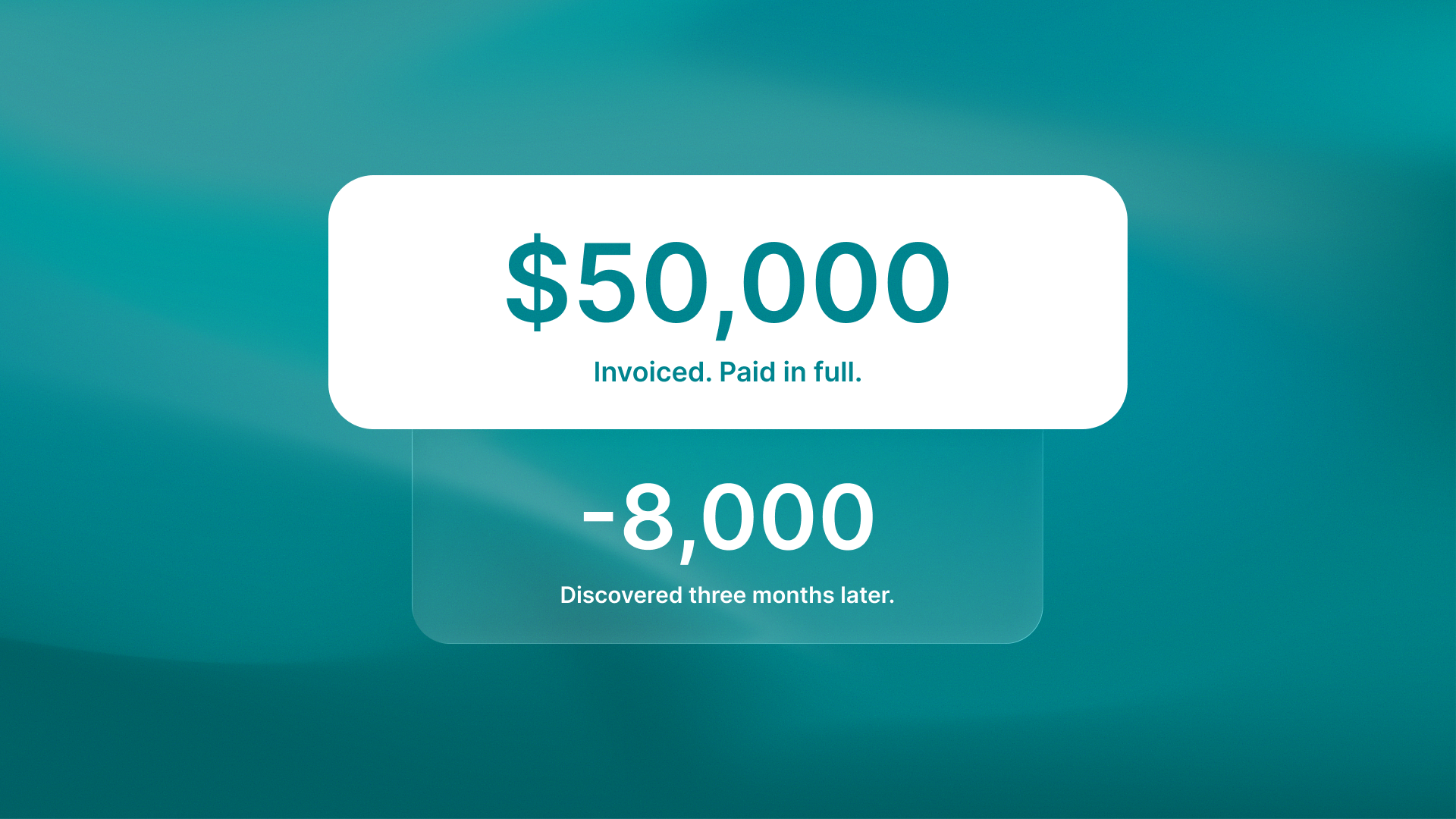
Your team delivered a $50,000 project on time. The client sent a glowing testimonial. Your time tracking showed 420 billable hours logged. You lost $11,000.
How did that happen?
You tracked every hour. You monitored utilization rates. You generated invoices on schedule. But traditional time tracking shows what your team worked on, not whether that work was profitable. The 420 billable hours included 180 hours of scope creep you never caught until the post-mortem revealed the damage.
That's not a time tracking problem. That's a visibility problem.
Scope creep is the silent profitability killer
4As Agency Operations 2025 reports that overservicing and scope creep are the biggest profitability hurdles for 22% of agencies. The financial impact is massive. Data from PMI and Asana 2025 shows 55% of projects have scope creep. The average cost overrun is 27%. A $50,000 project with 27% overrun means $13,500 in unplanned costs, often absorbed as non-billable hours that never hit the invoice.
But here’s the reality many agencies miss: they don’t see margin loss until a post-mortem shows the damage. By then, the client relationship is closed, the team has moved to new work, and the margin loss is permanent.
The math that destroys profitability
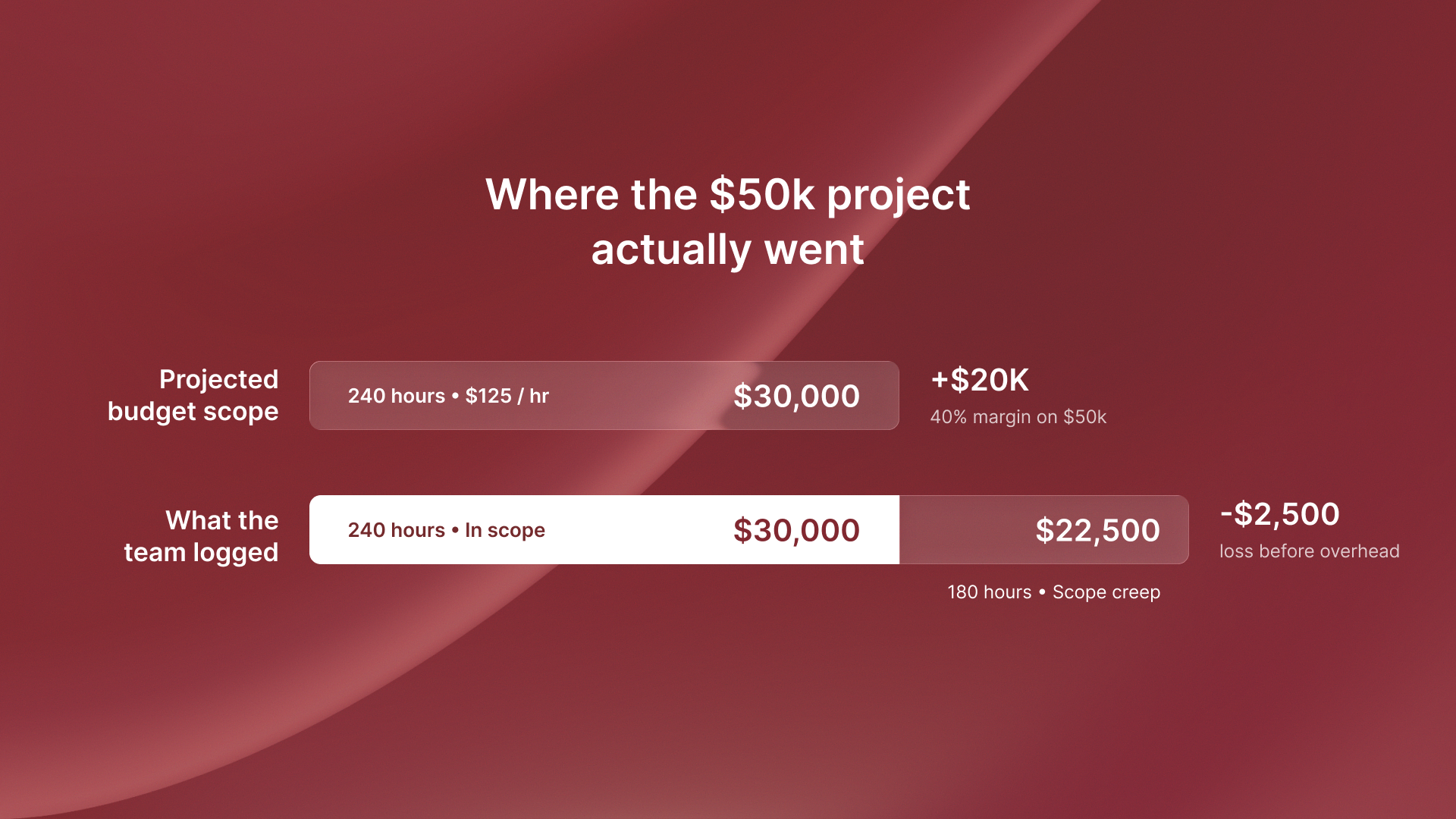
Here's what the $50,000 project breakdown actually looked like:
- Budgeted hours: 240 at $125/hour = $30,000 cost
- Actual hours worked: 420 total (240 billable + 180 scope creep)
- Actual cost: 420 hours at $125/hour = $52,500
- Revenue collected: $50,000 (original scope)
- Net result: $2,500 loss before overhead
Time tracking showed 420 hours logged and classified them all as billable. What it didn't show: 180 of those hours were out-of-scope work that should have triggered a change order conversation. The utilization report looked great. The profitability disappeared.
Project profitability failure is the industry norm
Forecast and Cactus 2025 research shows that 90-95% of agencies do not see projects as profitable. Only 9% report achieving project profitability. That means nearly every agency is losing money on what looks like successful client engagements. The root cause: discovering unprofitability too late to course-correct.
Most agencies run monthly profitability reports that show which projects lost money last month. Great. That information would have been useful three weeks ago. We still had budget then. We could have negotiated scope changes or reallocated resources. Monthly hindsight doesn't preserve margin, it documents margin loss.
Traditional time tracking creates a dangerous illusion
Agencies track hours closely and meet utilization targets, yet still lose money. Time tracking doesn’t separate scope-approved billable work from scope-creep, non-billable work. Your dashboard shows team activity and hours logged. It doesn’t show if those hours match the original scope. It also doesn’t show if they reflect added work. The client may not have paid for it.
The illusion works like this. High utilization rates suggest productivity. Total billable hours suggest revenue. Completing a project suggests success. None of those metrics reveal whether the work being tracked is profitable. By the time monthly reports aggregate the data and show overservicing, the margin damage is already permanent.
What visibility you're actually missing
Traditional time tracking answers "What did the team work on?" The question that determines profitability is "Was that work within the contracted scope and budget?" Without real-time comparison of costs against revenue and scope, you're flying blind until the project closes.
Real-time profitability visibility is the only operational defense
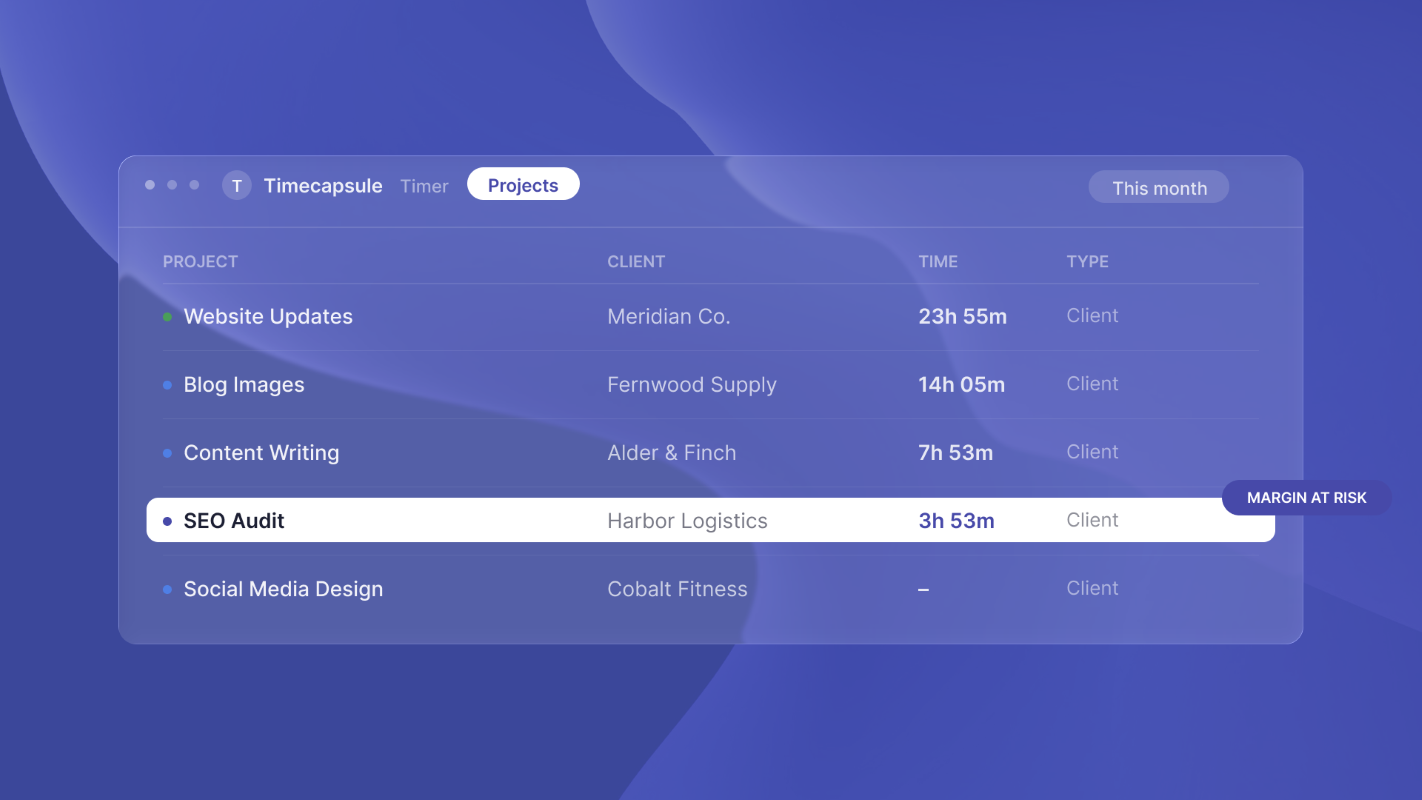
Catching scope creep needs you to track cost versus revenue and billable versus non-billable during active projects. Not after they close. Platforms like Timecapsule provide live profitability tracking that flags margin erosion during execution, when corrective action is still possible.
The 9% of agencies achieving profitability have real-time visibility into whether billable hours translate to profit during project execution. When Timecapsule users see a project trending 15% over budget in week two, they can act at once. They can course-correct right away and save 15-20% more margin than agencies that find overruns after the project ends.
Agencies like Islands use fractional CTO services to manage dev hours across many client projects. QA flow tracks development time for autonomous testing features.They report catching scope creep 40–60% faster with live visibility. The operational difference isn't prevention, it's detection speed. Scope creep happens. The question is whether you find out while there's still project budget left to do something about it.
Time tracking tells you what happened. Project intelligence tells you what's happening while you can still do something about it.