.svg)
How Time Entry Locking Eliminates Invoicing Back-and-Forth

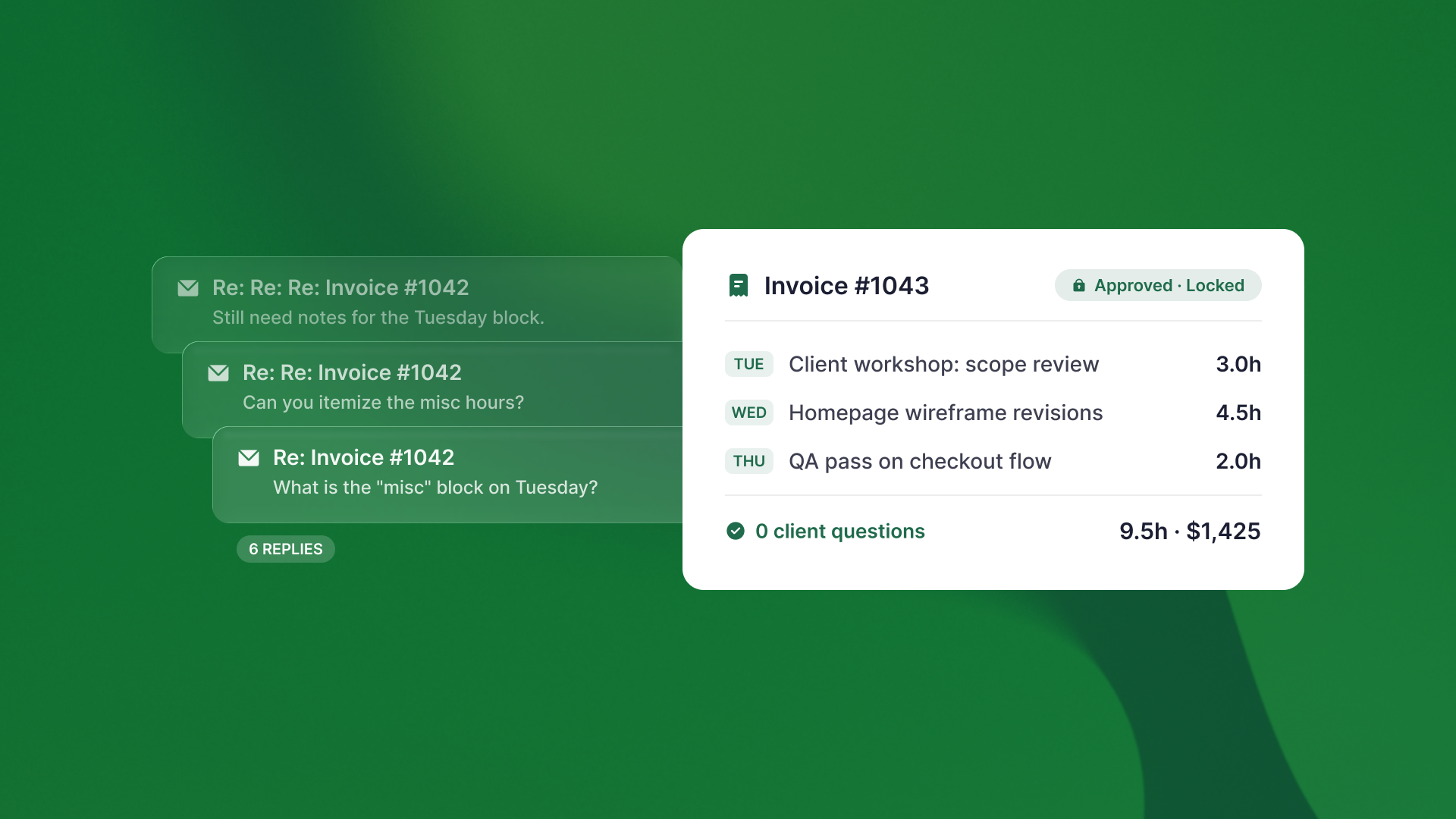
You billed for 40 hours, but your client is questioning the miscellaneous block on Tuesday. By the time you find the notes to justify the charge, you have already lost the profit on that hour. This gap between work performed and invoice issuance is the reconciliation tax: a silent margin killer that plagues professional services firms. Implementing a strict policy for time entry locking is the most effective way to eliminate this administrative friction. For efficiency-driven small businesses, timekeeping must shift from a suggestion to a financial control. To protect your profitability, you must move from activity tracking to a locked governance model. Activity is a metric. Governance is a profit strategy.
The myth of the flexible timesheet and time entry locking
Many agency owners believe that allowing staff to edit timesheets until the end of the month is a benefit. It is not. It is a liability. When you allow retrospective edits, you invite human error and memory decay to compromise your data integrity. I have observed that many firms routinely lose 10 to 15% of billable time to poor tracking practices. Using automated time logging ensures that every minute is accounted for as it happens, rather than being reconstructed from memory. This time slips through the cracks between starting work and logging it. This creates a revenue leak that is impossible to plug without real-time profitability monitoring.
Why retrospective edits trigger disputes
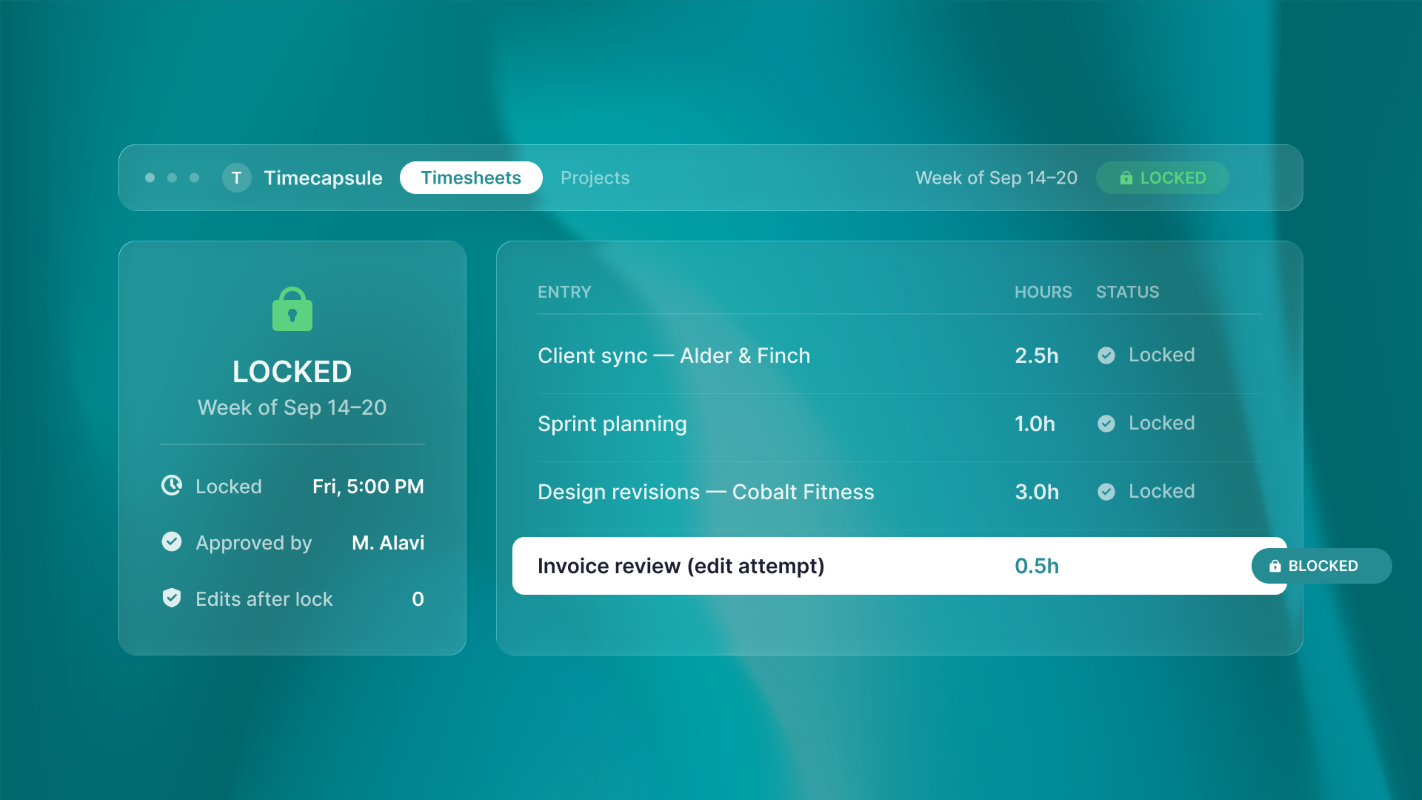
Client disputes rarely stem from the quality of work. They stem from a lack of transparency. When a consultant changes an entry three weeks after the fact, the link between the task and the value disappears. Automated time entry locking prevents the retrospective edits that trigger client invoicing disputes by ensuring records are finalized while the context is fresh. I have observed that agencies using immutable time entry locking report significantly fewer disputes compared to spreadsheet-driven workflows. Locking entries at the point of approval ensures that once a record is verified, it cannot be tampered with. This creates a trust document rather than a negotiation starting point.
The cost of manual reconstruction
Manual reconciliation is a massive administrative drain. A 10-person agency often burns 4 to 8 hours per cycle on manual timesheet-to-invoice reconciliation. Eliminating the back-and-forth during the month-end closing process saves project managers hours of billable capacity and reduces the administrative overhead for finance coordinators. These administrative complexities include:
- Lost billable capacity for project managers
- Increased billing delays that drop revenue visibility
- Higher administrative overhead for finance coordinators
Protecting retainer integrity with retainer billing software
Time entry locking is a governance mechanism. It prevents users from modifying time records after they reach a specific state, such as approval or the end of a billing period. This ensures that the data used for invoicing matches the work performed in real time. Timecapsule utilizes time locking to ensure the integrity of retainer billing and budget tracking by creating a permanent record of hours as they are approved. Modern retainer billing software provides the necessary guardrails to keep these records accurate. By enforcing a locked state, the system creates a tamper-proof audit trail. This serves as a control for legal disputes and incident reviews to help reduce billing disputes by 40%.
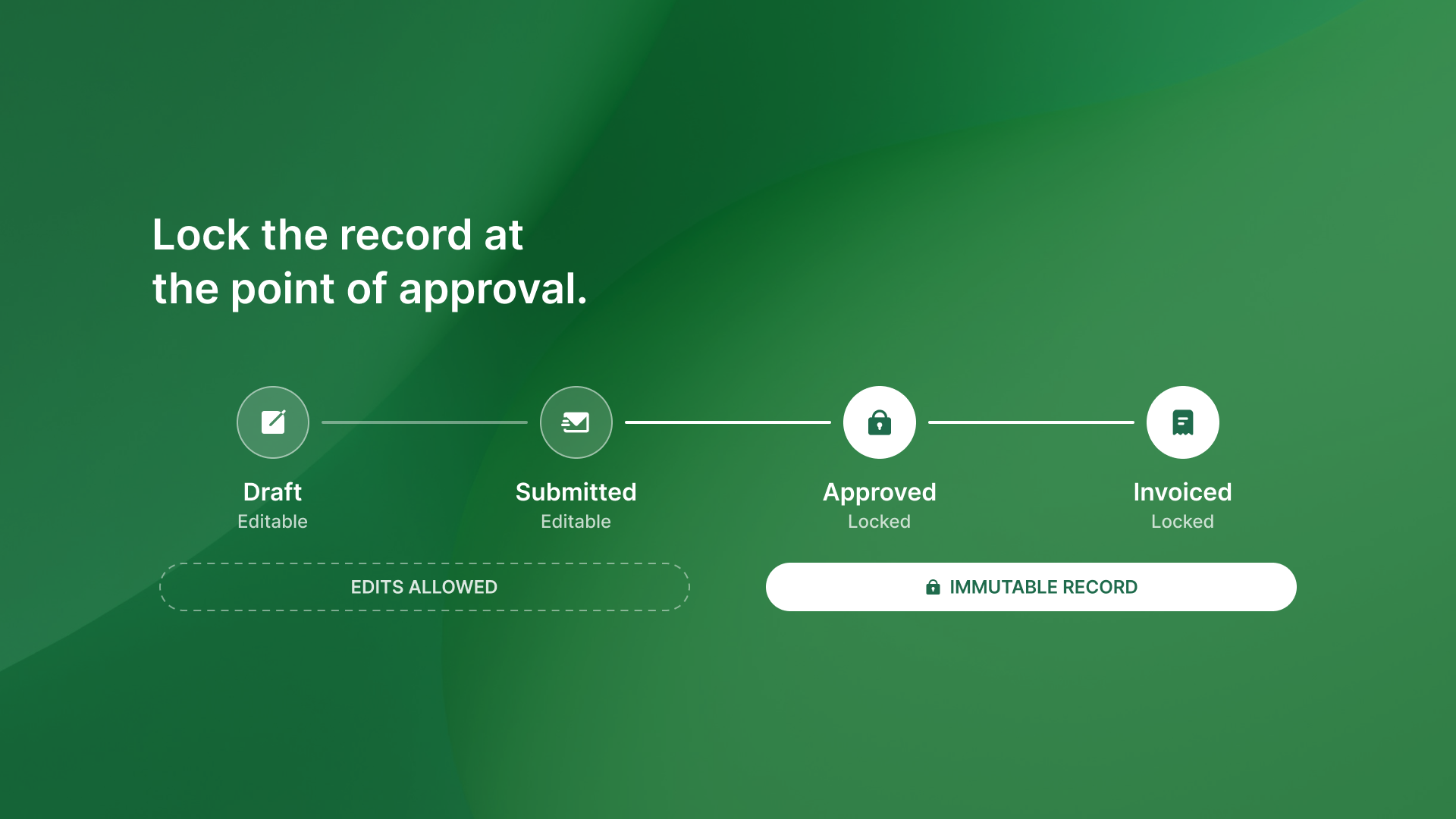
Locking at the point of approval
In a professional services context, automated capture still needs human confirmation. However, once that confirmation happens, the record must be immutable. Locking at the point of approval prevents the retrospective drift that causes billing leakage. Supporting a full lifecycle from Draft to Approved is essential for maintaining data integrity. Integrity is not optional.
Descriptive logs vs. generic entries
Generic entries like "client work" are an invitation for an invoice dispute. I always recommend that teams use automated capture to produce measurements rather than estimates. Specific, descriptive logs created at the point of work provide billing transparency that makes invoices clear. When a client sees exactly what they are paying for, the back-and-forth disappears.
The math: automation vs. manual reconciliation
When you compare a manual tracking system to an automated, locked model, the financial logic becomes clear. The administrative savings alone justify the transition.
- Manual Prep Time: 8 hours per cycle spent re-keying data and chasing consultants.
- Automated Prep Time: Under 2 hours per cycle focusing only on edge-case exceptions.
- Revenue Recovery: Capturing the hours lost to unbilled scope creep.
- Dispute Reduction: A 40% drop in invoice corrections due to workflow-integrated tracking.

Essential features for billing governance
Small businesses managing complex retainers need more than a simple timer. You need a system that integrates with your financial workflow. Look for these four critical features in the best software for managing complex retainer billing cycles:
- Full Timesheet Lifecycles: The software must support Draft, Submitted, and Approved states with locking at approval.
- Finance-Ready Reporting: Connect work hours directly to billing rates and project budgets without manual exports.
- Automated Capture: Replace end-of-period memory tests with governance-enforced logging at the point of work.
- Audit Trails: Ensure hash-linked records or write-once retention controls to prevent record tampering.
What to do next: implementing a locking policy
- Audit your current leak: Calculate how many hours your team spends on reconciliation and how many invoices are disputed monthly.
- Define the lock window: Set a clear policy, such as locking all entries 48 hours after the work week ends.
- Transition to automated time tracking software: Move away from spreadsheets and implement a platform like Timecapsule that enforces your locking policy.
- Train for specificity: Require team members to use descriptive logs rather than generic task names.
Manual tracking is an estimate. Locking is a measurement.
Review our scalable pricing structures to determine which efficiency-driven plan aligns with your organizational requirements.