.svg)
How to calculate project profitability in real-time


Your agency delivered a $50,000 project on time and on budget. The client paid in full. Three months later, during quarterly review, you discover the project lost $8,000. How did hours tracked and invoiced turn into a loss you never saw coming?
You tracked hours and billed them. But you never calculated whether those hours generated profit or loss. You didn't account for fully-loaded labor costs, overhead allocation, and non-billable time. That's not time tracking. That's profit monitoring.
This isn't an isolated mistake. 21.5% of agencies are losing money, up from 13% the previous year. Only about one-third of agencies hit every key profitability benchmark. The rest leak 15-30% of potential profit through scope creep, poor time tracking, and misaligned pricing. Time tracking tells you what was worked. It doesn't tell you whether those hours created profit or loss.
Why tracking hours doesn't reveal profit
Your project manager logged 100 billable hours at $150/hour. You invoiced $15,000. But that developer's fully-loaded cost wasn't $75/hour. It was closer to $95-110/hour when you account for benefits, payroll taxes, software licenses, and allocated office overhead. Your $75/hour freelancer actually costs $95-110/hour once platform fees, payment processing, onboarding time, and revision cycles get factored in.
Then there's the non-billable time:
- Internal status meetings
- Client communication
- Scope clarification
- Administrative work
All real labor costs. All invisible until after invoicing. When you choose between fractional marketing specialists versus full-time hires, you may face hidden coordination costs. These costs can add up across every outside resource.
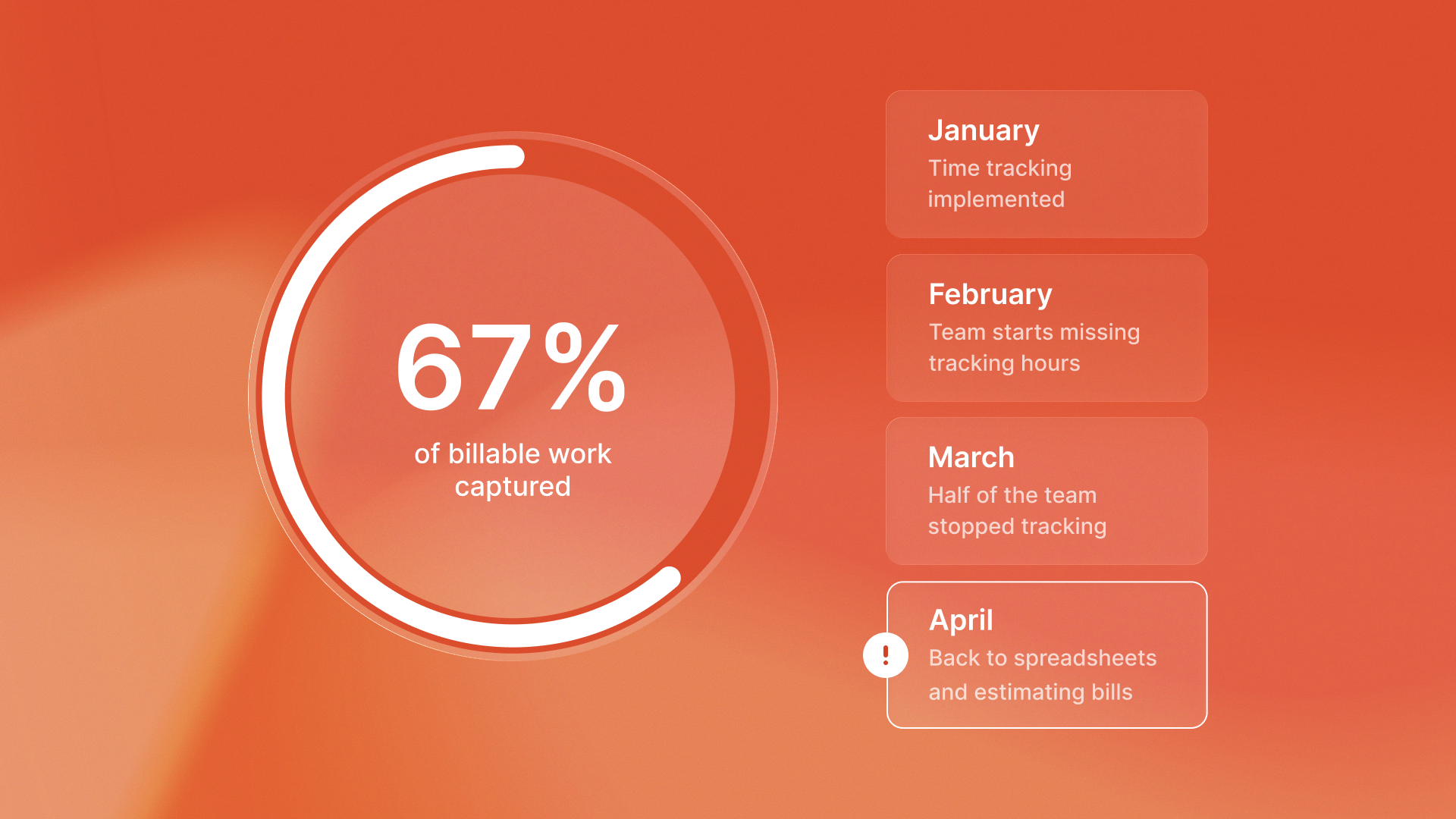
59% of agencies tracked individual project margins, with the average project margin at 35%. But tracking margin after the fact is just an autopsy. Post-project profitability analysis arrives too late to prevent margin erosion. You need the calculation during execution. That's when you can still adjust staffing, scope, or pricing.

The five-step framework to calculate project profitability in real-time
Here's what most agencies miss: learning how to calculate project profitability requires more than dividing revenue by hours. You need five specific calculations running throughout the project lifecycle. This project profitability formula tracks agency project profitability from kickoff through final invoice.
Calculate fully-loaded labor rates
Take your developer's $75/hour base rate. Add 25-30% for benefits and payroll taxes. This brings the rate to $93.75-$97.50/hour. Now allocate overhead: office space, software subscriptions, equipment depreciation. For most agencies, this adds another $12-18/hour. Your true labor cost is now $105.75-$115.50/hour, not the $75/hour you budgeted.
Allocate overhead to every project hour
Divide your monthly overhead by total billable capacity. If you run $50,000/month in overhead and have 800 billable hours of capacity, that's $62.50/hour in overhead allocation. Every project hour carries this cost whether you bill for it or not. Projects absorb overhead proportionally based on resource consumption. The same incomplete cost visibility that creates the QA budget illusion can hide your true costs. They can turn your $150,000 project budget into $900,000 in real costs.
Track budget burn rate against deliverables
If you're 40% through deliverables but have consumed 65% of the project budget, your burn rate reveals a margin problem. And you still have time to correct it. Budget burn rate is consumption velocity. It shows how fast you're spending relative to value delivered. This catches scope creep before it kills profitability. Understanding how to calculate project profit means tracking this velocity weekly, not discovering it during post-mortems.
Run incremental margin calculations at milestones
At the 25% milestone: revenue earned minus fully-loaded labor costs minus allocated overhead. If your project margin calculation is trending below 30%, you're on track for a loss. Agencies that calculate project profitability in real-time can identify margin erosion early. They can adjust staffing, scope, or pricing while projects are active.
Analyze variance between planned and actual
Compare planned hours to actual hours, budgeted costs to real costs, estimated margin to current trajectory. Variance reveals where the project is bleeding. It shows inefficient resource allocation, underpriced estimates, or uncontrolled scope expansion. Weekly variance analysis turns agency profit margins monitoring into operational discipline.
Why this matters more than ever
The gap between tracking hours and tracking profit is knowing you billed 100 hours. It is also knowing if those 100 hours made a profit or a loss. Basic time tracking shows hours worked. The five-step framework shows profit earned or lost. Companies struggle with the same measurement problem when calculating AI agent ROI. They often use simple time-saved formulas, instead of tracking true economic impact.
Agencies that calculate profitability in real-time during active projects can course-correct before losses accumulate. Agencies that rely on post-project reviews are conducting autopsies. They document what killed the margin but can't revive it. The competitive edge belongs to operators who see profit erosion while there's still time to act.
The question isn't whether you tracked the hours. It's whether those hours created profit or loss. Private label beauty brands understand this principle when they calculate true product profitability. They account for all costs, not just manufacturing. Thought leadership investments work the same way: measuring ROI means tracking influence on deal speed and win rates. It is not just about content hours.
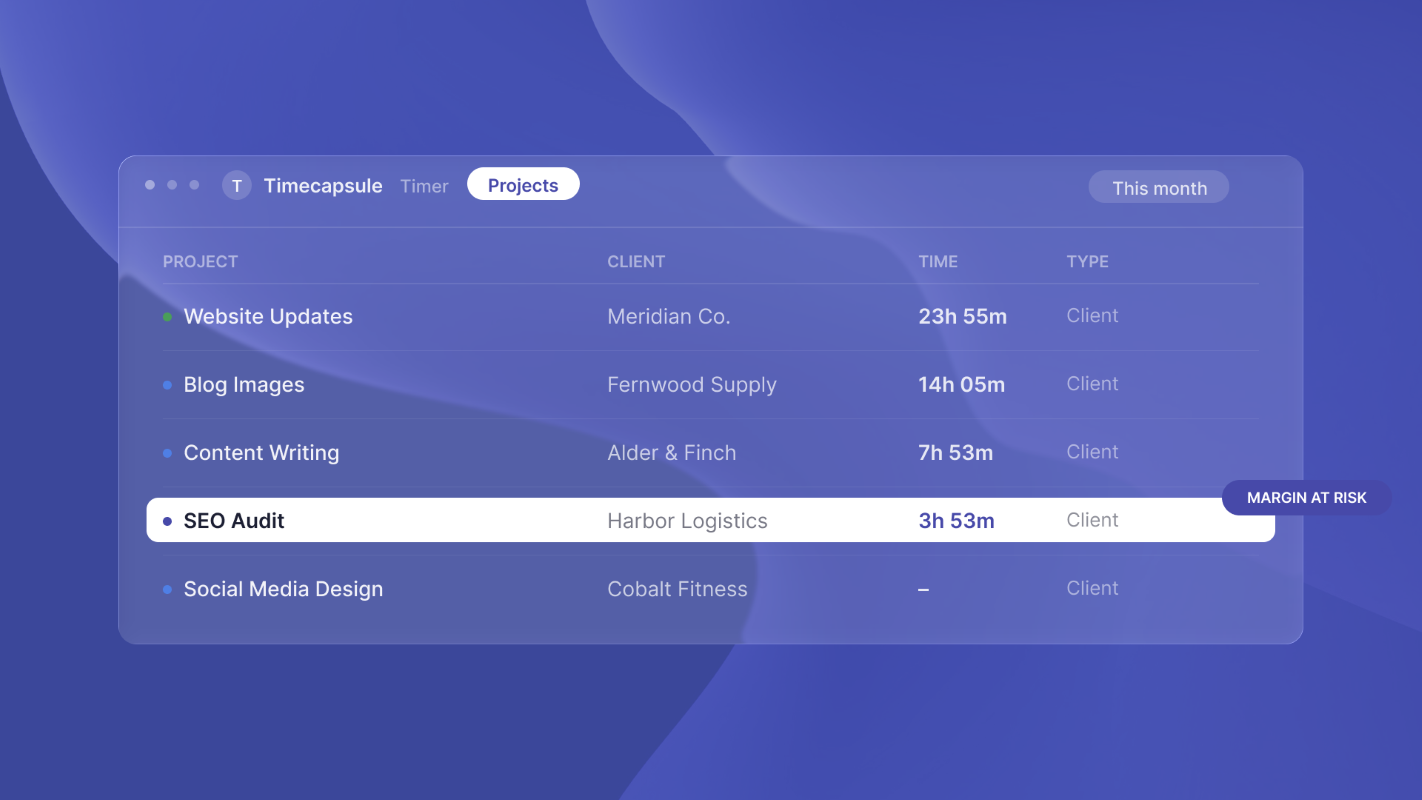
Ready to stop conducting profit autopsies and start monitoring margins in real-time? See how Timecapsule tracks project profitability from kickoff through final invoice.