.svg)
Why agency time tracking fails by month three

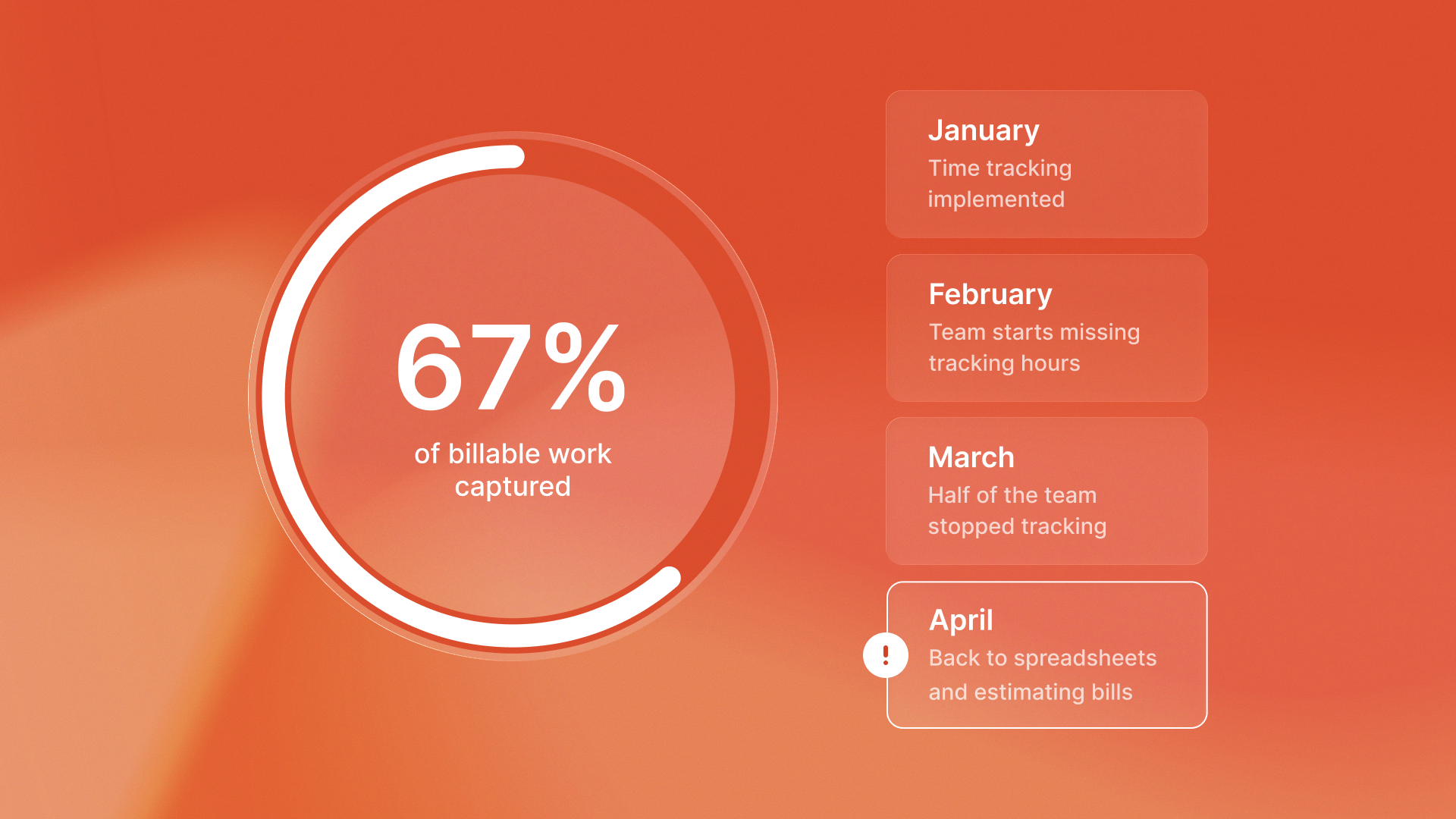
Your agency implemented agency time tracking in January. By March, half your team stopped logging hours consistently. By April, you're back to estimating billable time. You wonder why utilization reports show 60%. You know everyone is working 50-hour weeks.
This isn't a discipline problem. It's a systems design failure.
Almost half of agencies still estimate rather than track billable hours. The ones with well-developed utilization tracking report profitability 20-30% higher than those without tracking systems. The difference isn't tracking software. The difference is how agencies add time tracking to daily work. They do not treat it like compliance busywork. That kind of busywork usually fails by the third month.
The 15-25% revenue leak you can't see without real-time tracking
Agencies lose about 15-25% of revenue to scope creep and poor project scoping. This happens when they do not have real-time visibility. That's not a rounding error. That's the difference between profitable growth and burning cash while your team works 50-hour weeks.
Here's what happens when you estimate instead of track:
- Your developer spends 12 hours fixing a client integration issue. Your SOW said it should take 4 hours.
- Your project manager burns 6 hours in Slack clarifying requirements that weren't scoped.
- Your designer iterates through five rounds of revisions because the client keeps changing direction.
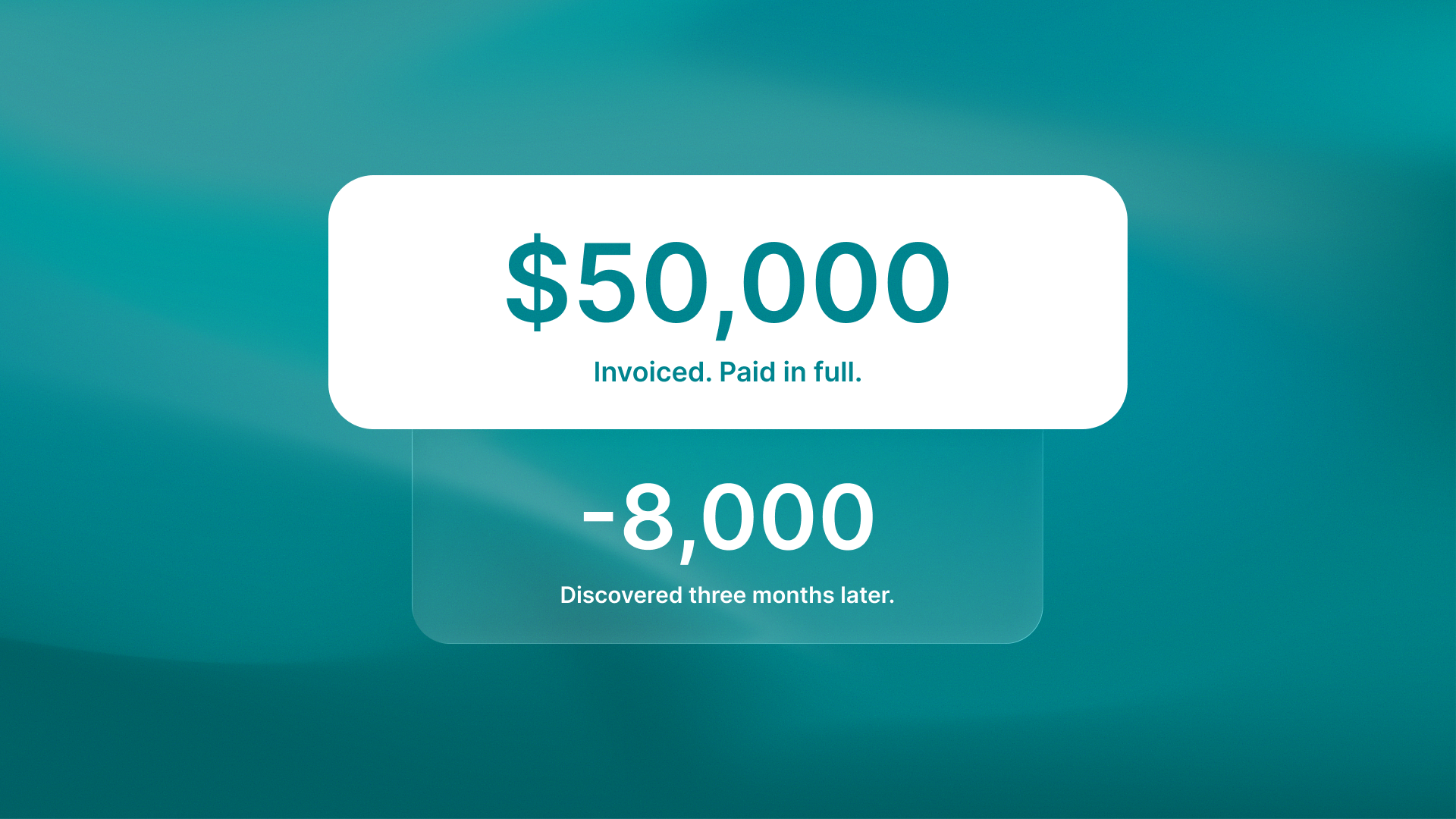
All billable work. All invisible until after the project ships and you realize your 40% margin turned into 12%. The financial damage gets worse because you use those invisible hours to estimate the next similar project. Understanding billable hours tracking and agency time tracking implementation prevents this cycle of underpricing and margin erosion from repeating.
Why time tracking dies by month three
Agency time tracking fails not from team resistance but from treating it as compliance rather than workflow integration. Context switching can waste up to 40% of productive time. When time tracking is a separate compliance step, it sits outside your current tools. This forces people to switch context. Those switching costs prevent adoption within 90 days.
Here's the breakdown cascade:
- Week one: your team logs hours daily because it's new and everyone's committed.
- Week four: logging drops to every other day because it feels like extra admin work. It feels separate from the real work.
- Week eight: half your team is rebuilding their week on Friday afternoon. They guess their hours because they can’t recall Tuesday morning.
- Week twelve: you're back to estimates and spreadsheets.
The workflow friction isn't subtle. Your developer finishes a feature. They switch to Toggl or Harvest. They try to remember which project code to use. They realize they forgot to start the timer four hours ago. They estimate the time. Then they switch back to Jira to update the ticket. That's three context switches and two minutes of mental overhead for every billable block. Multiply 30 blocks per week by 15 team members, and you create 15 hours of admin friction each week.
The same pattern shows up in LinkedIn workflows. ReachSocial's analysis shows operational workflow friction kills consistency through tool-switching and manual steps. Consolidating tools and automating repetitive tasks enables sustainable consistency. Time tracking faces identical abandonment dynamics.
The integration patterns that make tracking stick
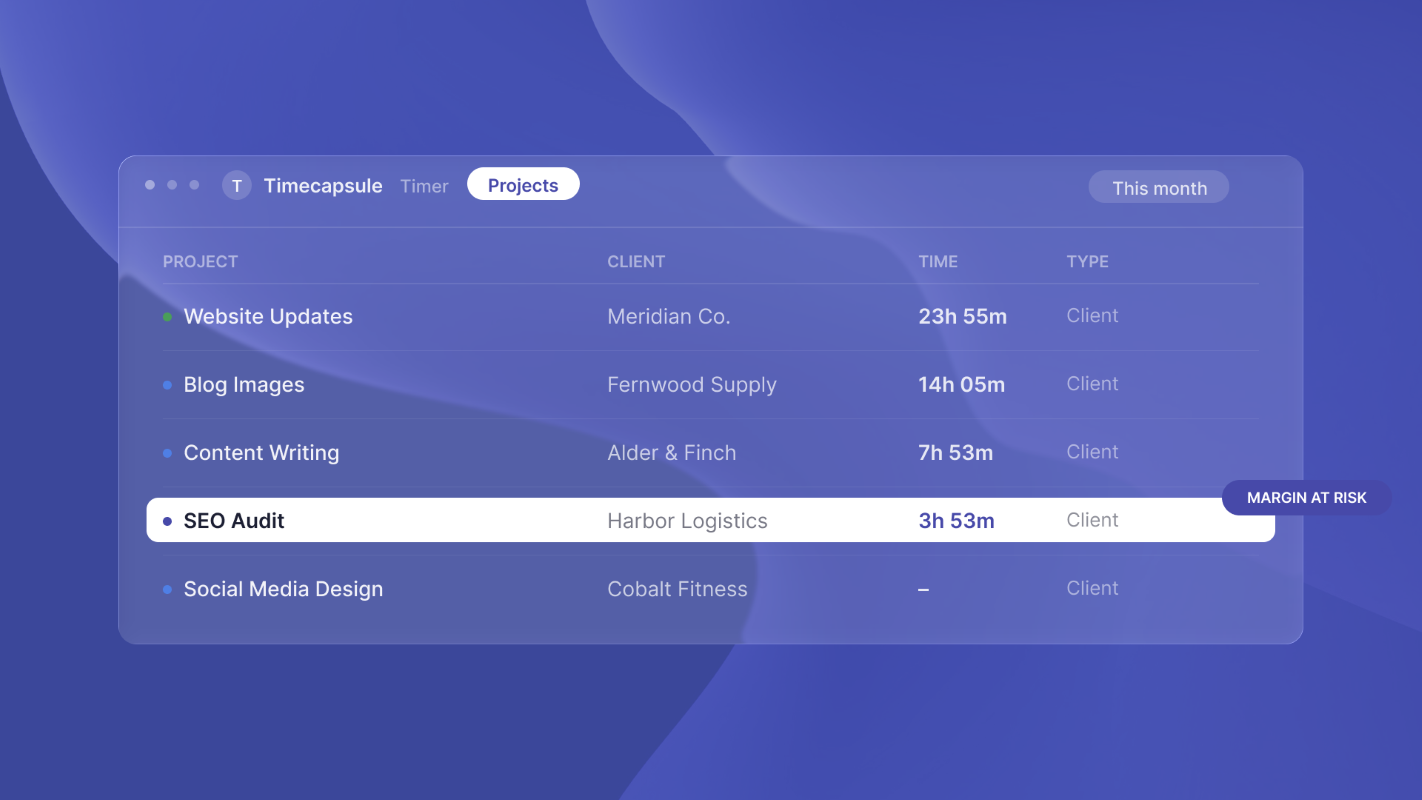
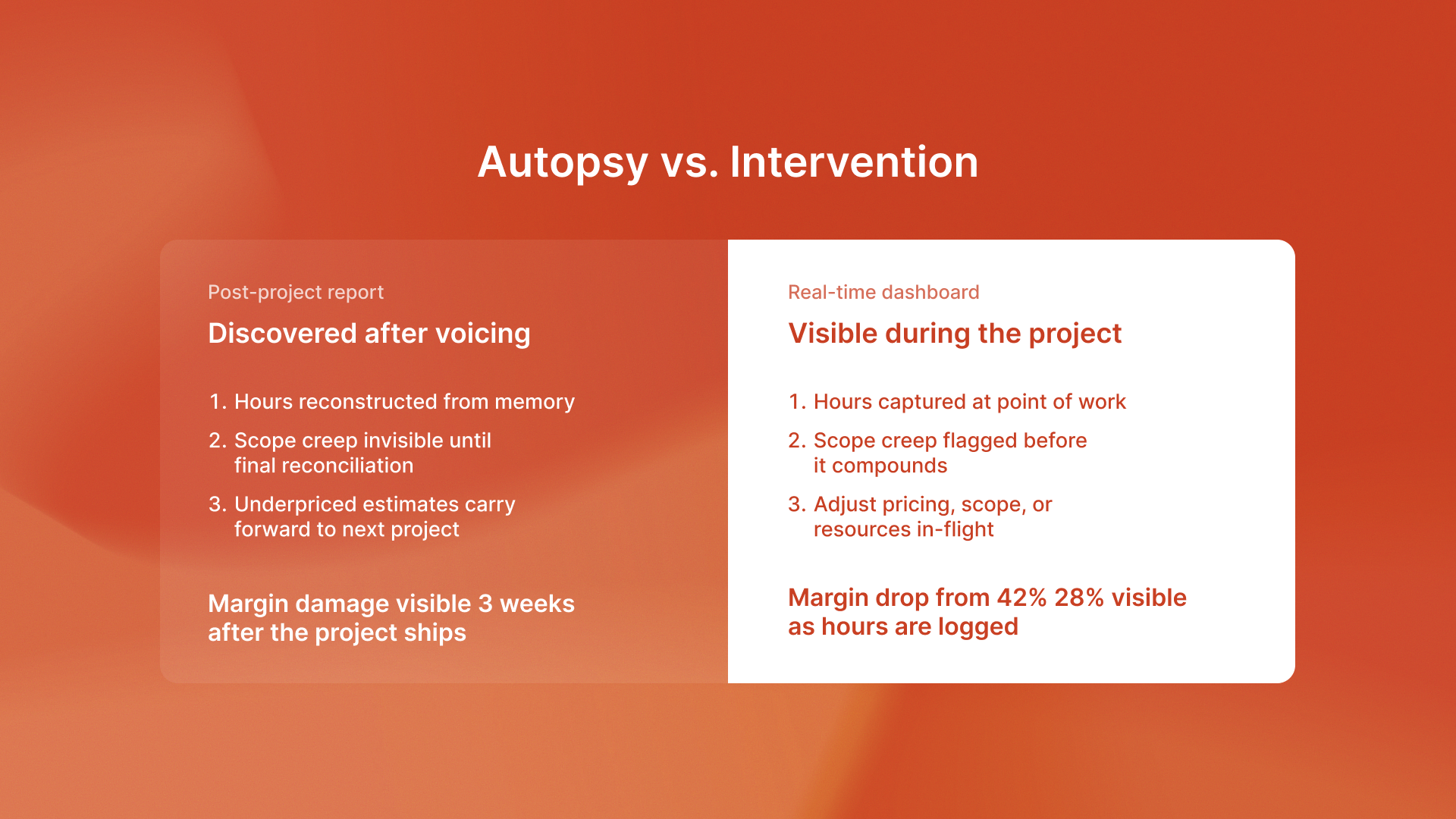
Agencies that keep utilization tracking past month three link time data to profitability dashboards. Teams then see how their entries affect project margins in real time. When your developer logs 12 hours on an integration bug and sees margin drop from 42% to 28%, time tracking shifts. It moves from a compliance task to a strategic intelligence tool.
Timecapsule connects time entries to project profit in real time. It shows teams how logged hours affect margins during the project. This happens now, not three weeks after invoicing. That visibility shift changes behavior. Suddenly time tracking isn't about reporting to management. It's about protecting the work you're doing right now.
Native connections eliminate double-entry friction
When time tracking needs manual transfer to invoicing systems or project management tools, admin work grows with each project. Eventually, the friction becomes unsustainable. Tools that sync directly with Jira, Asana, QuickBooks, and Xero remove the context-switching tax that kills adoption.
Role-appropriate utilization targets prevent burnout
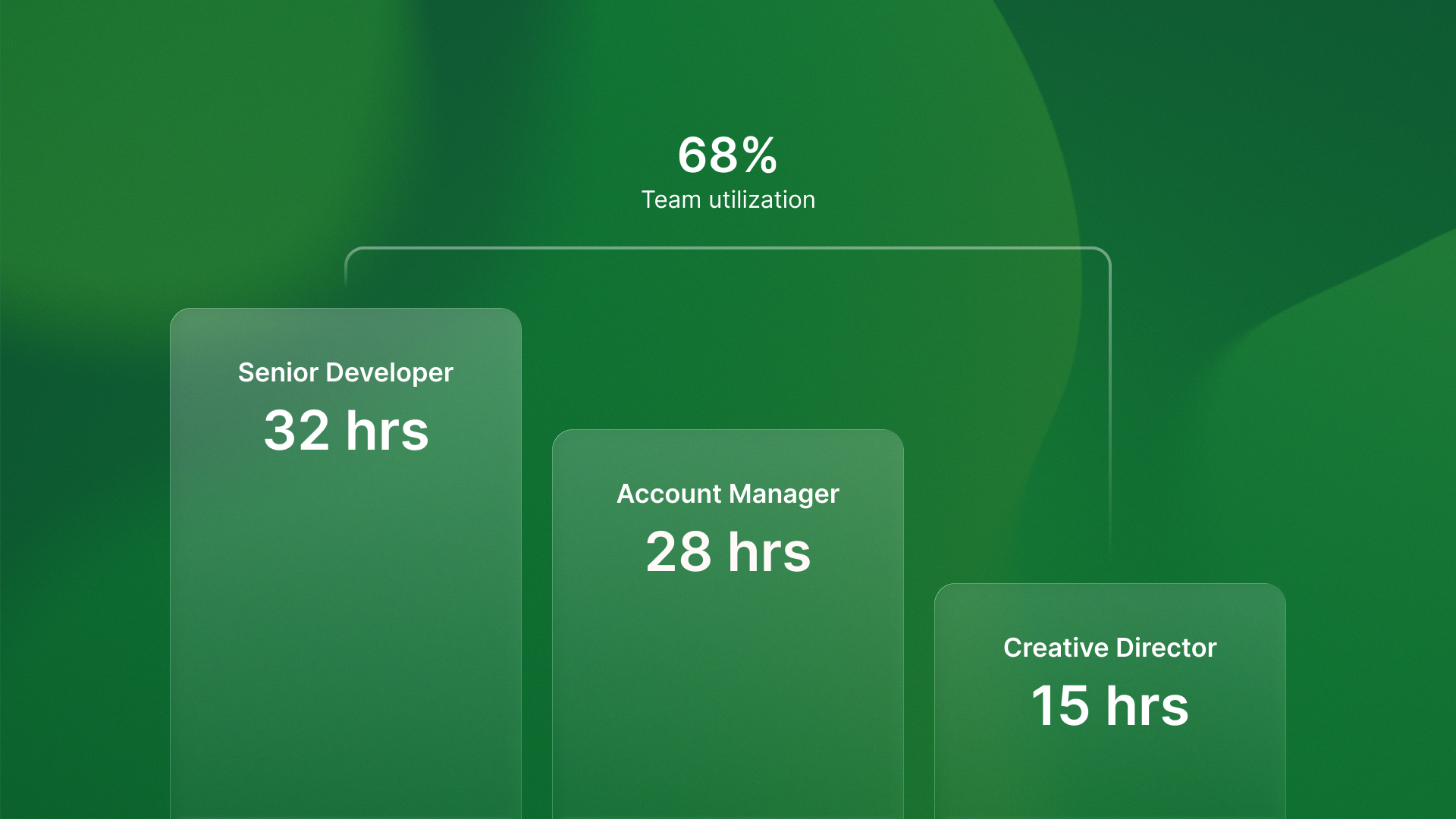
Agencies that set 80–85% utilization targets for all roles ignore a key fact. Senior strategists, account managers, and developers have different billable capacity limits. Your senior strategist spending 40% of time on client development isn't underperforming. Your account manager at 60% utilization managing client relationships isn't slacking. Setting realistic targets by role keeps tracking sustainable without creating constant failure signals.
Evaluating whether workflows are ready for systematic integration requires frameworks that prevent costly failed implementations. Islands' workflow readiness assessment presents criteria for evaluating whether processes can support autonomous systems. Time tracking implementation follows the same principle: systematic readiness evaluation prevents abandonment.
The hidden tax of manual tracking
Manual time tracking captures only 67% of billable work, according to research on agency profitability tracking. Agencies lose 33% of revenue to tracking gaps and non-billable hours that never get logged. Real-time profitability monitoring enables margin protection that retrospective hour logging cannot achieve.
The problem compounds because incomplete data creates invisible costs throughout operations. When bug tickets lack context, developers and QA enter multi-day clarification cycles that multiply true costs. QA Flow's analysis shows incomplete documentation creates a hidden tax consuming 60-100 developer hours monthly through clarification cycles and reproduction delays. Time tracking faces identical documentation failure modes.
The competitive stakes beyond month three
Agency time tracking isn't project management tooling. It is competitive intelligence infrastructure. It helps you protect margins in real time. Or you find revenue leakage three weeks after invoicing. By then, it is too late to recover.
We covered workflow integration patterns in our breakdown of why billable utilization dropped. It shows how real-time profitability tracking helps protect margins during projects. Retrospective reports cannot match that protection.
The agencies sustaining tracking beyond month three have fundamentally different systems:
- They've integrated time capture into daily workflow.
- They've connected entries to real-time profitability visibility.
- They've set role-appropriate targets acknowledging different billable capacity across functions.
- They're not asking teams to remember Friday what they did Monday.
- They're capturing hours at the point of work and using that data to make project decisions while margins can still be protected.
Agencies using estimated hours lose 15% to 25% of revenue from hidden scope creep. Competitors with integrated tracking systems spot margin erosion early. They adjust scope, pricing, or staffing before the damage grows. The difference between estimation and real-time tracking is the difference between autopsy and intervention. One tells you what went wrong after the project dies. The other shows you the problem while you can still fix it.
Ready to stop losing revenue to invisible scope creep? See how real-time profitability tracking protects your margins before the damage compounds.