.svg)
How to calculate the true cost of freelancers: why your 2x multiplier is missing 30-50% in hidden overhead

Your agency hired a freelance developer at $75/hour. You budgeted $150/hour with a 2x multiplier for the project. The project finished on time and on budget. You still lost money.
That's not bad project management. That's the systematic cost underestimation built into simplified multipliers.
Most agencies use 2x to 4x salary multipliers and do not track real overhead allocation. This creates a 30% to 50% gap between perceived costs and fully loaded expenses. The math seems sound until you discover projects were unprofitable after completion.
Here's the problem: 48% of CEOs plan to increase freelance hiring in 2026. This means the underestimation grows with each new hire. With 1.57 billion freelancers generating $1.5 trillion in earnings globally, the shift toward project-based talent is irreversible. But most agencies still price freelancer work like it’s 2015, using rough multipliers that ignore the real costs of managing remote teams.
The hidden costs your multiplier ignores
Agencies commonly use 2x to 4x salary multipliers, but systematically miss overhead allocation.
Here's what those multipliers don't capture:
- Onboarding time: Even experienced freelancers need 5-10 hours to understand your systems, tools, and workflows. That's $375-$750 in untracked costs before they write their first line of code.
- Management overhead: Someone on your team spends 2-3 hours per week coordinating, reviewing work, and answering questions. At $100/hour internal cost, that's $800-$1,200 per month per freelancer.
- Tool licenses: Figma, Slack, project management software, code repositories. Each freelancer needs access to 4-6 tools at $20-$50 per seat monthly.
- Communication friction: Asynchronous communication across time zones adds 15-20% to project timelines as clarifications and revisions stack up.
- Quality review cycles: Every deliverable needs internal review. Budget 10-15% of project time for QA and revision management.
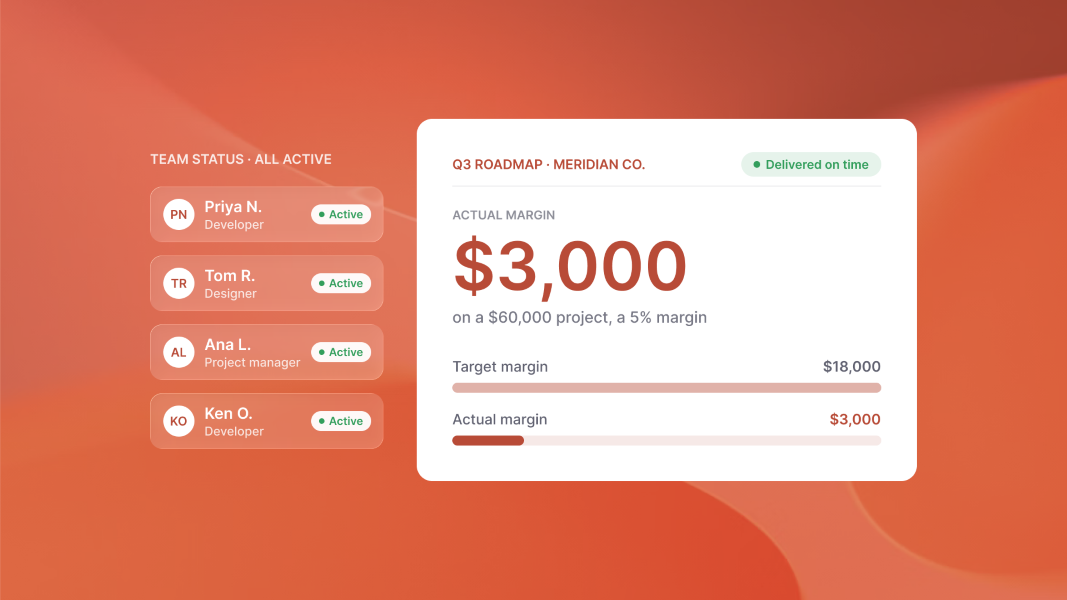
A $10,000 project with a 2x multiplier can yield only 12% margin instead of the expected 30%. This happens after you account for these unbilled costs. The damage compounds with scale.
Why real-time cost tracking changes everything
Simplified multipliers made sense when agencies hired one or two freelancers quarterly. Now, with project-based talent as the standard capacity model, you need real-time visibility into per-hire costs.
Target overhead must not exceed 20-30% of AGI for sustainable agency growth. Freelancer overhead (management time, onboarding, tools, coordination) invisibly pushes many agencies above this threshold. You discover the margin problem after projects complete, when it's too late to course-correct.
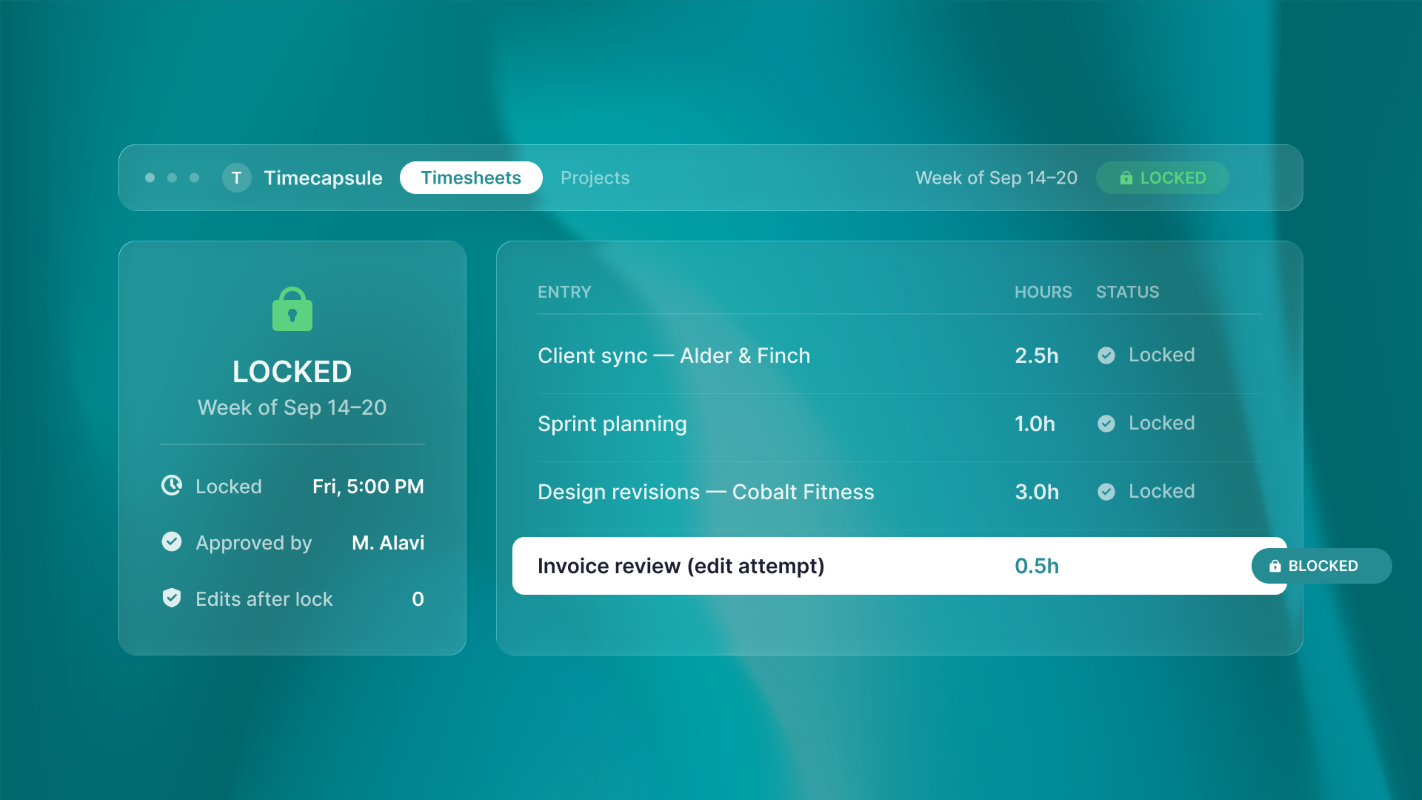
Platforms like Timecapsule track billable and non-billable hours in real time. This shows the true fully loaded cost of each hire. When you see your $75/hour developer really costs $112/hour after overhead, you adjust pricing before bidding. You do not wait to learn you only broke even on a job. You may have expected a 25% margin.
This visibility matters across different agency models. Islands is a fractional CTO service. It manages dev hours across client projects. It uses real-time cost tracking to stay profitable. It also manages distributed engineering teams. QA flow applies the same approach to track development time across their autonomous testing platform. Even ReachSocial tracks feature hours for its LinkedIn engagement tool. It needs clear per-hire cost data to price engineering work correctly.
The competitive advantage isn't avoiding freelancers. It means knowing your real costs.You can price projects correctly. You can also keep a 20–30% overhead target. That target separates sustainable agencies from the 70% that never reach $1M in revenue.

Calculate your true freelancer cost
Here's the framework agencies use to calculate fully-loaded costs:
Direct costs:
- Hourly or project rate (the number you're already tracking)
Indirect costs:
- Onboarding time: 5-10 hours × your internal hourly rate
- Management overhead: 2-3 hours/week × project duration × internal rate
- Tool allocation: $80-$150/month prorated across project length
- Communication overhead: 15-20% time buffer for async coordination
- Quality review: 10-15% of deliverable time × internal review rate
Add those together, divide by billable hours, and you have your true cost per hire. Most agencies discover their 2x multiplier should be 3x-3.5x to maintain target margins.
The math breaks down like this:
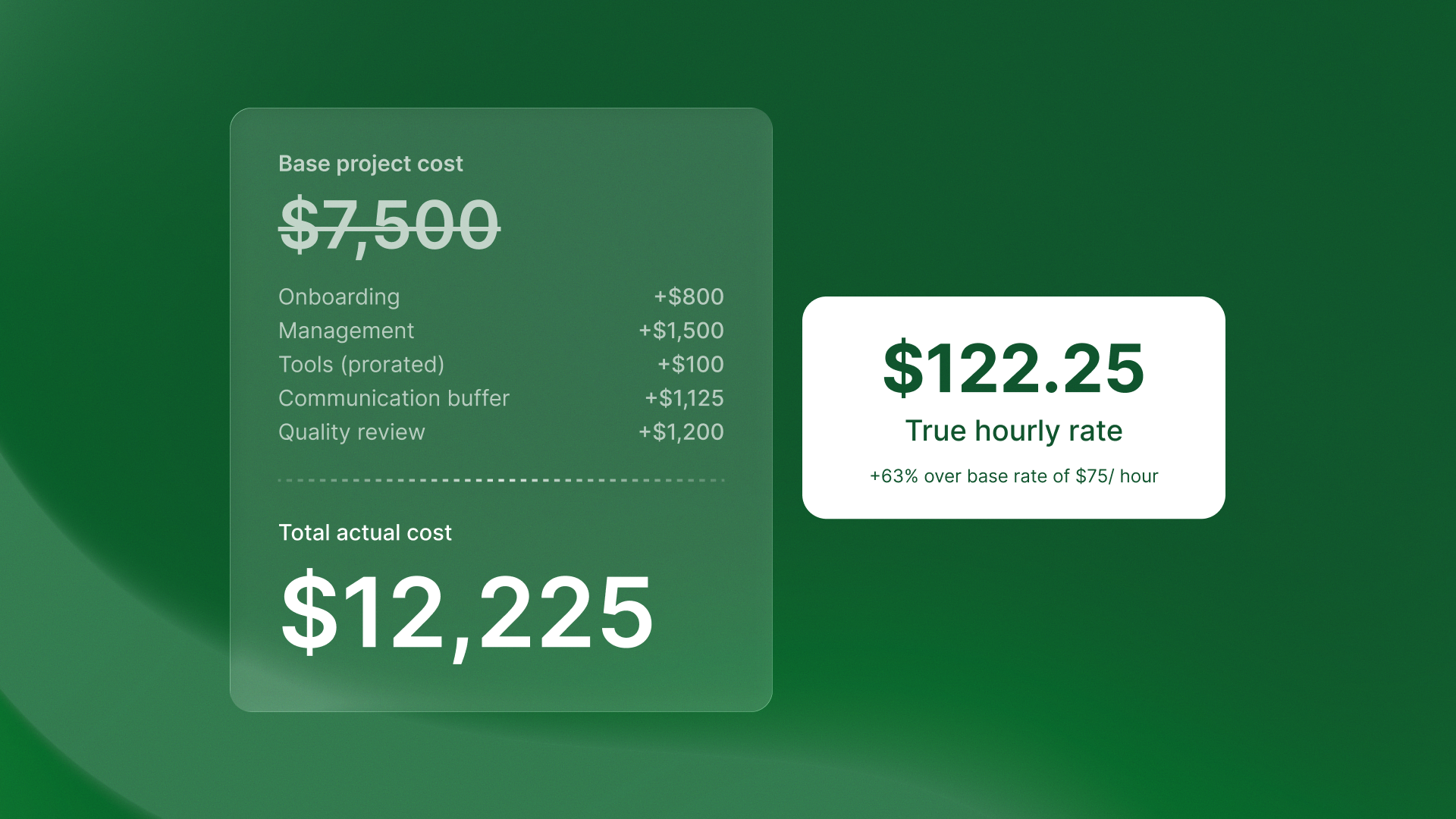
- Freelancer hourly rate: $75
- 100-hour project baseline cost: $7,500
- Onboarding (8 hours at $100): $800
- Management (3 hours/week × 5 weeks at $100): $1,500
- Tools (prorated): $100
- Communication buffer (15% × 100 hours × $75): $1,125
- Quality review (12% × 100 hours × $100): $1,200
- Total actual cost: $12,225
- True hourly rate: $122.25 (not $75)
That's a 63% increase over the base rate. Your 2x multiplier becomes a 1.2x multiplier once you account for reality.
From flexible capacity to profitability risk
The shift happens when costs are not tracked in real time. Companies first hire freelancers to add flexible capacity. Later, they start to see freelancers as a risk to profitability.
Agencies that calculate true fully-loaded costs before bidding projects win more profitable work. Agencies using simple multipliers discover margin problems after it's too late to adjust pricing or scope.
This isn't about avoiding freelancers. It’s about knowing their true costs. This helps you price projects correctly. It also helps you keep a 20% to 30% overhead target. That target separates sustainable agencies from most others. Many of those agencies stall before reaching seven figures. The math works when you track the real numbers.