The Rise of End-to-End Freelance Platforms: How to Track Project Profitability for an Agency in a Consolidated Market

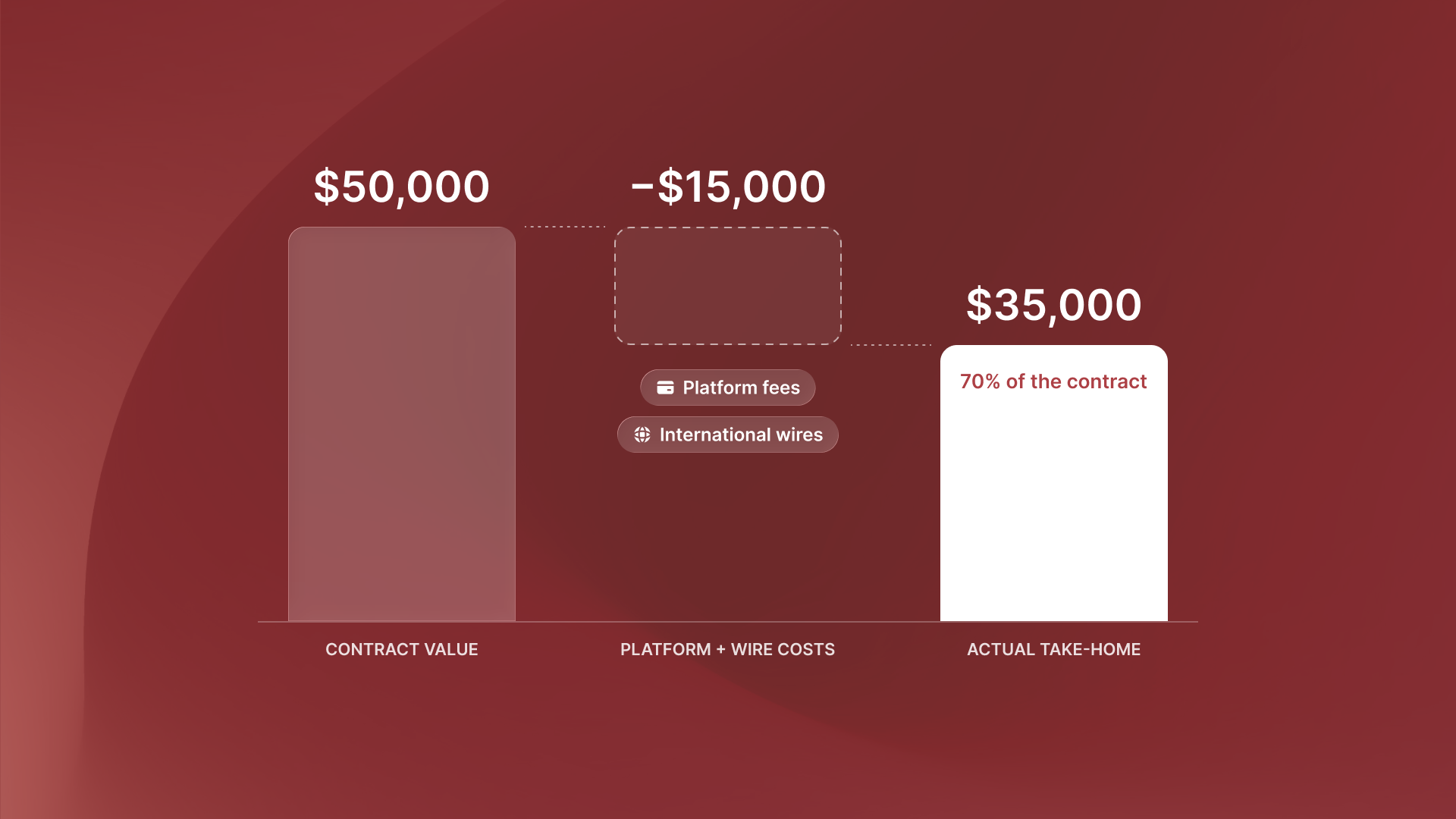
Your agency just landed a $50,000 contract. However, after platform fees and international wire costs, your actual take-home is closer to $35,000. You are paying for an ecosystem, not a single specialist. Traditional margin tracking fails when it treats platform friction as general overhead. In reality, these costs are direct delivery expenses that dictate survival. Implementing professional services margin tracking requires moving beyond reactive accounting to real-time project intelligence.
Transitioning from marketplaces to managed services
A fundamental shift is occurring in how talent is accessed globally. Freelance platforms are evolving into solution-based environments that orchestrate delivery by combining project management, QA, and curated expert teams. The market for these systems is projected to reach $21.65 billion by 2035 (Market Research Future). This evolution reflects a growing demand for reliability and measurable outcomes, turning freelance models into managed services that offer an efficient alternative to traditional agency retainers.
Why 100% visibility is the new standard
Centralizing external talent into a single platform provides the visibility needed to protect project margins. When you manage many contractors, you need an automated framework for spend management. Platforms now act as a financial system of record, integrating budgeting and audit documents for every external worker. This consolidation ensures that your project management tools reflect true delivery costs. Moving toward an agentic CFO office eliminates information lags and protects profit margins in real time.
The math behind real-time margins
To maintain a healthy agency gross margin, you must account for platform fees and international rates. These costs erode profit invisibly, especially when remote teams erode margins through conversion timing and administrative overhead. Use these formulas to ensure your pricing reflects reality:
- Gross Margin: (Revenue - Direct Delivery Costs) / Revenue x 100
- Direct Delivery Costs: Contractor payments + platform fees + software licenses tied to delivery (Pharallax)
- Net Margin: (Revenue - All Costs) / Revenue x 100
- Adjusted Margin: Net Margin - Owner Subsidy (Market Rate - Actual Pay)
Adjusting for the owner subsidy
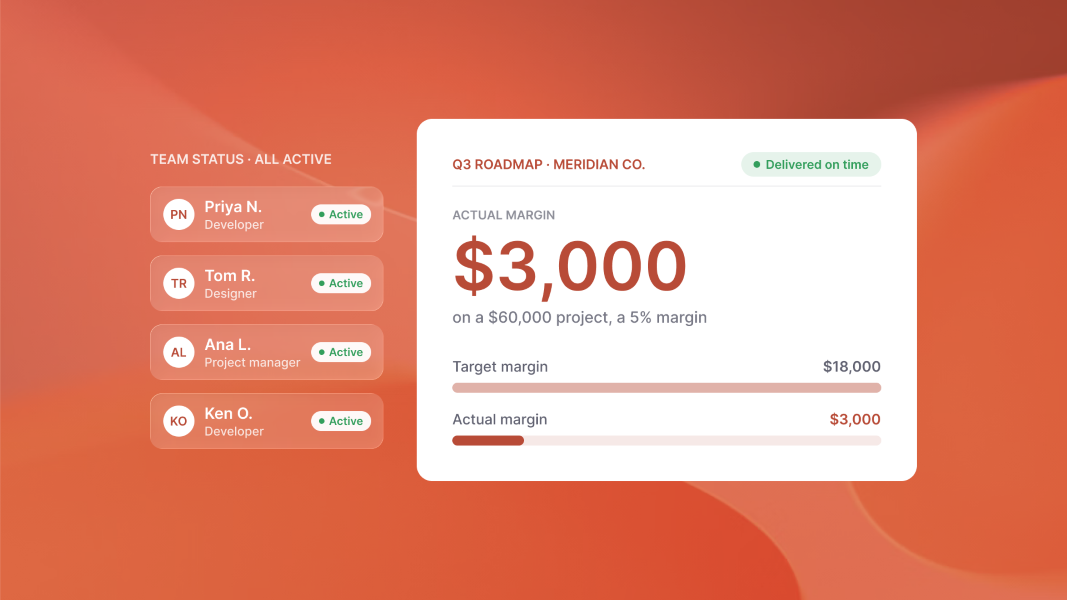
One of the most common mistakes is the owner subsidy. If you pay yourself $80,000 while your market rate is $150,000, you are masking a loss. True financial health requires your pay to match market benchmarks. Without this adjustment, an agency reporting a 15% net margin might actually be running at 5% or less. Using a five-step financial model helps move from feast-or-famine cycles to predictable growth.
How to track profitability in consolidated platforms
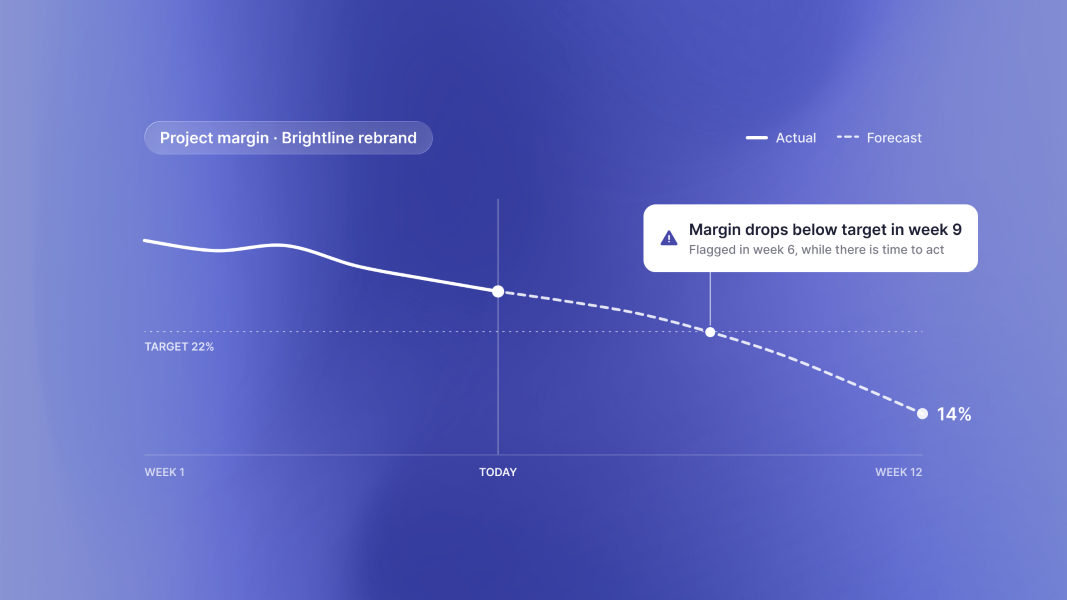
Agencies track profitability in consolidated platforms by using Project Intelligence as a financial system of record. This involves syncing worker classification, compliance auditing, and global payment data. By integrating automated spend management with delivery tools, agencies capture real-time costs including platform fees and international transaction overhead to ensure 100% margin visibility. Timecapsule enables this by connecting time tracking directly to real-time profitability monitoring, allowing you to see if those hours are translating into profit while the project is in progress.
Eliminating the onboarding tax
Manual hurdles in freelance management are a silent margin killer. Onboarding a single freelancer often takes over five hours due to contract approvals and compliance checks (Worksome). Utilizing curated talent sourcing platforms reduces this administrative friction. These systems automate the synchronization of worker data and payment records.
Steps to reduce friction
- Centralize talent sourcing across platforms into a single private talent pool.
- Automate worker classification and compliance auditing for 150+ countries.
- Integrate global payment data directly into your agency project management tools.
Compliance as a margin protector
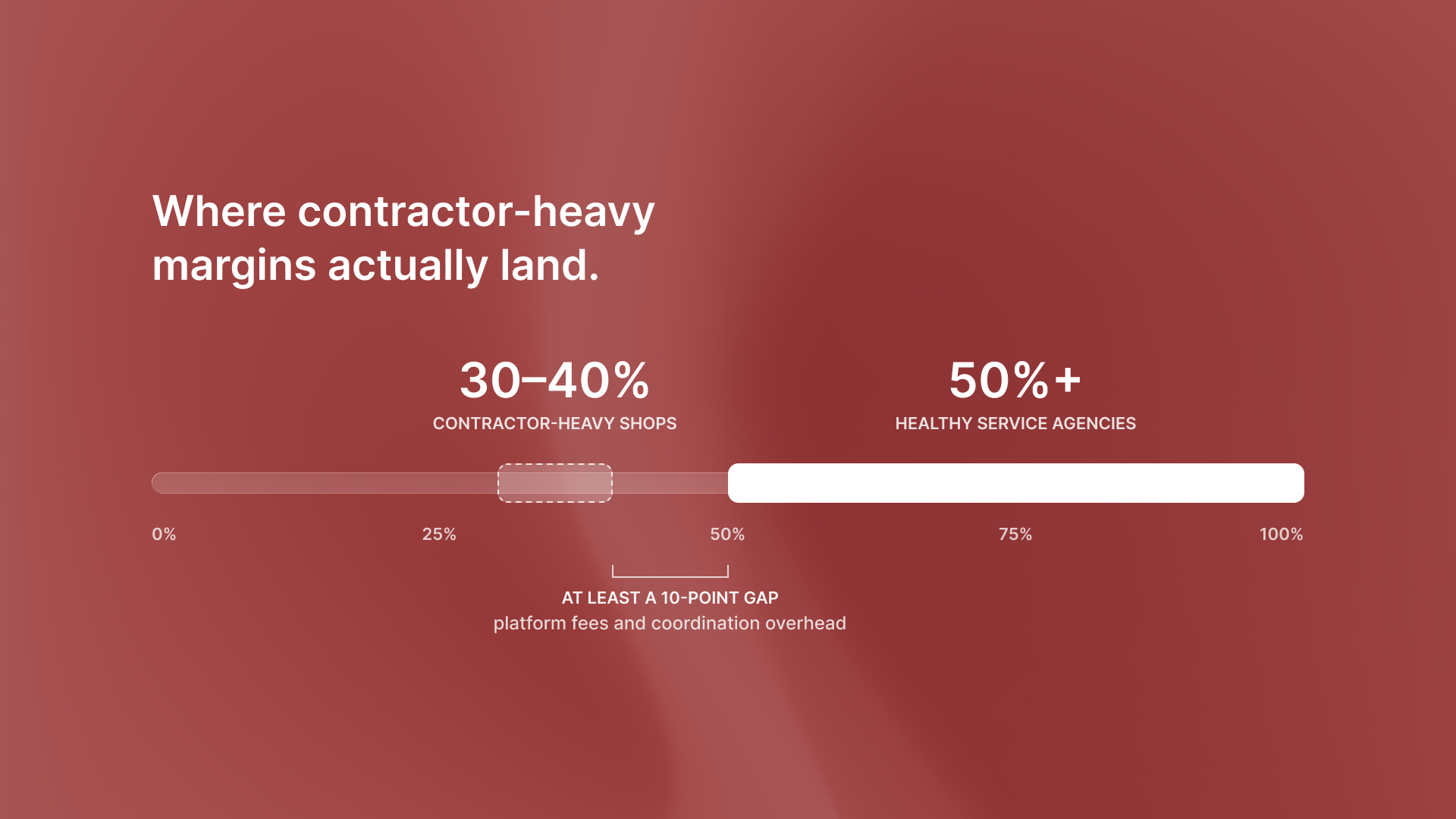
Healthy service agencies typically target 50% or higher gross margins, but shops with heavy contractor costs often see these drop to 30-40% (Forge). Using consolidated freelance management systems reduces the distance between your agency and your talent. This ensures that non-billable coordination overhead is captured accurately. It protects your bottom line from compliance risks and administrative bloat. Following profitable agency tips can further safeguard these margins.
The 30% margin leak
Most agencies fail to account for hidden costs. A $75/hour freelancer often costs the business significantly more after platform fees and coordination overhead. Analysis of dev time tracking shows that fully-loaded freelancer rates must include non-billable hours like Slack management and code reviews. Improving your project management for freelancers and time management practices ensures these hours are billed or accounted for correctly.

Ignoring these costs causes projected margins to shrink before the first invoice is sent. Agencies frequently underestimate freelance costs by 30-50%. By identifying when a $75/hour freelancer actually costs $110/hour, you can make mid-project adjustments. Software teams use real-time cost visibility via Timecapsule to ensure these leaks are caught during the project, not after the loss is finalized. This level of project intelligence allows you to monitor billable vs. non-billable hours to identify exactly where profit margins disappear.
Visibility into platform fees and delivery overhead is a strategic advantage. The math works when you track the real numbers.
Optimize your team's performance and secure your data integrity by choosing to get started with Timecapsule today.