Why Real-Time Business Insights Now Require Predictive AI Forecasting

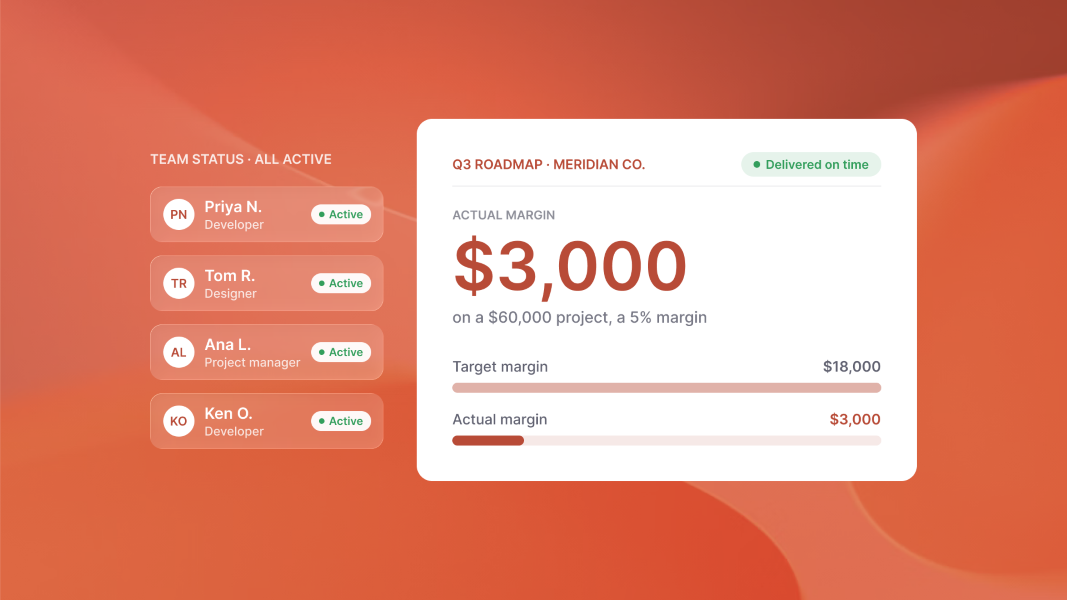
Your team worked 400 hours, the client is happy, and the invoice is sent, but did you actually make a profit? Most agency owners do not find out until the autopsy report arrives three weeks too late. Analysis of agency P&Ls shows a recurring theme: financial losses are almost always discovered after they have occurred. This reactive reporting trap is a significant threat to scalability.
The blindspot: why reactive tracking is failing agencies
The professional services industry loses $50 billion annually in untracked billable hours (Rize). Traditional time tracking analytics often miss a third of the hours actually worked, creating a fundamental drain on your net margin floor.
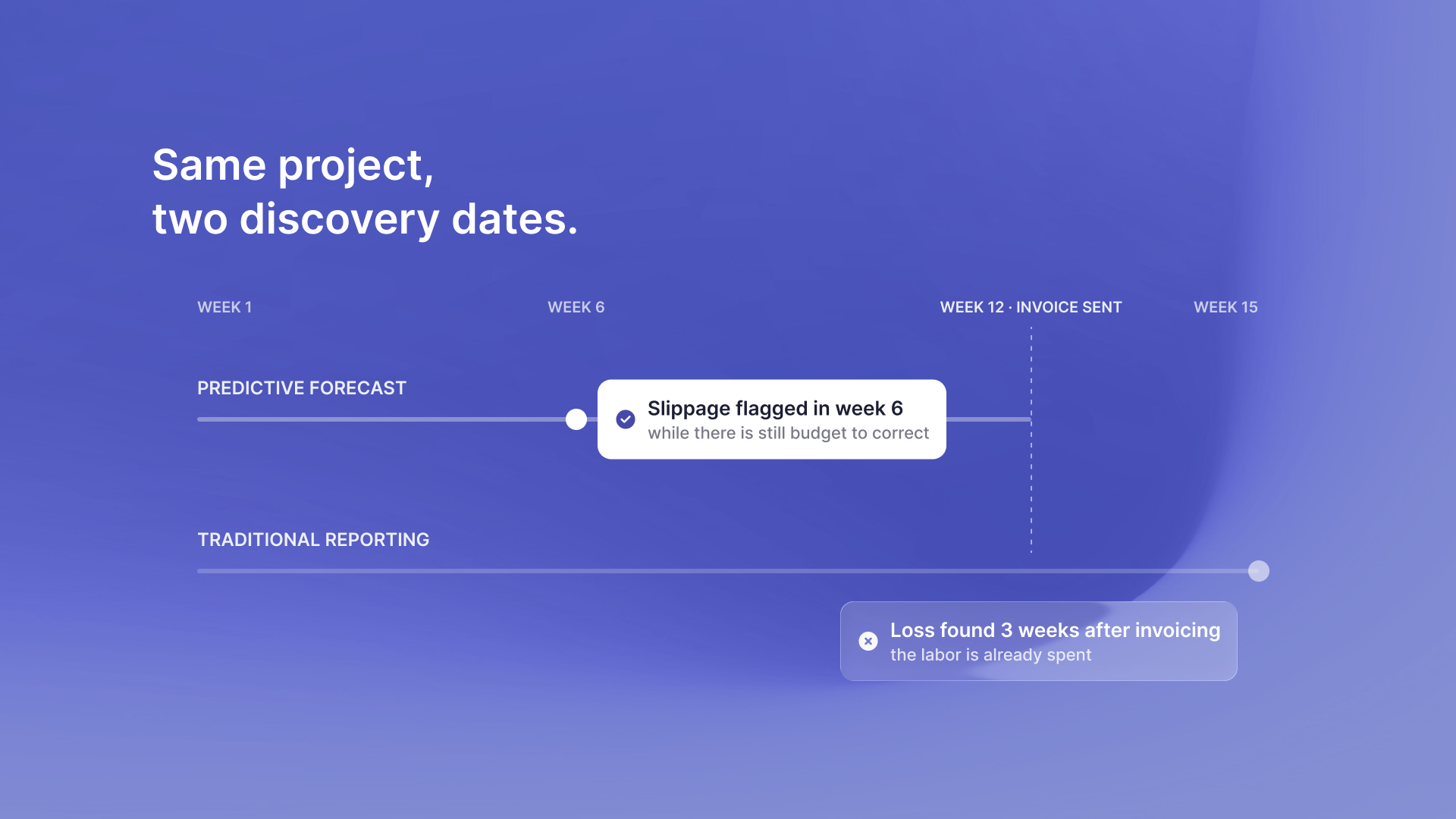
Using automated time tracking helps only if the data is accurate enough to avoid manual correction cycles. Traditional time tracking fails because it is historical. It tells you what happened last month, rather than what is happening to your bank account right now. Generic project management tools like Toggl or Harvest are built for tasks and timelines, yet they lack the live cost baselines necessary to manage money effectively. Waiting until the end of a project often means realizing losses too late to recover the spent labor.
The limits of traditional tracking
- No real-time margin visibility: You see progress, but not the live cost of that progress against earnings.
- Missing cost baselines: There is no benchmark to compare actual performance against estimates during the project.
- Delayed reporting: Issues like scope creep are only visible after the budget is already exhausted.
Predictive AI vs. traditional dashboards
Forecasting margins before commitment
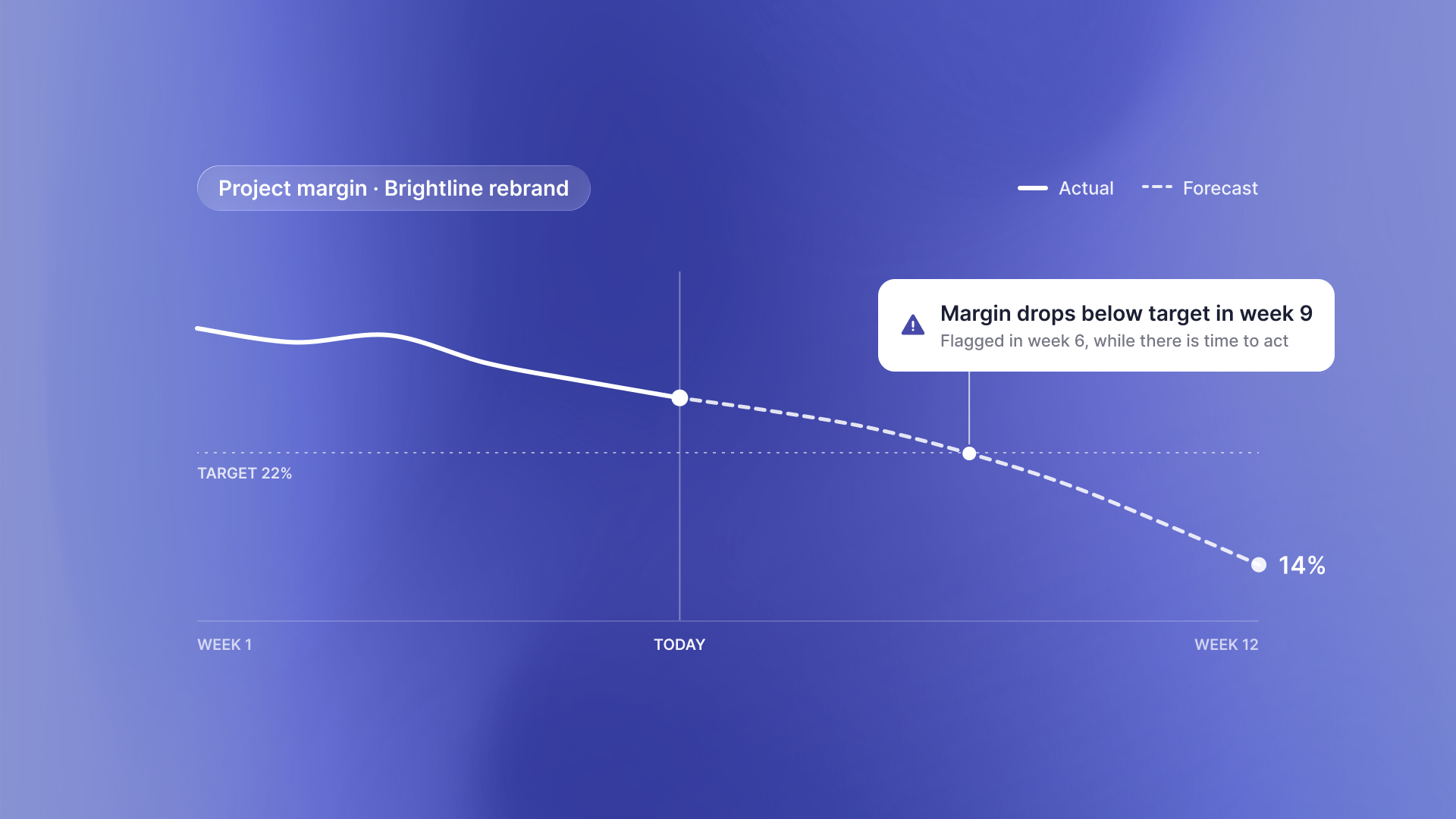
Predictive AI dashboards identify margin slippage before the quarter ends. Successful agencies use historical delivery data, costs, and rates to forecast revenue and headcount before they even commit to the work. This allows you to prototype a budget and test best-case scenarios. You can see the profitability impact before you say yes. This shift toward a predictable growth model is becoming the industry standard for 2026.
Identifying slippage during delivery
AI-driven tools provide real-time visibility into cost baselines. This differs from traditional dashboards that record project costs after the fact. When an internal team is overloaded, you might consider variable marketing talent to maintain agility without the structural liability of a full-time hire. Predictive models link labor and contractor costs to specific budget categories during delivery. This surfaces risks while there is still time for human judgment to intervene.
The math of margin protection: utilization and scenario modeling
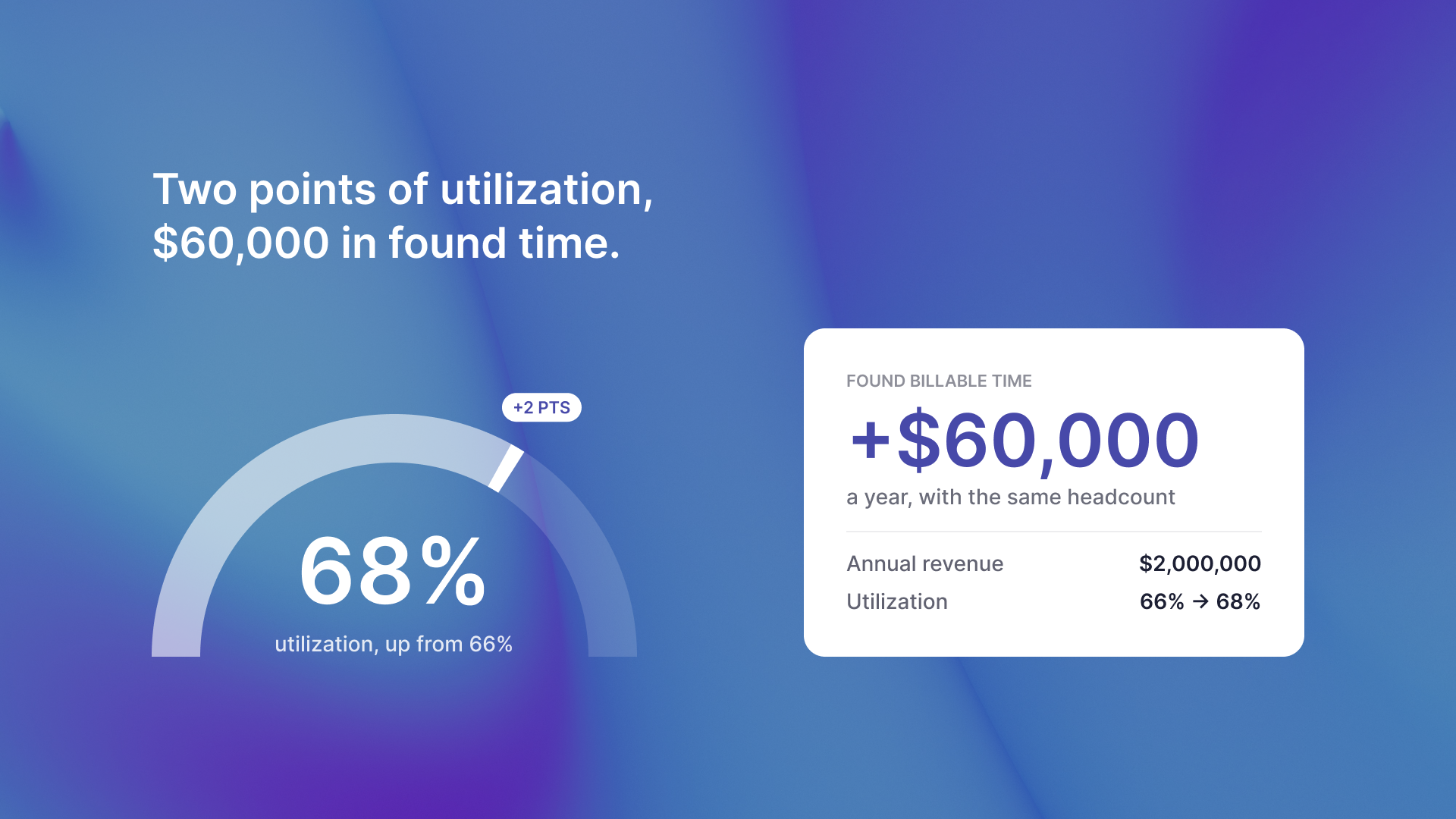
Utilization determines whether you grow or stall. According to Rize, a two-percentage-point improvement in utilization can mean six figures in additional annual revenue for a mid-sized team. It is vital to understand billable utilization benchmarks to distinguish between producer-level performance and firm-wide averages. AI metrics flag scope creep and resource conflicts early enough to protect these gains.
The math breaks down like this
- Current Revenue: $2,000,000 at 66% utilization.
- Efficiency Gain: AI identifies 2% in untracked hours or resource gaps.
- New Utilization: 68%.
- Revenue Impact: ~$60,000+ in found billable time without increasing headcount.
Linking labor costs to budget categories
To prevent margin erosion, your software must distinguish pass-through costs from costs that affect your gross margin. By calculating project profitability during execution, you ensure every hour spent contributes to your target 20-30% net margin. This replaces guessing with knowing your profit per hour.
Mitigating risk: from resource conflicts to EU AI Act compliance
Predictive AI models reduce operational risk by surfacing resource conflicts and budget overruns early. This allows for proactive course correction instead of financial loss. These tools also help agencies navigate the regulatory landscape. For example, staying compliant with the EU AI Act means ensuring your tools do not use prohibited features like emotion recognition. You can maintain compliance while still using proactive margin tracking.
What to do next: transitioning to proactive intelligence
- Review your current reporting cycle to identify the lag time between work performed and margin visibility.
- Implement a real-time profitability tool like Timecapsule that links labor costs to budget categories during execution. A dedicated project profitability tool provides real-time business insights that allow for immediate adjustments.
- Model your next three project proposals under different variable investment scenarios to identify potential margin slippage before signing.
The old way is an autopsy. The profitable way is a forecast.
Review our scalable pricing structures to determine which efficiency-driven plan aligns with your organizational requirements.