.svg)
Why agencies underestimate freelance costs by 30-50% before the first invoice

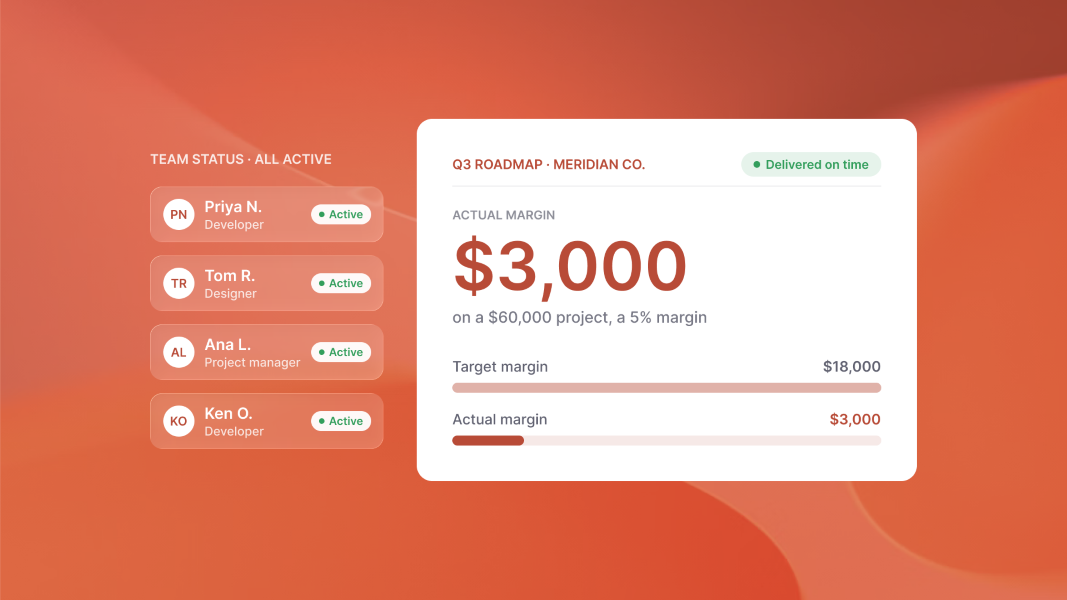
Your agency books a $50,000 project. You hire three freelancers at $75/hour. You invoice the client. Two months later, accounting shows the project netted 11% profit instead of the projected 30%.
That's not bad project management. That's a cost calculation problem.
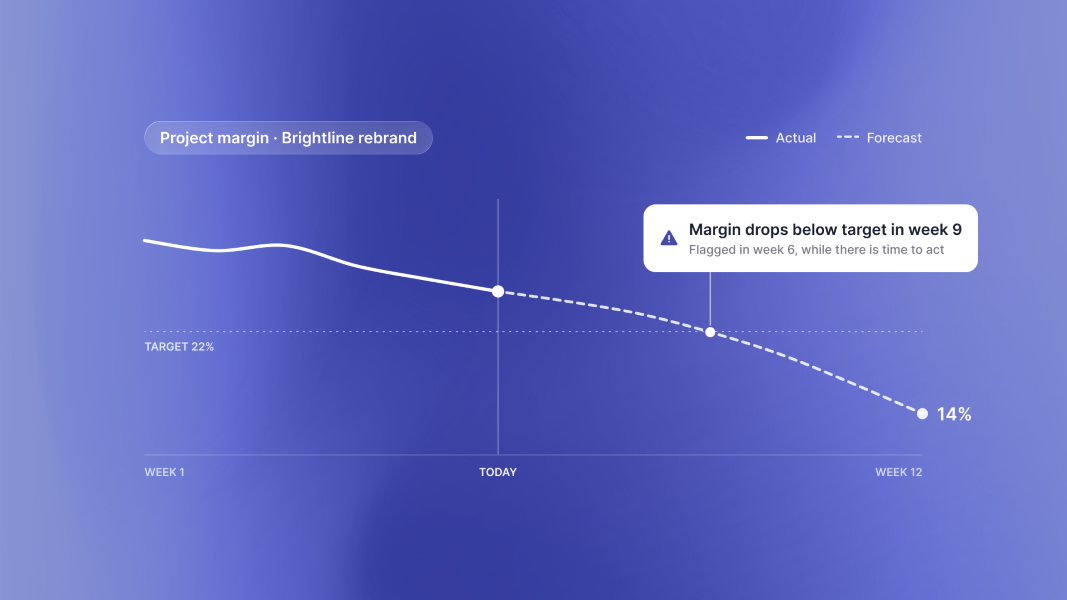
Most agencies often underestimate the true cost of freelance talent by 30% to 50%. This can turn profitable-looking projects into margin traps before the first invoice goes out. While 48% of CEOs plan to increase freelance hiring according to Upwork's 2026 research, most lack cost frameworks. These frameworks track what freelancers really cost beyond their hourly rate. Upwork reports that freelancers earned $1.5 trillion in 2024. But agencies often find profit problems after projects end.
The invisible 30-50% that kills margins
Standard multipliers miss critical overhead allocation. Most agencies use 2x to 4x salary multipliers according to industry benchmarks. But they often ignore platform fees and payment processing. They may also miss communication overhead, onboarding time, and quality assurance costs.
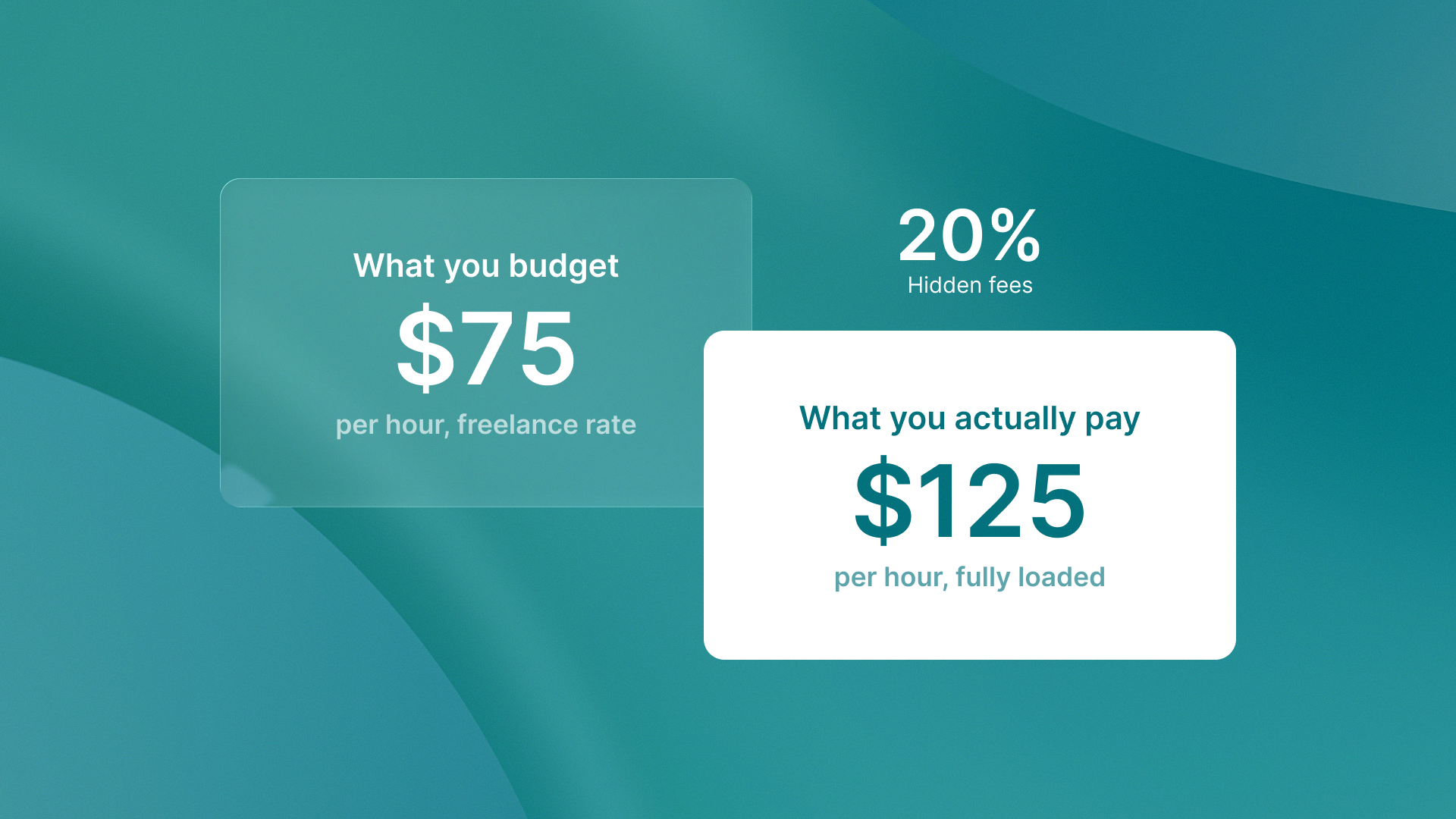
That $75/hour freelancer doesn't cost $75. Here's what you don't see:
Direct costs you're tracking:
- Hourly rate: $75
- Platform fee (20%): $15
- Total visible cost: $90/hour
Hidden costs you're missing:
- Payment processing (2.9%): $2.61
- Onboarding time (4 hours @ $90): $360 one-tim
- Revision cycles (15% of project hours): $13.50/hour
- Communication overhead (2 hours weekly @ your rate): $200/week
- Timezone coordination delays: 5-8% project timeline extension
- Quality assurance review (10% of deliverables): $9/hour
The math breaks down like this:
- Budgeted freelance cost (200 hours @ $75): $15,000
- Actual platform-adjusted rate: $90/hour = $18,000
- Payment processing on $18,000: $522
- Onboarding (one-time): $360
- Revision cycles (30 hours @ $90): $2,700
- Communication overhead (8 weeks × $200): $1,600
- QA review time (20 hours @ $90): $1,800
- Total actual cost: $24,982
Your $75/hour freelancer actually costs $125/hour when you factor in the operational complexity of remote coordination. That's a $10,000 gap between what you budgeted and what you spent.
The overhead threshold agencies can't afford to cross
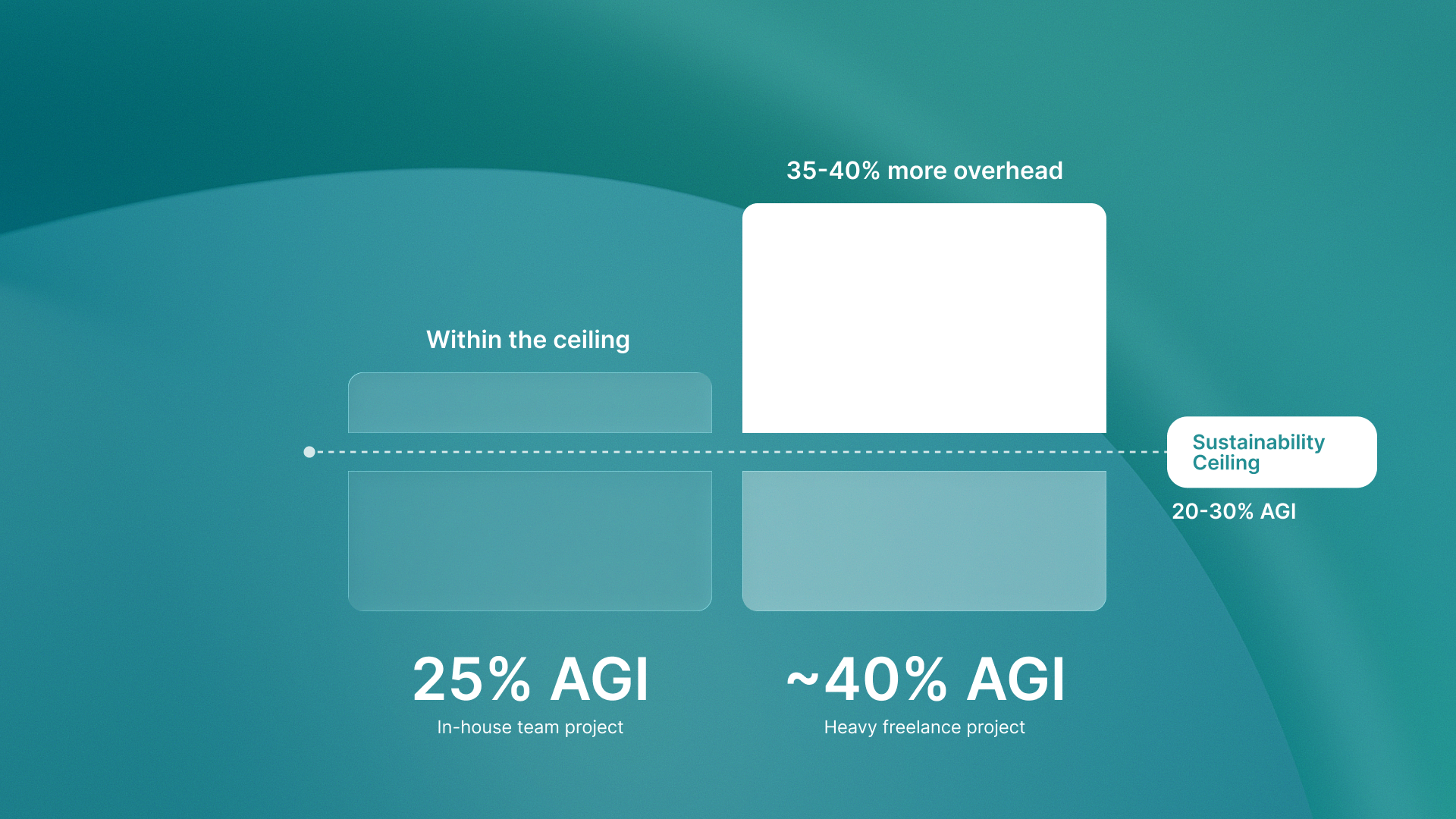
Sustainable agencies keep overhead at 20-30% of AGI, according to TMetric's marketing agency profitability benchmarks, but untracked freelance costs silently inflate this percentage.
Revision requests, scope clarifications, and timezone coordination all count as overhead. Most agencies don't track them as freelance-related expenses. They bury these costs in general operations, making it impossible to see which projects actually made money.
Traditional accounting software like QuickBooks or Xero tracks invoice totals but misses real-time cost accumulation. By the time you see the profitability problem, the damage is permanent.
Agencies using Timecapsule discovered that projects with heavy freelance coordination carried 35-40% more overhead than in-house team projects. The freelancer's rate wasn't the problem. The invisible coordination overhead was.
Why only 30% of agencies break $1M revenue
Industry data shows that only 30% of agencies reach $1M in revenue. Margin erosion from hidden costs is a key barrier to scaling.
You can't scale what you can't measure. When every project carries hidden costs you're not tracking, growth compounds the problem. More projects means more coordination overhead. More freelancers means more onboarding, more communication gaps, more quality assurance.
The agencies that break through don't have cheaper freelancers. They have visibility into fully-loaded costs before the project starts. Platforms like Islands manage dev hours across client projects with fractional teams. They track the real cost of coordination in real time.
They know a $50,000 project with three $75/hour freelancers will cost $34,500 to $36,000 total. That is not the $22,500 they budgeted using hourly rates alone.
Real-time cost visibility as competitive advantage
Freelance hiring isn't going away. It's accelerating.
The agencies that survive scaling aren't the ones who find cheaper talent. They're the ones who know the true cost of every hour before the project starts.
Platforms like QA flow and ReachSocial track development hours and features in real time. They reveal coordination overhead that traditional multipliers often miss. Billable versus non-billable hours become visible as they accumulate, not after projects complete.
Real-time cost visibility turns freelance flexibility from a margin risk into a strategic advantage. You can price accurately, staff confidently, and scale profitably because you're working with actual costs instead of hopeful estimates.
The freelancer cost calculator you need isn't a spreadsheet multiplier. It's a system that captures every hour of coordination, revision, and communication as it happens.