.svg)
Why manual retainer billing software fails modern agencies

Your team logged 160 hours on a $15,000 retainer this month. On paper, the project looks profitable. However, once you account for senior-level scope creep and untracked revisions, these margins often vanish. This problem stems from a financial intelligence failure rather than a simple time tracking error.
I have observed a recurring pattern among profit-focused agencies managing remote teams. Many owners believe manual oversight provides more control over margins. In reality, relying on manual billing processes creates a visibility gap that only widens as agencies grow. When critical data stays fragmented across static spreadsheets, identifying revenue leaks becomes impossible, and even multi-million dollar contracts can be put at risk by simple clerical oversights.
Why manual retainer billing software breaks at 10 retainer clients
The administrative complexity ceiling
Manual billing processes become unsustainable for agencies once they reach 10 or more retainer clients (US Tech Automations). At this stage, the administrative work needed to match hours against retainer balances grows faster than revenue. If your team relies on basic hourly billing software, project managers spend hours every Friday checking spreadsheets instead of focusing on client outcomes. This complexity ceiling stops growth, often forcing a choice between marketing agency retainers and more efficient fractional models to maintain margins.
Reconciliation lag and cash flow gaps
Manual systems lead to reconciliation lag. Agencies that fail to automate monthly billing experience persistent cash flow gaps despite having signed contracts (Anchor). By the time you realize a project has gone over budget, the work may already be complete and the opportunity to course-correct has passed. This delay makes real-time profitability dashboards a necessity for firms that want to stay liquid. Without this, you lack the billing transparency needed to prevent disputes before they occur.
The math of billable leakage
To understand the true cost of manual processes, consider these typical leakage points for a mid-sized agency:
- 5 hours per week of untracked billable work misclassified as relationship building.
- 8 hours per month of administrative labor spent on manual reconciliation.
- 3% margin loss due to rounding errors in legacy spreadsheets.
- 12 days of average payment delay caused by manual invoicing friction.
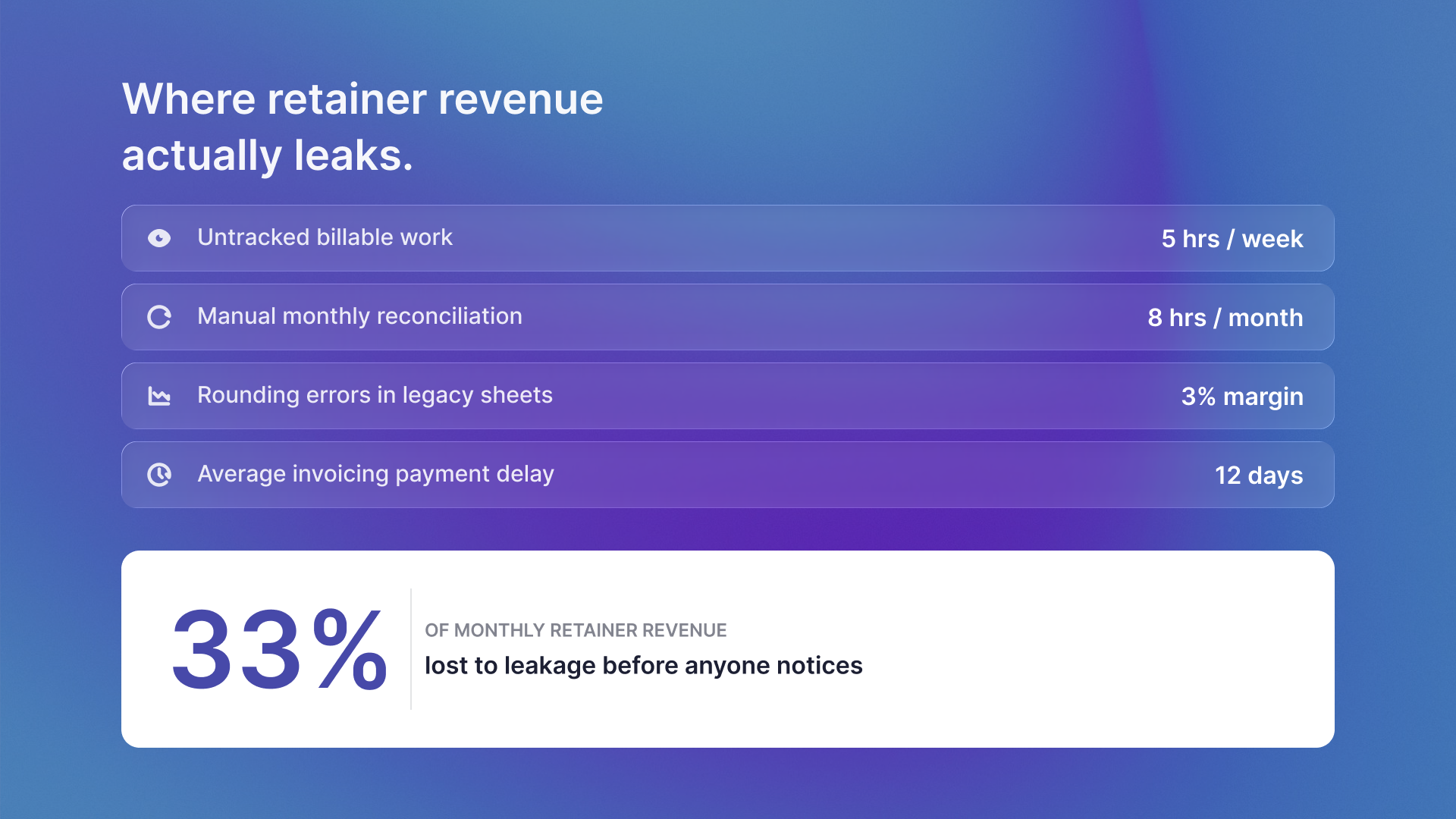
Total monthly leakage can account for a 33% revenue loss when tracking gaps are left unaddressed, acting as a hidden tax on the firm's bottom line. As noted in my experience with agency scaling, actual profit is frequently eroded by 15% due to excessive billable leakage from out-of-scope work on retainers that goes untracked.
Retainer billing software vs. legacy spreadsheets
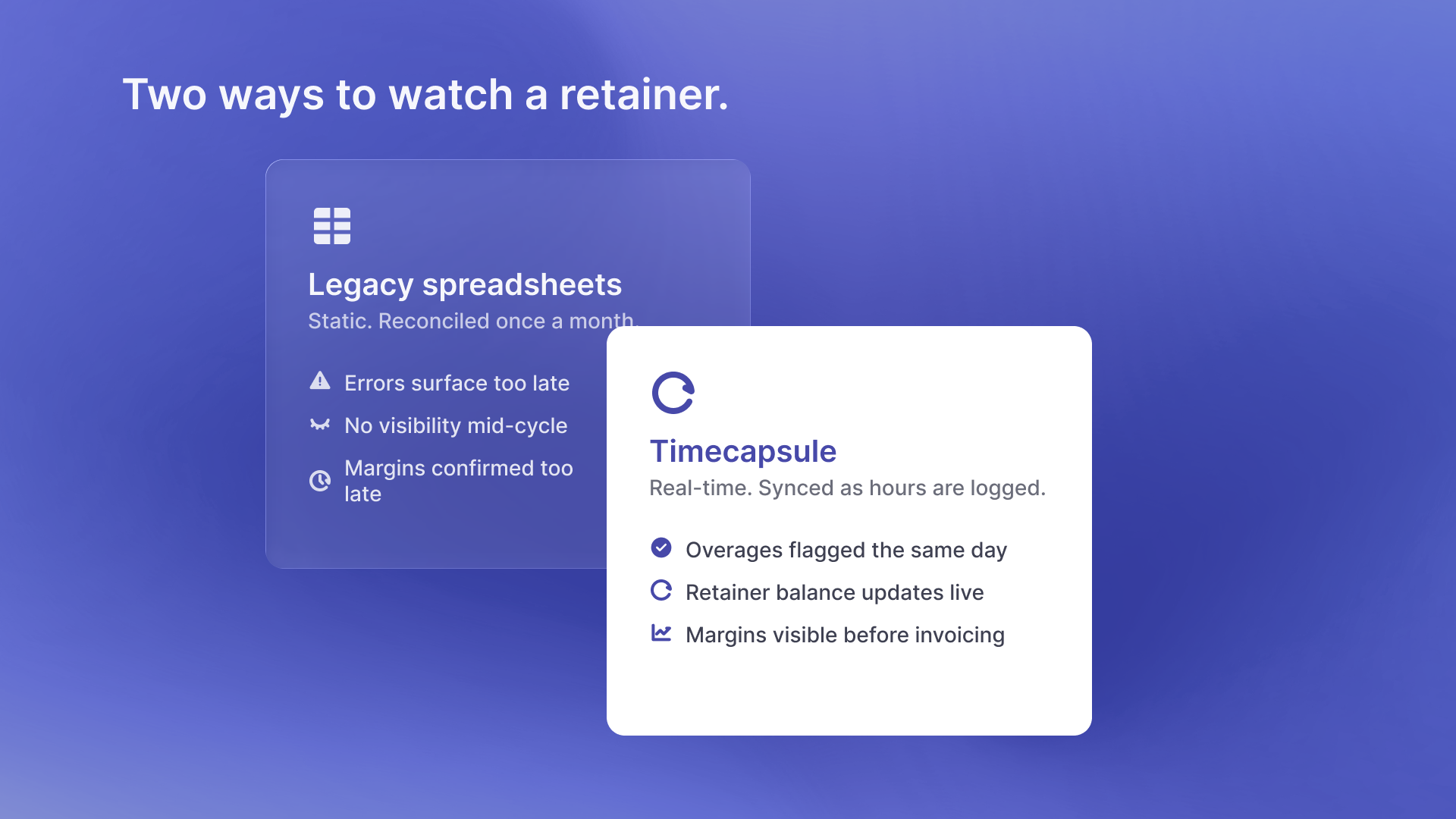
Modern agency management software shifts the focus from simple activity tracking to labor reconciliation. Switching to real-time profitability visibility separates lifestyle businesses from scalable firms. Legacy spreadsheets are static: they cannot indicate if a senior developer is spending too much time on a low-margin task in real time.
Profit-intelligent systems sync labor costs directly to retainer balances as they happen. This automation eliminates billable leakage by capturing out-of-scope work before it becomes a loss. For teams focused on scale, having this visibility ensures every hour helps the bottom line. It provides the granular data necessary to accurately forecast headcount and revenue based on actual utilization rather than guesswork.
Auditing your billing stack
- Review your last three months of invoices to identify all out-of-scope work that was performed but never billed.
- Calculate the total hours your leadership team spends manually reconciling time sheets each month.
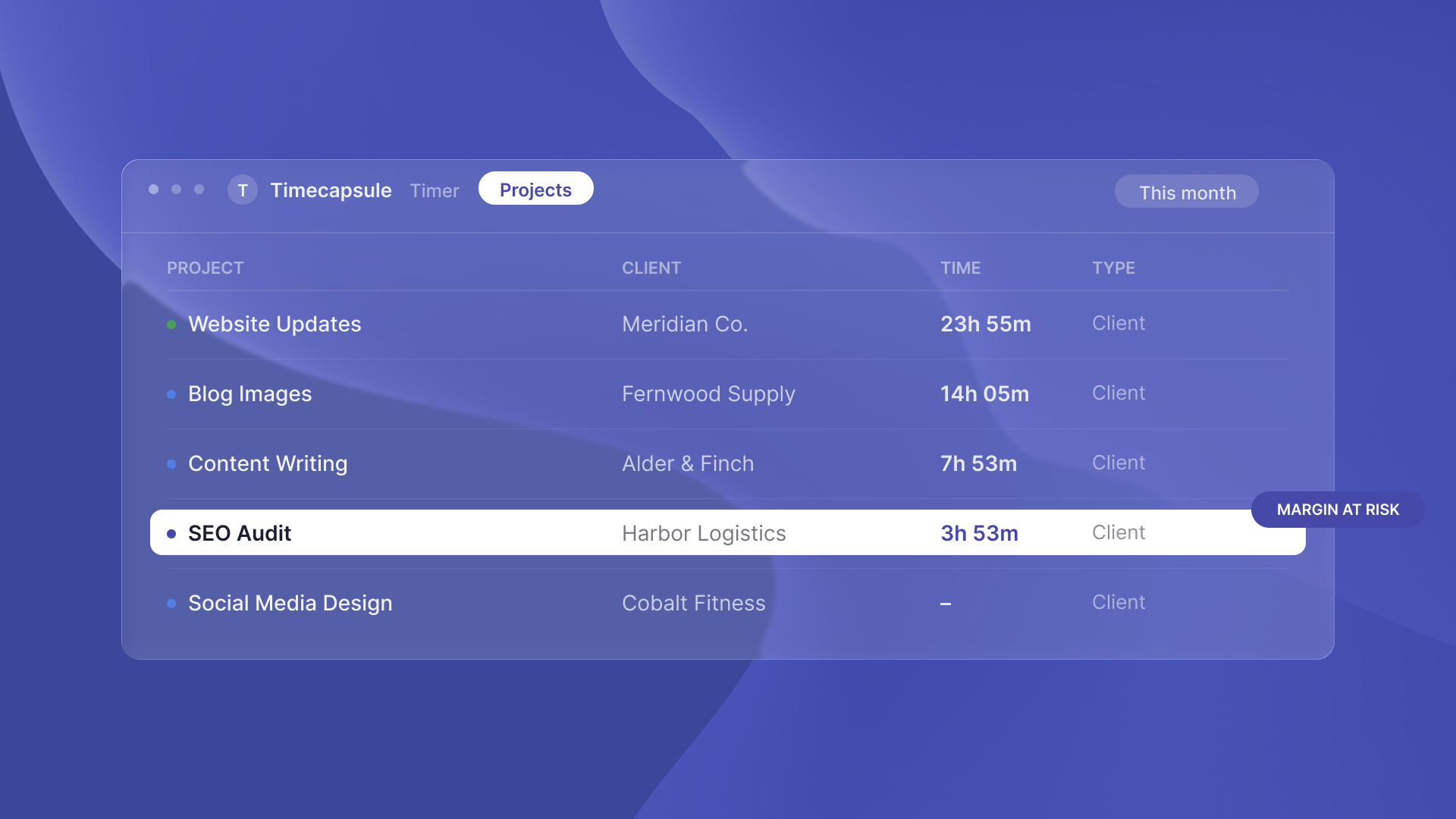
- Implement a system like Timecapsule that provides visibility into project margins to catch scope creep before the billing cycle ends.
Scaling an agency requires a shift from tracking time to monitoring profit. Project profitability monitoring ensures that growth is sustainable and margins are protected. Manual billing is the primary bottleneck to growth. If you cannot see your margins in real time, you are managing a spreadsheet instead of a business.
Optimize your team's performance and secure your data integrity by choosing to get started with Timecapsule today.