.svg)
Why your $75/hour freelancer actually costs $110/hour

You negotiate a $75/hour rate with a senior developer. You bill the client $150/hour. That's a clean 2x markup and a healthy 50% margin, right?
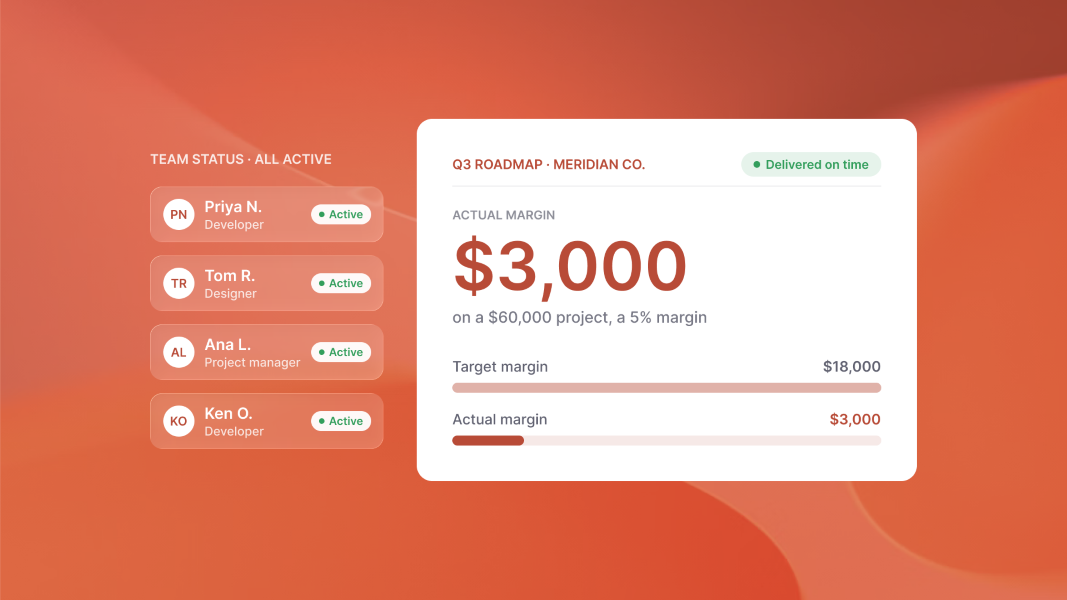
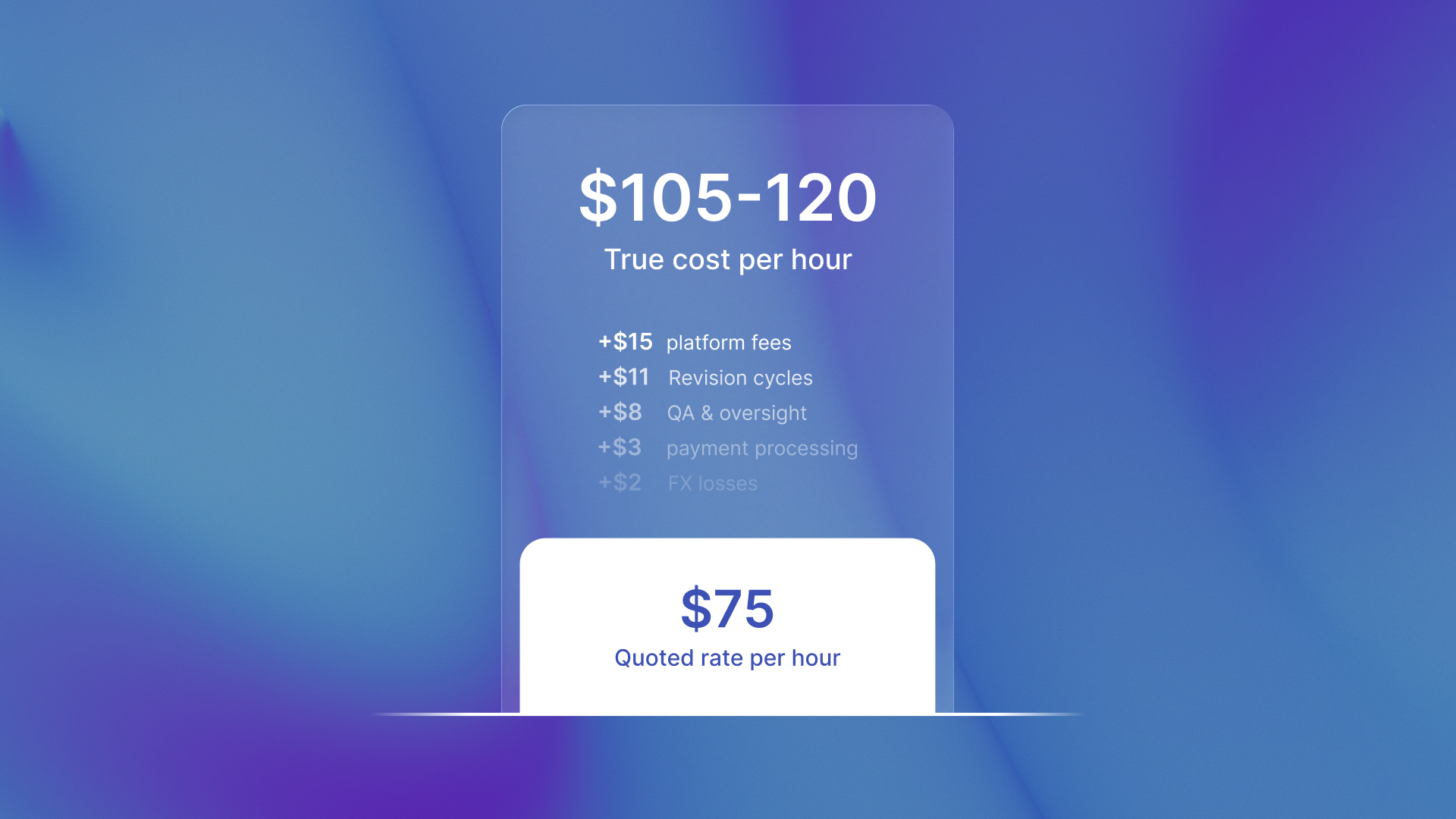
Wrong. That $75/hour freelancer actually costs your agency $105-$120 per hour when you account for the full expense stack. Your 50% margin just became 20-25%, and you won't discover this until you're reviewing the P&L after invoices close.
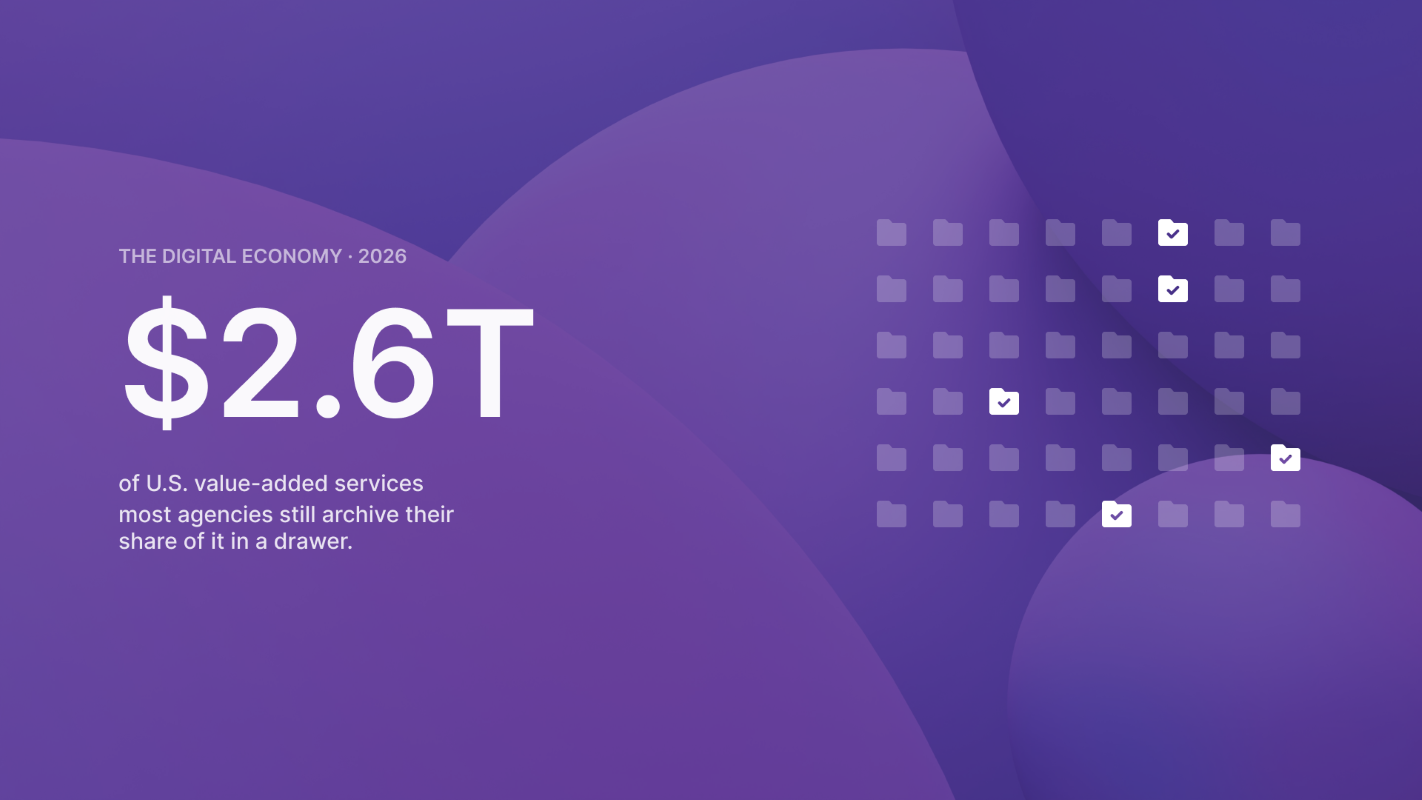
This is the systematic cost blindness killing agency profitability in the freelance economy. With 48% of CEOs planning to increase freelance hiring in 2026 according to Upwork and global freelance earnings hitting $1.5 trillion, agencies are scaling capacity without scaling their cost accounting frameworks. The result: projects that look profitable on paper break even or lose money in reality.
The agencies that break the $1M revenue barrier aren't necessarily better at negotiating rates. They're better at knowing their true costs in real-time and adjusting before margins disappear.
The hidden cost stack beyond the hourly rate
Most agencies use the 2x to 4x salary multiplier for full-time employees and apply it to freelancers. This approach systematically misses overhead allocation, leading to 30-50% cost underestimation.
Here's what that $75/hour freelancer actually costs:
- Platform commission (Upwork/Fiverr): $7.50-$15/hour (10-20% of rate)
- Payment processing fees: $2.20-$2.50/hour (2.9% + $0.30 per transaction)
- Multi-currency conversion losses: $0.75-$2.25/hour (1-3% on international payments)
- Onboarding and briefing time: 2-4 hours per project at your internal hourly cost
- Revision cycles: 15-25% additional hours beyond the original estimate
- Quality review and feedback: 10-15% of total project hours
- Invoice processing and reconciliation: administrative burden per contractor per month
- Contract management and compliance tracking
- Time tracking verification and dispute resolution
When you add these components to your $75/hour base rate, the real cost lands between $105-$120/hour. Your 2x markup just became a 1.25x-1.43x markup, and your margin dropped from 50% to 20-25%.
The math gets worse when overhead exceeds the 20-30% of AGI threshold agencies need for sustainable growth. Untracked freelancer-related overhead pushes many agencies beyond this limit without them realizing it.
Why post-project cost discovery kills profitability
Traditional accounting tools like QuickBooks and Xero track expenses after they happen. You import time entries, process invoices, and reconcile payments weeks after the work completes. By the time you see the real cost, the project is closed and the margin damage is permanent.
This is why only 30% of agencies ever break the $1M revenue mark according to HubSpot research. The problem isn't revenue growth. It's margin erosion from underpricing projects based on incomplete cost data.
Here's what happens without real-time visibility:
- You price a project at $150/hour based on a $75/hour freelancer rate
- Platform fees, payment processing, and management overhead add $30-$45/hour
- Revision cycles extend the timeline by 20%, inflating total costs
- You discover the true cost when reviewing monthly P&L statements
- The project already closed at the original price, locking in the margin loss
The gap between estimated and actual costs compounds across every freelance-heavy project. Over a quarter, these invisible cost overruns can turn a projected 40% margin into a realized 15% margin.

Real-Time cost tracking while projects are active
The solution isn't negotiating lower freelancer rates. It's tracking the fully-loaded cost as projects progress so you can course-correct before margins disappear.
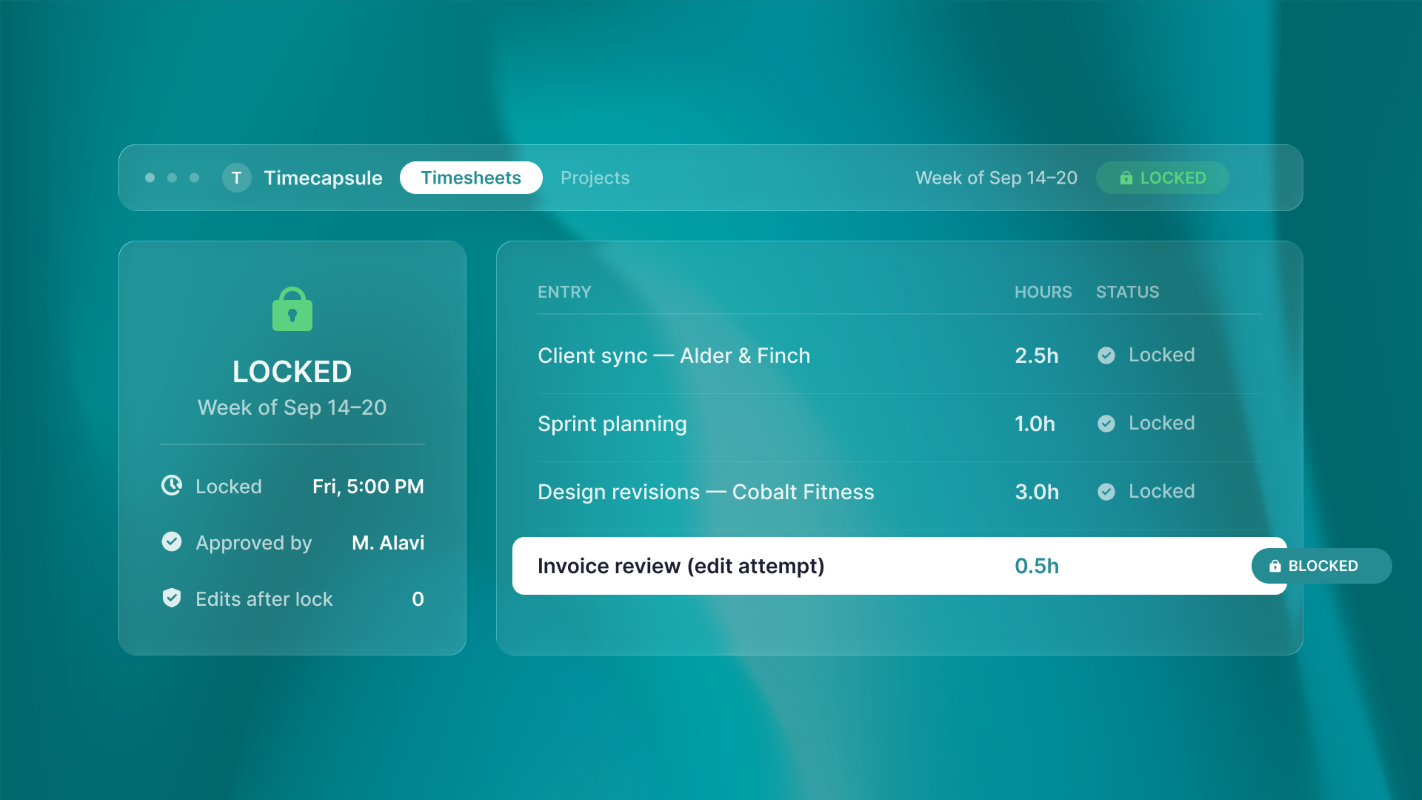
Platforms like Timecapsule monitor project profitability in real-time by tracking billable hours, non-billable overhead, and all freelancer-related expenses as they accumulate. You see the true cost per hour while the project is still active, not weeks later when it's too late to adjust.
Companies like Islands use this approach to track dev hours across client projects. They do this as a fractional CTO service. This helps them see profit levels across their full freelance roster. Development teams at QAFlow and ReachSocial track contractor costs in real time. This helps prevent budget overruns during feature development cycles.
This visibility enables three critical actions:
- Factor the full cost stack into your initial quotes before projects start
- Catch scope creep and cost overruns mid-project before they erode margins
- Know your true break-even point when discussing rates with contractors
The agencies winning in the freelance economy aren't the ones avoiding contractors. They're the ones with cost visibility systems that catch margin bleed in real-time.
From cost estimation to cost visibility
Freelance hiring is becoming table stakes for agency growth. The competitive advantage isn't whether you use contractors. It's whether you know what they actually cost while there's still time to protect your margins.
A $75/hour freelancer who actually costs $110/hour isn't a bad hire. But pricing them at $150/hour and discovering the math too late is a profitability killer. The difference between 30% margins and 12% margins isn't the talent you hire. It's whether you know what they actually cost while there's still time to fix the pricing.
In today’s economy, more companies are hiring freelancers quickly. Many businesses still aim to keep overhead at 20–30%. Clear cost visibility helps companies scale profitably. Without it, margins shrink. The agencies that break through aren't better at finding cheaper talent. They're better at tracking the real cost before it becomes permanent.