.svg)
Why your $80/hour freelancer actually costs $120 (and how to calculate it)

.png)
Your agency just hired a freelance developer at $80/hour for a three-week sprint. You budgeted the project at their hourly rate times estimated hours. The project finished on time and on scope.
That's not what you paid. That's what you invoiced for.
The real cost of that freelancer includes time you spent coordinating but never tracked. It also includes slow onboarding you never measured. It also includes scope work you never billed. The freelancer cost calculator most agencies use is missing 30-50% of the actual expenses.
The 2x multiplier myth
Most agencies estimate freelancer costs with a simple multiplier. They multiply the contractor’s hourly rate by 2 to 4.This helps cover overhead costs. Teamcamp's Agency Pricing Guide 2025 reports this is the dominant approach across the industry.
Here's the problem: those multipliers were designed for full-time employees with predictable overhead allocation. Freelancers carry different cost structures that traditional multipliers systematically miss.
Your $80/hour developer isn't costing you $160/hour with a 2x multiplier. They're costing you $104-116/hour when you account for the hidden expenses that never appear in project budgets.
The math breaks down like this:
- Quoted rate: $80/hour
- Coordination overhead: 10-15% (client communication, status updates, integration with internal teams)
- Onboarding inefficiency: 15-20% (ramp-up time, learning your systems, initial mistakes)
- Scope management: 5-10% (clarifying requirements, handling changes, managing expectations)
- True fully-loaded cost: $104-116/hour before your agency markup
That 30-45% hidden cost is why your project budgets consistently underestimate reality.
.png)
Where the missing 30% hides
Unbilled coordination time is the largest hidden cost category. Your project manager spends 3–5 hours per week coordinating freelancers. This includes status check-ins, clarifying requirements, and integrating their work with internal teams. That's $300-500 in management overhead on a $10,000 project that never appears in your budget.
Onboarding inefficiency compounds the problem. That first week of a three-week sprint? Your freelancer is learning your systems, understanding your clients, and making mistakes they'll correct in week two. Industry trends show a 15% to 20% productivity drop during contractor ramp-up. Many agencies still budget as if day-one output matches day-fifteen output.
Scope management overhead is the silent margin killer. Every "quick clarification" call, every "small change" request, every "can you just…" conversation represents unbilled time.
The freelance economy nobody's tracking properly
Upwork's Future Work Index 2025 reports 1.57 billion freelancers globally generated $1.5 trillion in earnings in 2024. 48% of CEOs plan to increase freelance hiring in 2026.
Your agency is likely part of this shift. You're hiring more contractors, scaling teams faster, and delivering more projects with variable capacity.
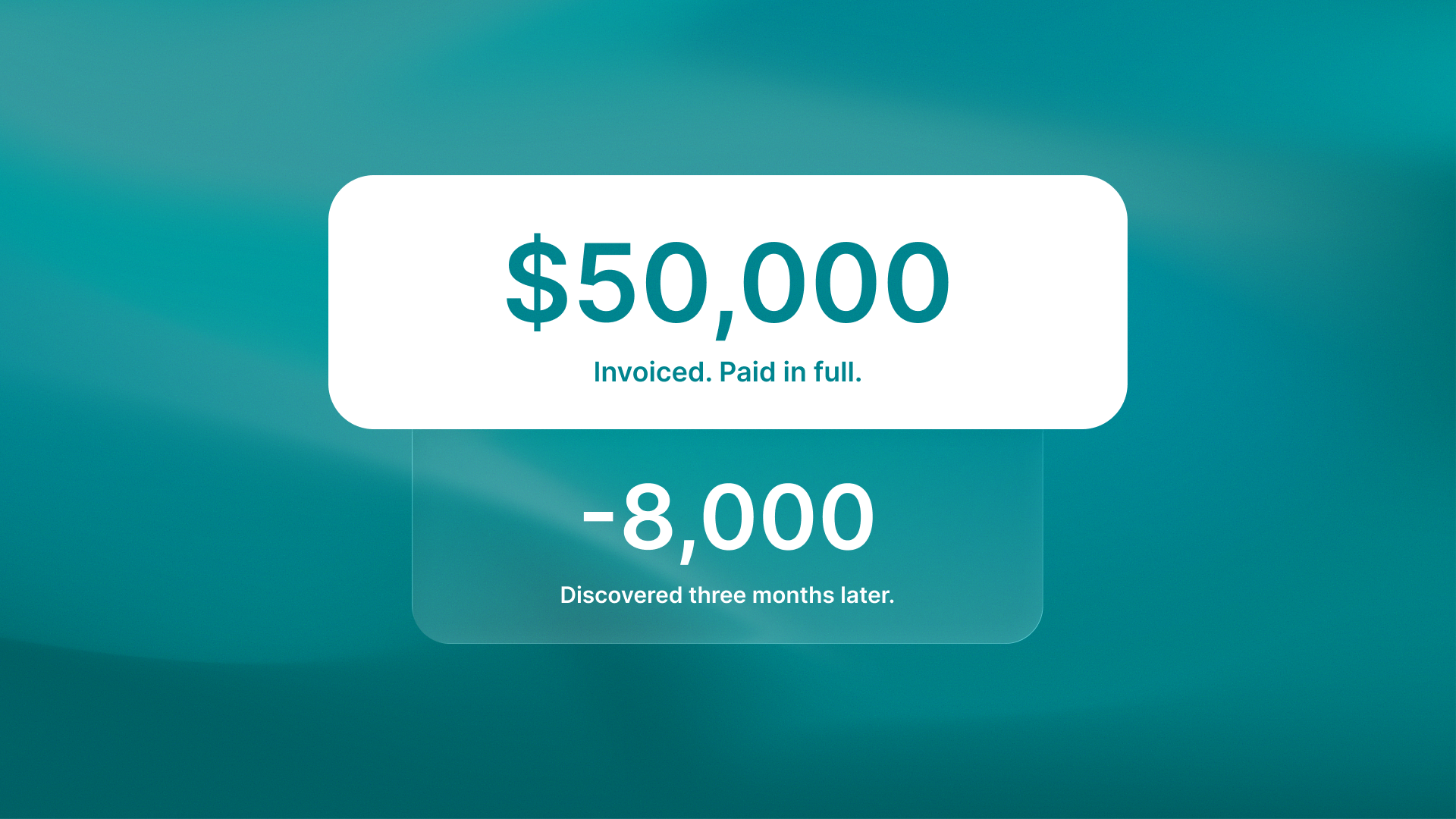
But your financial tracking hasn't evolved to match. You're still using QuickBooks and Xero to capture expenses after projects complete. You discover profitability problems after invoicing, when it's too late to course-correct pricing, scope, or resource allocation.
Real-Time cost visibility changes the decision window
Traditional accounting captures expenses after projects complete. QuickBooks and Xero track what you spent, but they don't show you what you're spending while you can still adjust project parameters.
Real-time cost tracking creates a critical intervention window. When coordination overhead hits 20% in week one of a three-week project, you can course-correct. You can renegotiate scope, adjust staffing, or reprice the remaining work. By the time you reconcile expenses in QuickBooks after invoicing, the damage is permanent.
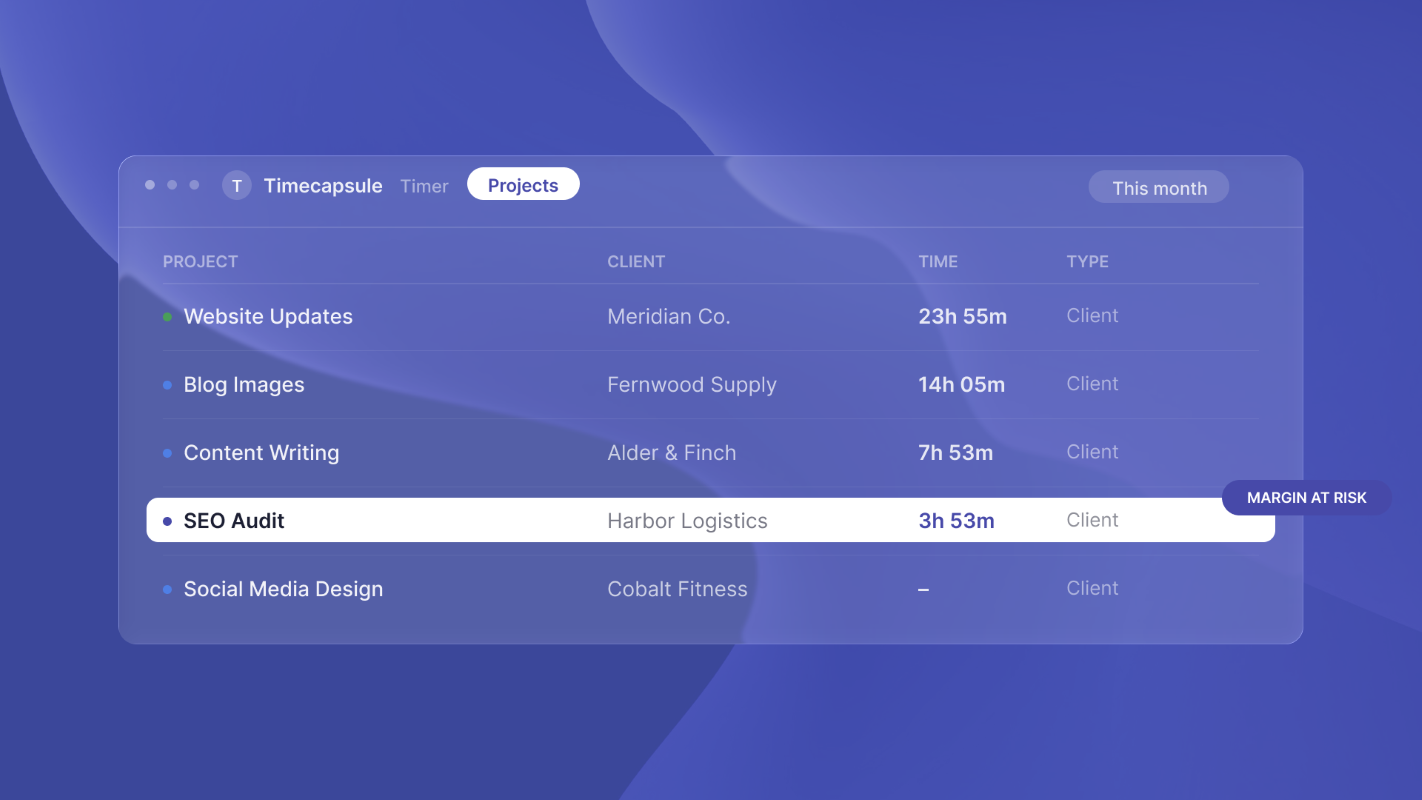
Platforms like Timecapsule track billable and non-billable time in real time. This gives agencies a clear view of true project costs while work continues. The difference isn't better accounting. It's the ability to make profitable decisions before margins evaporate.
According to TMetric's Marketing Agency Benchmarks 2025, target overhead must not exceed 20-30% of AGI for sustainable agency growth. When hidden freelancer costs push your actual overhead to 40-50%, profitability becomes impossible even with healthy top-line growth.
The competitive advantage of knowing what things actually cost
This isn't about better spreadsheets. It's about the difference between planning what you think you'll spend and tracking what you really spend. You can still adjust while it matters.
Agencies that see true fully-loaded freelancer costs in real time make profitable choices. They can adjust pricing during a project. They can reassign resources before coordination overhead grows. They can spot which freelancers deliver real value, not just quoted rates.
Agencies often find costs only after they get invoices. They often repeat the same mistakes that destroy margins. Then they wonder why growing revenue does not increase profit.
.png)
In the freelance-heavy agency landscape of 2026, financial intelligence isn't a nice-to-have. It's the difference between 30% margins you project and 12% margins you actually deliver.